Fernweh
    ExploreTravel GuidesMy Trips
    de|en
    About FernwehImprintFAQPrivacy Policy
    ExploreTravel GuidesMy Trips
    Corinth

    Corinth

    City
    1. Home
    2. Destinations
    3. Greece
    4. Peloponnese
    5. Corinth
    Welcome to Corinth, a fascinating place where glorious antiquity meets impressive engineering! Here, you'll immerse yourself deep in history, follow in the footsteps of Saint Paul, and marvel at the strategic importance this city once held. Experience a vibrant blend of historic ruins, breathtaking views, and the modern marvel of the Corinth Canal that will captivate you.
    • Neighborhoods & highlights
    • Eat & drink
    • Culture
    • Getting around
    • Accommodation
    • Plan trip
    • Nearby
    • Neighborhoods & highlights
    • Eat & drink
    • Culture
    • Getting around
    • Accommodation
    • Plan trip
    • Nearby

    Overview

    Ancient Corinth was one of the most influential cities of Greek antiquity, strategically located on the isthmus.You'll explore the expansive archaeological site with the Temple of Apollo, the Roman Agora, and the Peirene Spring, testaments to a glorious past.The city was a center for trade and culture, playing a crucial role in the spread of early Christianity through Apostle Paul.A climb to the fortress on Acrocorinth offers panoramic views over the ruins and the landscape extending to the modern Corinth Canal, a masterpiece of engineering.Ideally, plan your visit for spring or autumn to avoid the peak heat and main tourist crowds, ensuring a relaxed experience of the sites.

    Places in Corinth

    Discover the most important sights and attractions

    Sights in Corinth

    1Antikes Korinth

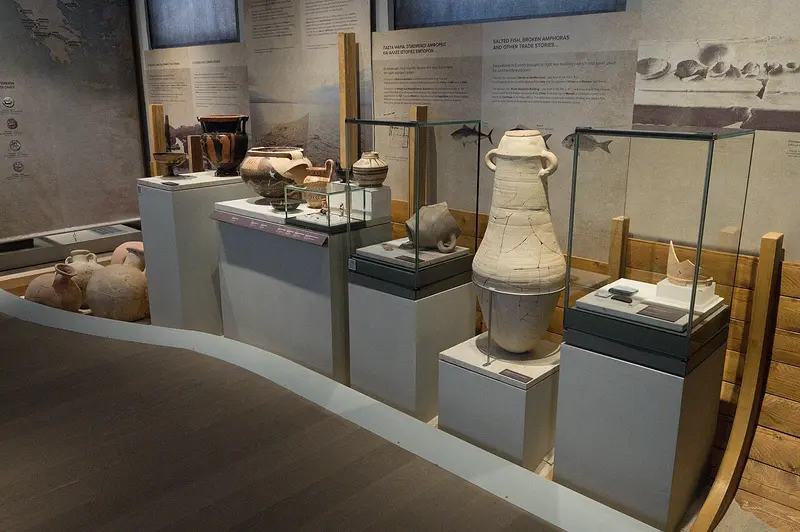
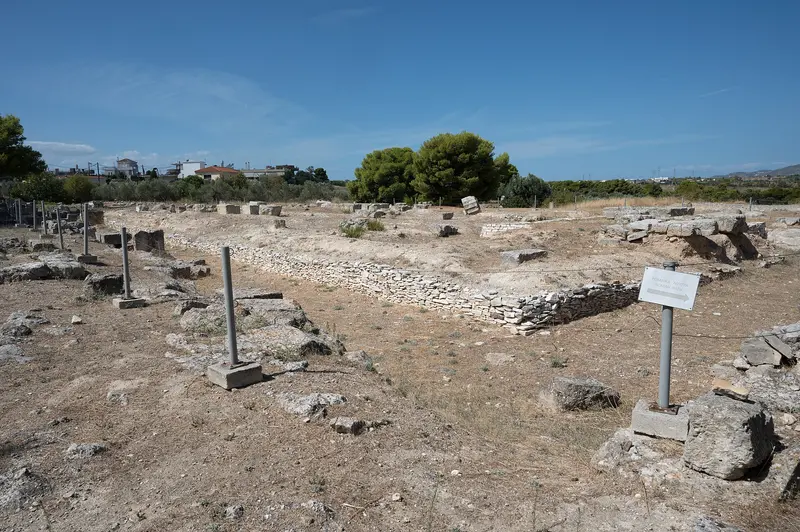
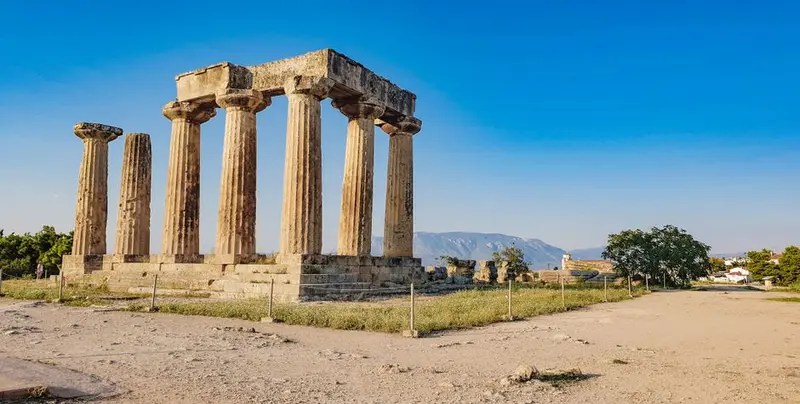
    Ancient Corinth was once one of Greece's most powerful and wealthiest city-states, strategically located on the isthmus. After its destruction by the Romans in 146 BC, it was rebuilt as a Roman colony and enjoyed a second golden age, reflected in the preserved ruins. Here you'll find impressive remains, including the Doric Temple of Apollo from the 6th century BC, majestically dominating the ancient Agora. Explore the sprawling Agora with its shops, the Bema, from which the Apostle Paul is said to have spoken, and the Peirene Spring, a vital water supply in antiquity. The blend of Greek and Roman architecture is fascinating and testifies to the site's long history. In the adjacent museum, you can admire numerous artifacts illustrating the daily life and art of its inhabitants. Our Tip: Visit the site early in the morning to avoid the worst of the heat and the crowds. From the steps of the Temple of Apollo, you'll have an excellent view of the ruins and Acrocorinth, perfect for photos.
    Open in Google Maps

    2Akrokorinth

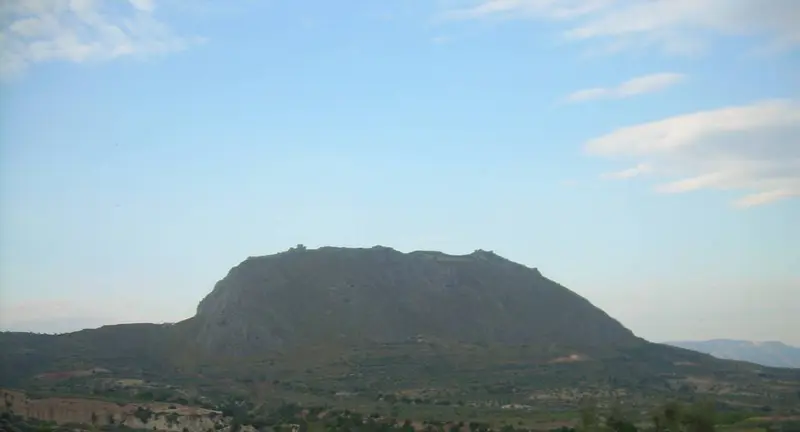
    The Acrocorinth, the ancient acropolis of Old Corinth, majestically crowns the plain and is one of Greece's most impressive fortresses. Its strategic location offered centuries of impregnable defense, enabling control over the Isthmus of Corinth. Here you'll discover traces of numerous civilizations: from the ancient Greeks with their temples, including that of Aphrodite, through Roman and Byzantine structures, to Frankish, Venetian, and Ottoman additions. The sprawling ruins include multiple defensive walls, imposing gates, and the remains of mosques and churches, reflecting the site's tumultuous history. From the upper walls, you'll enjoy a breathtaking 360-degree panoramic view over the Corinthian and Saronic Gulfs and the surrounding landscape. Our Tip: Plan your visit for early morning or late afternoon to avoid the peak heat and crowds. Sturdy footwear and ample water are essential for exploring the sprawling complex, as the ascent and paths can be uneven.
    Open in Google Maps

    3Kanal von Korinth

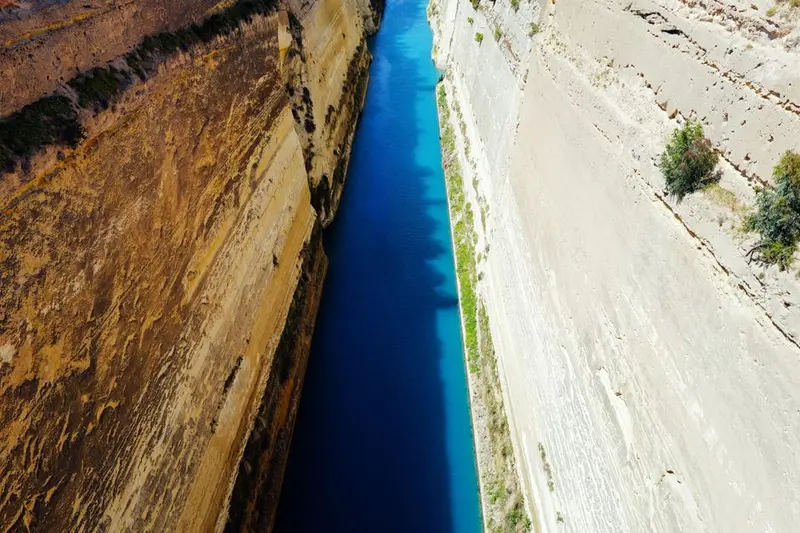
    The Corinth Canal separates the Peloponnese from the mainland, an impressive feat of engineering. Completed in 1893, it fulfilled an ancient dream pursued even by Emperor Nero. You'll look upon a 6.3-kilometer-long, 21-meter-wide waterway with rock walls up to 80 meters high. This strait saves smaller ships the long sea journey around the Peloponnese and remains strategically important. The bridges of the old national road and the motorway offer the best views. Our Tip: Try to witness a ship passing through – a fascinating spectacle. For undisturbed photos and fewer crowds, an early morning visit is recommended.
    Open in Google Maps

    4Το Παγκάκι

    “Το Παγκάκι” in Corinth is an unassuming, yet locally significant spot that offers you a unique perspective on the surroundings. This simple but popular seating, whose name simply means “The Bench,” has evolved into a meeting point for locals and an insider tip for travelers seeking peace. From here, you’ll enjoy a picturesque view, often over the Saronic Gulf or the surrounding landscape, depending on its exact position. It’s an ideal place to pause, let the Greek atmosphere wash over you, and contemplate the vastness of the landscape. The bench itself is a testament to local culture, where everyday stories and observations intertwine. Our Tip: Visit Το Παγκάκι in the late afternoon to catch the soft light of the setting sun, which bathes the landscape in warm colors. For an undisturbed experience and the best photos, consider the early morning hours, before most visitors arrive. Take your time, sit down, and enjoy the tranquility away from the busier tourist paths.
    Open in Google Maps

    5Kalamia Beach

    **Kalamia Beach**, located near the modern city of Korinth, is a popular meeting point for locals and visitors alike. Here, you'll find a well-organized beach with clear waters and a mix of pebbles and sand. Along the promenade, cozy tavernas and cafés line up, offering local specialties and refreshments. The beach offers a relaxed atmosphere and is ideal for enjoying the Greek sun and swimming in the Gulf of Korinth. Historically, Kalamia has served the residents of Korinth for decades as an important seaside recreational area, connecting modern city life with natural coastal beauty. *Our Tip:* It's best to visit Kalamia Beach on weekday mornings to enjoy the most tranquility and find a good spot. For an atmospheric photo of the Gulf of Korinth with the mountains in the background, late afternoon is recommended when the light softens.
    Open in Google Maps

    Restaurants & Cafes

    Corinth: An Echo of Ancient Power and Culture

    Corinth, strategically located on the Isthmus connecting the Peloponnese to the Greek mainland, boasts a fascinating and often turbulent history. The city was already settled in Neolithic times but achieved its greatest flourishing as a powerful Greek city-state in the Archaic and Classical periods. Its maritime dominance and flourishing trade made it a significant center of antiquity, establishing extensive colonies and hosting the famous Isthmian Games.Today's archaeological site bears witness to this rich past, notably with the imposing remains of the Temple of Apollo from the 6th century BC, whose Doric columns shape the landscape. After its destruction by the Romans in 146 BC, Corinth was refounded as a Roman colony under Julius Caesar, which profoundly influenced the architecture of the Forum, the Lechaion Road, and numerous fountains such as the Peirene Spring. Early Christian history is also closely linked to Corinth, as the Apostle Paul preached here and founded one of the first Christian communities.Above ancient Corinth thrones the fortress of Acrocorinth, a majestic testament to various eras – from Greek to Roman, Byzantine, and Frankish, through to Venetian and Ottoman rule. The layers of this fortress reflect the cultural influences that shaped the region over millennia. Although many ancient customs are no longer directly practiced in modern Corinth, the city's heritage lives on in its architectural richness and deep-rooted history, which is reflected in every stone column and mosaic.

    Exploring locally

    Corinth, a city rich in history and charm, is best explored on foot, especially its vibrant city center and the picturesque waterfront along the Gulf. For longer distances and exploring the wider area, the local bus system, operated by KTEL Korinth, is a reliable option; tickets can be conveniently purchased directly on the bus or at designated sales points.While Corinth itself does not have metro or tram systems for urban transport, taxis are widely available and offer a convenient way to get quickly and directly from A to B; ride-sharing services are less established here. For short to medium distances and self-guided exploration, bicycles are also available for rent in many places, whereas e-scooters are not yet widely available.A practical tip for journeys beyond the city limits is to use the modern KTEL intercity buses, which efficiently connect Corinth with Athens and other regions of the Peloponnese. It's advisable to always carry some cash for bus tickets and taxis, even though card payments are increasingly accepted.

    Accommodations in Corinth

    Accommodations in Corinth

    Find perfect stay in Corinth

    Booking.com
    Search Hotels
    Agoda
    Search Hotels
    Airbnb
    Vacation Rentals
    Hotels.com
    Hotels Worldwide
    Hostelworld
    Hostels

    Campgrounds in Corinth

    Find perfect campground in Corinth

    Search via Google Maps
    Campgrounds nearby (15km)
    Camping.info
    Find Campgrounds
    Park4Night
    RV Parks & Camping

    Plan your trip to Corinth

    Save places, build a route and plan your city trip — all in one place.

    Save places

    Bookmark sights, restaurants and neighborhoods you're interested in.

    Build your route

    Turn your bookmarks into a route — define order, days and budget.

    Refine with AI

    Let Mein Fernweh suggest experiences and put together a tailored daily plan.

    Start trip planningOpen bookmarks

    Locations nearby

    These places are nearby — perfect for additional days or a day trip.

    Mycenae

    Mycenae

    The ancient site of Mycenae, once the center of a powerful Bronze Age civilization, transports you into the world of Agamemnon. You enter the Acropolis through the imposing Lion Gate, a masterpiece of Mycenaean architecture. Explore the massive cyclopean walls and the royal tombs in Grave Circle A. Outside the citadel, the monumental Treasury of Atreus captivates. These ruins offer deep insights into the highly developed Mycenaean culture. Plan your visit for early morning to avoid the midday heat and larger crowds.
    Ancient Epidauros

    Ancient Epidauros

    Ancient Epidaurus on the Peloponnese was an important sanctuary of Asclepius, the god of healing, in antiquity. Here you will find the world-famous Theatre of Epidaurus, known for its exceptional acoustics; even in the highest rows, you can hear a coin drop on the stage. Besides the theatre, explore the Asklepieion with its ruins of temples, baths, and accommodations for the sick who sought healing here. The small on-site museum offers insight into the site's history and archaeological finds. To avoid the heat and the biggest tourist crowds, an early morning or late afternoon visit is recommended. Plan enough time to soak up the peaceful atmosphere of this historic place.
    Nafplio

    Nafplio

    Immerse yourself in the timeless beauty of Nafplio, one of Greece's most picturesque cities, where Venetian charm meets neoclassical elegance.As the first capital of modern Greece, this place enchants you with its rich history, impressive architecture, and an unparalleled atmosphere that invites you to stroll and linger.
    Peloponnese

    Peloponnese

    The Peloponnese is a storied peninsula in southern Greece, considered the cradle of ancient Greek civilization. Here, travelers can expect a fascinating mix of breathtaking archaeological sites, picturesque coastal towns, and a wild, mountainous landscape that invites exploration and is a UNESCO World Heritage site.
    Arachova

    Arachova

    The chic mountain village of Arachova, situated near Delphi, is known for its ski resorts, traditional architecture, and lively nightlife.