Fernweh
    ExploreTravel GuidesMy Trips
    de|en
    All Places & RegionsAbout FernwehImprintFAQPrivacy Policy
    ExploreTravel GuidesMy Trips
    • Neighborhoods & highlights
    • Eat & drink
    • Food culture
    • Culture
    • Nightlife
    • Getting around
    • Excursions
    • Accommodation
    • Plan trip
    • Nearby
    Neapoli (Neapoli Voion)
    City

    Neapoli (Neapoli Voion)

    Neapoli is a port town at the southern tip of the Malea Peninsula in southeastern Laconia, approximately 115 kilometers south of Sparta. From here, ferries depart for Kythira, Antikythira, and Elafonisos.

    More
    1. Home
    2. Destinations
    3. Greece
    4. Peloponnese
    5. Neapoli (Neapoli Voion)
    Neapoli is a port town at the southern tip of the Malea Peninsula in southeastern Laconia, approximately 115 kilometers south of Sparta. From here, ferries depart for Kythira, Antikythira, and Elafonisos. The town stands on the site of ancient Boiai and is a starting point for the Kastania Cave and the submerged settlement of Pavlopetri.
    Port Town at the End of the Malea PeninsulaNeapoli is situated on a shallow bay in the far southeast of the Peloponnese, approximately 335 kilometers from Athens and 115 kilometers from Sparta. With a population of just over 2,700, it is the main town of the Vatika region and belongs to the municipality of Monemvasia. The town's street grid dates back to a plan from 1837, and the waterfront promenade stretches along the bay.Base for Exploring the RegionMost visitors come for the ferries to Kythira and Antikythira or en route to Elafonisos. In the vicinity are the Kastania Cave, the sunken Bronze Age settlement of Pavlopetri, and the Agios Nikolaos Geopark with its fossilized tree stumps. In the town itself, an Archaeological Museum and a Museum of Maritime Tradition showcase the peninsula's history.
    Neapoli is small enough to explore on foot. Life revolves around the Akti Voion waterfront promenade, home to tavernas, bars, and the ferry terminal, behind which stretches the 19th-century grid of streets.

    Sights in Neapoli (Neapoli Voion)

    Discover the most important sights and attractions

    Archaeological Museum Neapoli
    José M. Ciordia / Wikimedia Commons / CC BY-SA 4.0

    1Archaeological Museum Neapoli

    The Archaeological Museum of Neapoli developed from the city's former Archaeological Collection and displays finds from the entire Malea Peninsula, the ancient region of Epidauros Limera. On display are sculptures, inscriptions, grave stelae, and pottery. The exhibition is arranged according to the peninsula's outline and follows the route of the ancient travel writer Pausanias from northwest to northeast. Colors indicate the origin of the pieces: Blue represents coastal locations, ochre for inland areas, red for urban settlements. The museum is closed on Tuesdays.
    Open in Google Maps
    The Cave of Kastania
    Batikiotis / Wikimedia Commons / CC BY-SA 4.0

    2The Cave of Kastania

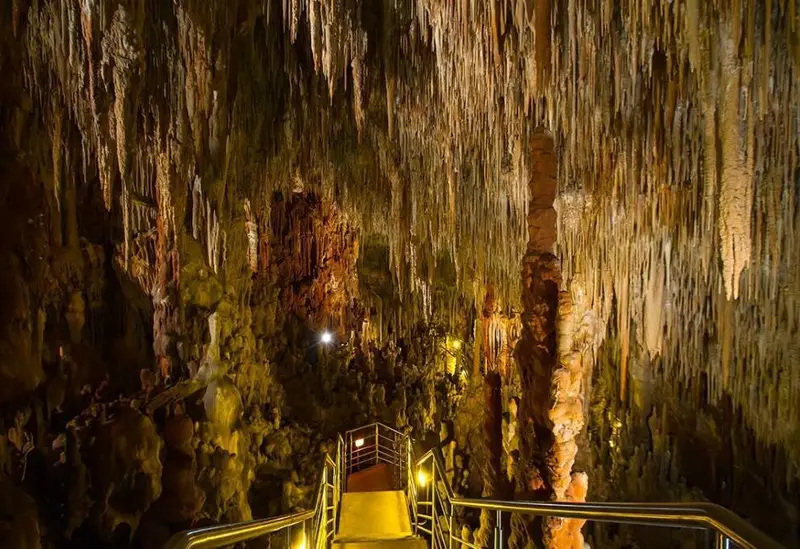
    The Cave of Kastania, also known as the Cave of Agios Andreas, is located approximately 11 to 13 kilometers northeast of Neapoli in Jurassic limestone. A shepherd discovered it at the beginning of the 20th century when he saw bees flying into an opening in the ground. Across approximately 1,500 square meters and two levels, a 500-meter long circular path leads past columns, curtains, disks, flat stalactites, and Excentriques in red and white. The visit is conducted with a guide and lasts 30 to 40 minutes.
    Open in Google Maps

    3Faraklo

    The small village of Faraklo is located in the hills northeast of Neapoli and has only a few dozen inhabitants. The village was founded in Venetian times and is one of the historically significant places of Vatika. One of the two roads from Neapoli to the Kastania Cave passes through Faraklo, making it an ideal stop along the way.
    Open in Google Maps

    4Pavlopetri

    Pavlopetri, located in Vatika Bay opposite Elafonisos, is considered the world's oldest known sunken city. The settlement was inhabited from approximately 3500 BC until the Bronze Age, sinking around 1000 BC due to earthquakes and rising sea levels. At a depth of only three to four meters lies an almost complete city plan, featuring streets, buildings, chamber tombs, and cist graves. Geologist Fokion Negris described the remains in 1904; they were mapped in 1968 by archaeologists from Cambridge.
    Open in Google Maps

    Restaurants in Neapoli (Neapoli Voion)

    Bain Marie
    1

    Bain Marie

    Bain Marie is a restaurant in the center of Neapoli, just a few steps from the promenade. It serves Greek cuisine.
    Show on Google Maps
    Archontiko
    2

    Archontiko

    Archontiko is in the village, unlike most Neapolis tavernas, not on the waterfront. The cuisine is Greek, focusing on souvlaki and grilled meats.
    Show on Google Maps
    Mone Mone
    3

    Mone Mone

    The Mone Mone is located on Neapoli's northwestern outskirts, along the bay road. Its cuisine offers modern interpretations of Greek dishes.
    Show on Google Maps
    The Sailor (Naftis)
    4

    The Sailor (Naftis)

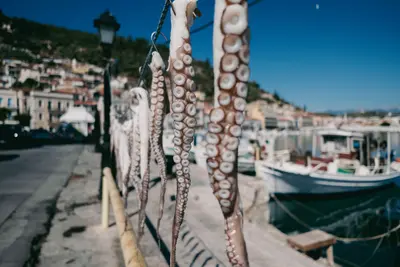
    The Ouzeri sits on Akti Voion waterfront, by the port. Serving Mezedes and fish, it's famed for grilled octopus.
    Show on Google Maps
    Maistrali
    5

    Maistrali

    The restaurant is located on Leoforos Voion, on the southern part of the promenade. The cuisine is traditional Greek, plus fresh fish.
    Show on Google Maps

    Food and Drink

    Most taverns and ouzeries line the waterfront promenade, serving primarily fish and seafood. Additionally, Vatika's cuisine offers some unique specialties.

    Tsaiti

    A fried pastry pocket, filled with cheese and mint, traditionally prepared in Vatika.
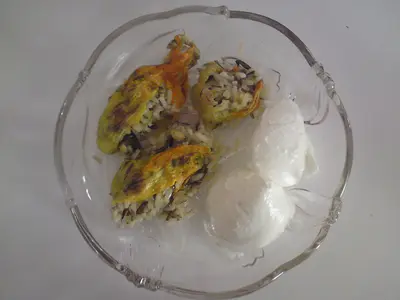
    Stuffed Zucchini Blossoms
    Saintfevrier / Wikimedia Commons / CC BY-SA 3.0

    Stuffed Zucchini Blossoms

    The blossoms are filled with rice and spices and served in many taverns of the area in summer.
    Chargrilled Octopus

    Chargrilled Octopus

    Grilled octopus is a standard offering at promenade ouzeries, typically enjoyed with Ouzo as a meze.

    Samousades

    A sweet pastry with Byzantine roots made with handmade puff pastry, nuts, spices and sesame, similar to Baklava.

    History and Culture

    Ancient BoiaiNeapoli stands on the site of ancient Boiai, which, according to tradition, was founded in the 10th or 9th century BC by the Heraclid Boios. The city was under Spartan control and flourished in Roman times as a member of the League of Free Laconians. An earthquake completely destroyed it in 365 AD.The New Town of 1837For a long time, only the village of Pezoula stood on the bay. In 1837, a Bavarian architect designed the street plan for a new settlement, which was named Neapoli, 'New Town'. The suffix Voion commemorates ancient Boiai.MuseumsThe Archaeological Museum displays sculptures, inscriptions, grave stelae, and pottery from the entire Malea Peninsula, ancient Epidauros Limera. The Museum of Maritime Tradition highlights the importance of seafaring for the region.

    Nightlife

    Ereipio Bar
    1

    Ereipio Bar

    Established in 1984 on Akti Voion waterfront road, the bar offers sea-view seating both indoors and on its terrace. Cocktails are served, with Soul, Funk, and Rock music, sometimes live.
    Show on Google Maps

    Arrival and Around

    Getting ThereNeapoli is approximately 335 kilometers from Athens; the drive takes you via Sparta and Molai to the south of the Malea Peninsula. Monemvasia can be reached via the coastal road to the north.FerriesFrom the port, ferries depart for Kythira and Antikythira. Neapoli is also the starting point for the crossing to Elafonisos. Schedules change seasonally, please check them before your journey.In the VicinityThe town itself can be explored on foot. Kastania Cave is located approximately 11 to 13 kilometers away, and the Agios Nikolaos Geopark is just under 15 kilometers. For these destinations and for Pavlopetri, you will need your own vehicle.

    Day Trips

    Elafonisos

    You reach the small island west of Vatika Bay by ferry from Pounta; it's known for Simos sandy beach. En route is the submerged settlement of Pavlopetri.

    Kythira

    Ferries to Kythira depart directly from Neapoli and arrive at Diakofti port. The island features a Venetian castle above the Chora and numerous bays.

    Monemvasia

    The medieval fortress town on a rock off the east coast of Laconia lies north of Neapoli and is reachable by car via the Malea Peninsula.

    Accommodations in Neapoli (Neapoli Voion)

    Find perfect stay in Neapoli (Neapoli Voion)

    Booking.com
    Search Hotels
    Agoda
    Search Hotels
    Airbnb
    Vacation Rentals
    Hotels.com
    Hotels Worldwide
    Hostelworld
    Hostels

    Campgrounds in Neapoli (Neapoli Voion)

    Find perfect campground in Neapoli (Neapoli Voion)

    Search via Google Maps
    Campgrounds nearby (15km)
    Camping.info
    Find Campgrounds
    Park4Night
    RV Parks & Camping

    Plan your trip to Neapoli (Neapoli Voion)

    Save places, build a route and plan your city trip — all in one place.

    Save places

    Bookmark sights, restaurants and neighborhoods you're interested in.

    Build your route

    Turn your bookmarks into a route — define order, days and budget.

    Refine with AI

    Let Mein Fernweh suggest experiences and put together a tailored daily plan.

    Start trip planningOpen bookmarks

    Nearby

    Monemvasia

    Monemvasia

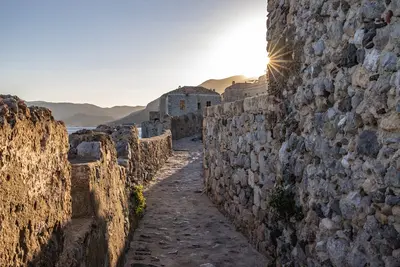
    Monemvasia lies on a rock off the Laconian east coast, rising some 300 meters from the sea and connected to the mainland only by a causeway. The name means 'single entrance' and precisely describes its position, which made the site hard to attack since the 6th century. Behind the wall, Byzantine churches and stone houses stand close together; on the plateau above lies the abandoned Upper Town.
    Nafplio

    Nafplio

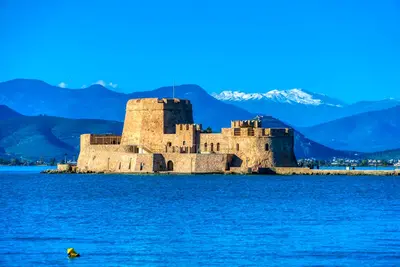
    Nafplio lies on Argolis' east coast, on the Argolian Gulf, some 140 kilometers southwest of Athens. From 1823 to 1834, it served as the first capital of independent Greece, having previously seen Venetians and Ottomans alternately rule its port. The city retains three fortresses, a compact old town of Venetian and neoclassical houses, and a scenic rock path encircling the peninsula.
    Ancient Epidauros

    Ancient Epidauros

    Ancient Epidaurus refers to two sites, twelve kilometers apart: the coastal village of Palea Epidavros on the Saronic Gulf and the Asklepieion inland, a UNESCO World Heritage site since 1988. For centuries, this sanctuary was the most important healing center in the Greek world. Predominantly preserved is the theater from the 4th century BC, whose acoustics still work without technical amplification today.
    Milos

    Milos

    Milos is the geologically most unusual island in the Cyclades: A volcanic crater forms its deeply indented natural harbor, and within just a few kilometers, the coastline transforms from white tuff to red and black rock. Around 70 beaches line this coast, many accessible only by boat. To truly experience Milos, plan to spend half your time on the water.
    Peloponnese

    Peloponnese

    The Peloponnese clings to the southern end of the Greek mainland and, strictly speaking, has been an island since the construction of the Corinth Canal. Within an area the size of Hesse, Mycenaean castles, the Sanctuary of Olympia, Byzantine ruined cities, and Venetian sea fortresses lie close together. Between them, mountain ranges rise to over 2,400 meters, and coastal roads remain narrow and winding.