ExploreTravel GuidesMy Trips
    de|en
    All Places & RegionsAbout FernwehFAQPrivacy PolicyImprint
    ExploreTravel GuidesMy Trips
    • Neighborhoods & highlights
    • Eat & drink
    • Food culture
    • Culture
    • Nightlife
    • Getting around
    • Excursions
    • Accommodation
    • Plan trip
    • Nearby
    Kos
    CityCulture

    Kos

    Kos, the third-largest Dodecanese island, lies just a few kilometers off the Turkish coast near Bodrum. In the island capital, ancient ruins, a Knights Hospitaller castle, and 1930s Italian buildings stand side by side.

    More
    1. Home
    2. Destinations
    3. Greece
    4. Dodecanese
    5. Kos
    Kos, the third-largest Dodecanese island, lies just a few kilometers off the Turkish coast near Bodrum. In the island capital, ancient ruins, a Knights Hospitaller castle, and 1930s Italian buildings stand side by side. Inland, the Dikeos Ridge rises, its slopes home to mountain villages like Zia and Pyli.
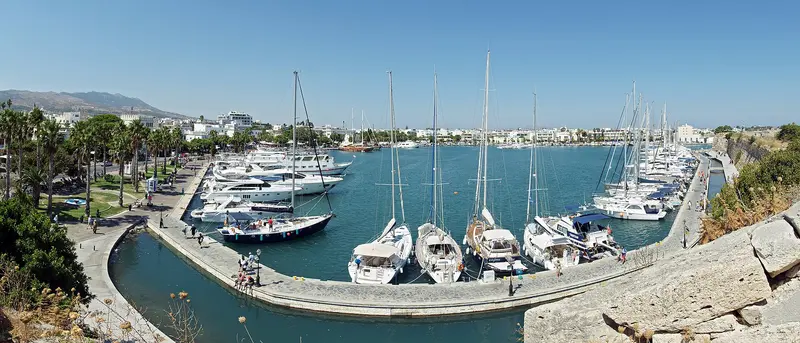
    The CityKos Town is the island's bustling hub, easily explored on foot or by bike thanks to a network of cycle paths winding through the city and along the coast. The Knights' Castle Neratzia and the Plane Tree of Hippocrates stand at the harbor, with the ancient Agora and the western excavations nestled among residential buildings just behind.The IslandThe island stretches approximately 40 kilometers long and is narrow, with a flat north coast bordered by long sandy beaches. Inland, the Dikeos Massif climbs to 846 meters, its slopes home to Zia and the castle ruins of Alt-Pyli. The wide Bay of Kefalos in the southwest offers Paradise Beach and Agios Stefanos.Who It's ForKos perfectly blends beach holidays with ancient history: The Asklepieion and Casa Romana are just a few kilometers from the hotel beaches. Those seeking tranquility will find it in the charming mountain villages or on the secluded beaches of the southwest.
    The island is roughly divided into the lively capital in the northeast, the beach resorts along the flat north coast like Tigaki, Marmari, and Mastichari, and the mountainous southwest around Kefalos. In between lie the villages of Zia, Pyli, and Asfendiou on the slopes of Dikeos.

    Sights in Kos

    Discover the most important sights and attractions

    Asklepieion
    Rodw / Wikimedia Commons / CC BY-SA 4.0
    Historic Landmark

    1Asklepieion

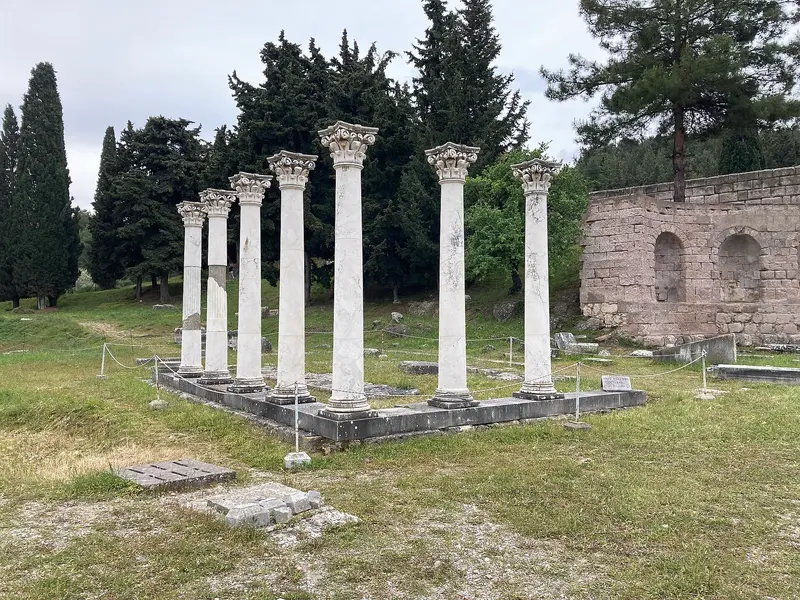
    The sanctuary of Asklepios, god of healing, lies about 3.5 kilometers southwest of Kos Town on a slope overlooking the strait to Turkey. The complex rises over three terraces: The middle one features the remains of the great altar from the 4th century BC and smaller temples, while at the very top stands the Doric Asklepios Temple from the 2nd century BC. According to tradition, the school of medicine in the tradition of Hippocrates taught here. The site was discovered in 1902 by the German archaeologist Rudolf Herzog together with local historian Iakovos Zarraftis. The complex is easily reached from the town by bicycle or car.
    Open in Google Maps
    Plane Tree of Hippocrates
    Steven Fruitsmaak / Wikimedia Commons / CC BY-SA 3.0
    Historic Landmark

    2Plane Tree of Hippocrates

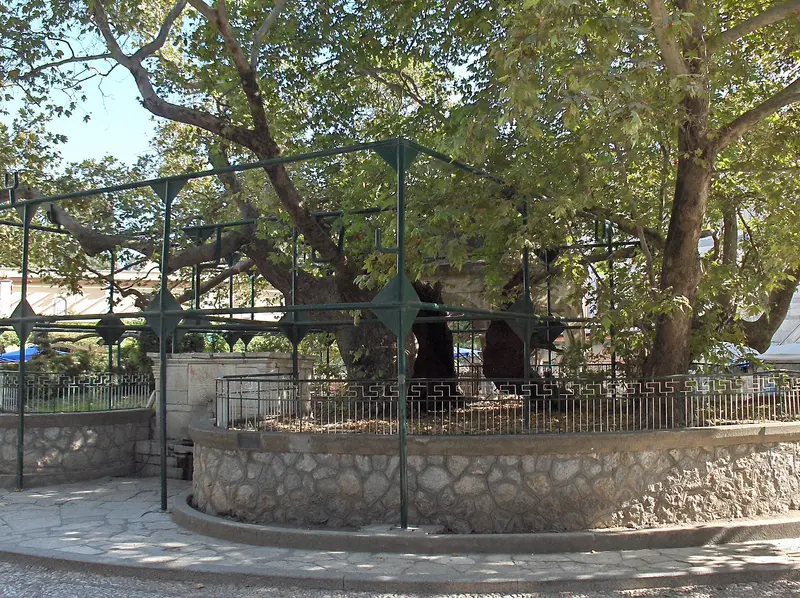
    A mighty plane tree, supported by scaffolding, stands on Plane Tree Square in front of the Knights' Castle. Legend has it that Hippocrates taught his students in its shade, though the present tree is considerably younger than ancient times. Right next to it are the Ottoman Loggia Mosque and a fountain for which an ancient sarcophagus serves as a basin. The square is situated between the harbour and the ancient Agora, making it an excellent starting point for a city tour.
    Open in Google Maps
    Ancient Agora
    JD554 / Wikimedia Commons / CC BY-SA 3.0

    3Ancient Agora

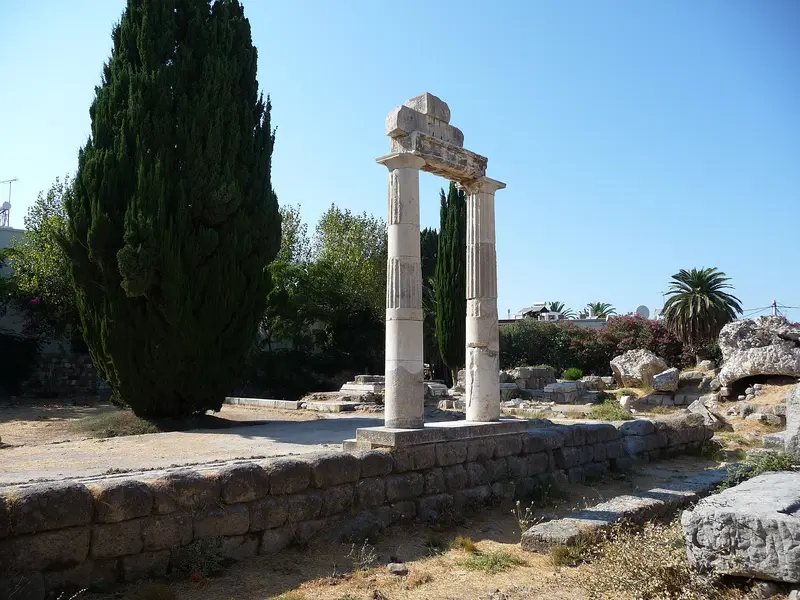
    In the heart of Kos Town lies the excavation site of the ancient Agora, the city's marketplace and island capital from 366 BC. The site was only uncovered after the 1933 earthquake destroyed the overlying houses. Visible are columned halls enclosing a large courtyard on three sides, along with remains of sanctuaries of Aphrodite and Heracles, shops, and sections of the city wall. A large part of the Agora still lies beneath the modern city. The site borders Platanenplatz and is reachable on foot from the harbor in just a few minutes.
    Open in Google Maps
    Zia and the Dikeos
    Robert Ahner / Wikimedia Commons / CC BY-SA 4.0

    4Zia and the Dikeos

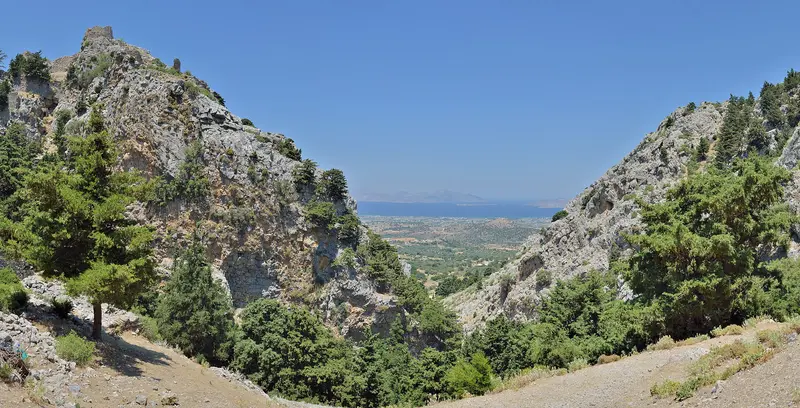
    The mountain village of Zia is located on the northern slope of the Dikeos Massif, the island's highest mountain range. From its terraces, you can gaze out over the north coast to the neighboring islands, and in the evenings, many visitors come up to watch the sunset. From Zia, a drivable track leads to the hiking trail up to the 846-meter-high summit, where the white chapel of Christos tou Dikeou stands. The path is narrow and steep in places, and the ascent takes about one and a half to two hours.
    Open in Google Maps
    Casa Romana
    Ввласенко / Wikimedia Commons / CC BY-SA 4.0
    Historic Landmark

    5Casa Romana

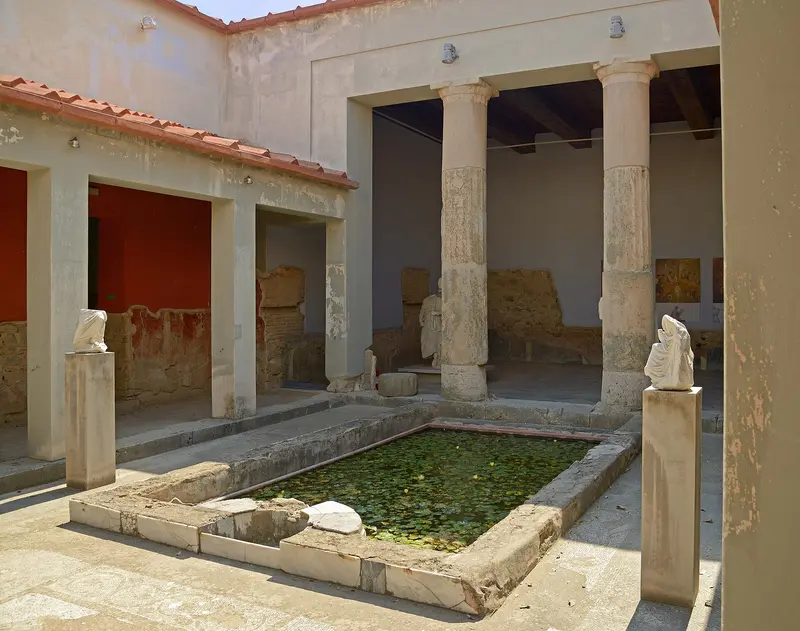
    The Roman town villa, dating from the late 2nd or early 3rd century AD, stands on Hellenistic foundations in the south of Kos Town. It comprises 36 rooms and three courtyards, two of which feature two-story colonnades in the Rhodian style. The floor mosaics depict, among other things, panthers, deer, and sea creatures. After the 1933 earthquake, the Italian archaeologist Luciano Laurenzi excavated the house, and by 1940, it was reconstructed with roofs and walls, allowing you to walk through enclosed rooms today.
    Open in Google Maps
    Pyli and Old Pyli
    Taxiarchos228 / Wikimedia Commons / FAL
    Castle

    6Pyli and Old Pyli

    On a rocky ridge above the modern mountain village of Pyli lie the ruins of Alt-Pyli. The settlement reportedly originated around 1080; the Byzantine castle above it was expanded until the 15th century and has seven towers from various eras. In the early 19th century, inhabitants left after a plague; among the preserved are the churches of Agios Antonios, Panagia Kastriani, and Agioi Asomatoi. A forest path leads some three km up from the new village; admission is free, and from the top, you look out over the north coast all the way to Turkey.
    Open in Google Maps

    Restaurants in Kos

    1

    Oromedon (Zia, Kos)

    The tavern is located in the mountain village of Zia on the slope of Dikeos on Kos. Dishes are cooked according to traditional Dodecanese recipes, many from the wood oven, such as lamb with rosemary, stuffed goat, and pasta with braised veal.
    Show on Google Maps
    2

    Petrino (Kos Town)

    The restaurant is located in a stone house with a bougainvillea-covered terrace right by the western excavations of Kos Town. The cuisine combines Greek Mezedes with meat and fish dishes such as pork fillet with plums or steamed swordfish.
    Show on Google Maps
    3

    Ampavris Taverna (Kos Town)

    Family-run tavern on Makrigianni Street, downtown's south edge, a walk from the marina. Menu offers Greek home cooking: Stifado, lamb chops, Souvlaki, boiled wild greens, plus daily specials.
    Show on Google Maps
    4

    Kali Kardia (Mastichari)

    The blue-and-white tavern sits at Mastichari harbour on the north coast, where boats depart for Kalymnos. It specializes in grilled fish and seafood, alongside fried octopus and calamari.
    Show on Google Maps
    5

    Stamatia (Kefalos)

    The tavern is right on Kefalos Bay beach in the island's southwest, with sea views. Traditional Greek cuisine with fish and calamari is served for lunch and dinner.
    Show on Google Maps

    Food and Drink

    The cuisine of Kos has a rustic character: goat and sheep's cheese, bulgur, and garden-fresh vegetables are staples on many taverna tables, with fresh fish also featuring along the coast.

    Krasotyri

    The Wine Cheese of Kos is a white sheep or goat cheese that ripens for at least a month in wine pomace. This gives it a reddish rind and a slightly sour aroma.

    Pligouri accompanied by Pork Meat

    Coarse bulgur is cooked with pork, cumin, olive oil, and broth until the meat is tender. A typical dish of the island.

    Stuffed Zucchini blossoms

    The blossoms are filled with rice, onion, tomato, parsley and mint, and braised in olive oil. In early summer, they feature on many menus.

    Lambropites

    Small yeast dough pastries with a filling of white island cheese, Anthotyros, and egg, traditionally baked for Easter.

    Evraiko

    Scrambled eggs with braised onions and tomatoes in olive oil, a simple island specialty.

    History and Culture

    The Island of HippocratesKos is considered the birthplace of the physician Hippocrates, who lived in the 5th century BC. After his death, the Asklepieion, a sanctuary of the god of healing where the sick were treated, was built outside the city. In 366 BC, the capital was moved to its current location by the harbour, and the foundations of the ancient city date from this period.Knights, Ottomans, and ItaliansFrom the early 14th century, the Knights Hospitaller ruled the island from Rhodes and built Neratzia Castle by the harbour. This was followed by almost four centuries of Ottoman rule, remembered by the mosques in the Old Town. In 1912, Kos came under Italian administration; it was not until 1947 that the island, along with the rest of the Dodecanese, became part of Greece.The 1933 EarthquakeA severe earthquake destroyed large parts of the city in 1933. Italian archaeologists used the debris to uncover the ancient Agora, the western excavations, and the Casa Romana, and the city was re-planned with buildings in the Italian style of the 1930s, including the Archaeological Museum in Eleftherias Square.

    Nightlife

    1

    Global

    The café-bar on Alexandrou-Ypsilantou Street sits on the edge of the ancient Agora in the old town's nightlife quarter. By day, enjoy coffee; by night, cocktails and music, often jazz and blues, with DJs spinning later.
    Show on Google Maps
    2

    Zero Cafe Bar

    The bar and beer garden is located near Kos Town's port. It offers a wide selection of Greek and imported beers and ciders, plus a small cocktail menu.
    Show on Google Maps
    3

    Sitar Cocktail Bar

    The cocktail bar on Riga-Fereou Street is steps from the harbor; from your seats, you look out at the boats. Evenings offer cocktails and music in a relaxed atmosphere, opening early for coffee in the mornings.
    Show on Google Maps

    Arrival and Travel

    Getting ThereKos Ippokratis Airport is located near Antimachia, approximately 23 kilometers from Kos Town. During peak season, many direct flights from Central Europe land here; year-round connections to Athens are available. KTEL buses run from the airport to Kos Town, Kardamena, Kefalos, and Mastichari.The ferry port is located in the heart of Kos Town. Blue Star connects Kos with Piraeus, with journeys lasting approximately 10 to 16 hours depending on the route. Ferries and catamarans travel to Rhodes, Kalymnos, Patmos, Leros, Nisyros, and the other Dodecanese islands, with additional services to Bodrum in Turkey. From Mastichari, smaller ferries cross to Kalymnos in about half an hour.Getting Around the IslandKTEL buses connect Kos Town with the island's larger villages, while city buses operate within the town itself. The town and the flat north coast are easily explored by bicycle, with rental bikes available in many places. For the mountain villages and the beaches in the southwest, a rental car or scooter is practical.

    Day trips

    Nisyros

    The small volcanic island lies south of Kos. Excursion boats take you over; from Mandraki, you drive into the caldera and descend into Stefanos Crater.

    Kalymnos

    You can quickly reach Kalymnos from Mastichari or Kos Town. The island is known for its sponge-diving tradition and the climbing rocks on the west coast.

    Bodrum

    The Turkish port city is located within sight, opposite Kos Town, and can be reached by ship. Overlooking the harbour is St. Peter's Castle, also built by the Knights Hospitaller. To enter, you'll need a valid passport or ID card.

    Accommodations in Kos

    Find perfect stay in Kos

    Booking.com* (Affiliate link)
    Search Hotels
    Agoda* (Affiliate link)
    Search Hotels
    Airbnb
    Vacation Rentals

    * Affiliate link: if you book through it, we earn a small commission. The price stays the same for you.

    Campgrounds in Kos

    Find perfect campground in Kos

    Search via Google Maps
    Campgrounds nearby (15km)
    Camping.info
    Find Campgrounds
    Park4Night
    RV Parks & Camping

    Plan your trip to Kos

    Save places, build a route and plan your city trip, all in one place.

    1. 1
      1234

      Round trip

      12 days · 4 stops

      Saved

      Pick a route

      Take a ready-made round trip or build your own from saved places.

      Open bookmarks
    2. 2

      Trip to Kos

      Live
      • 1Asklepieion3 days
      • 2Plane Tree of Hippocrates4 days
      • 3Ancient Agora5 days
      Budget

      Plan your trip

      The planner sorts stops, days and budget. Plan together in real time.

      Start trip planning
    3. 3
      9:41 No signal
      Available offline

      Use it on the road

      Download the guide to your phone and use it offline on location.

    Nearby

    Leros

    Leros

    Leros is the only Greek island whose townscape is marked by Italian Rationalism: Lakki was entirely re-planned in the 1930s as a naval base, featuring round arches, arcades, and wide avenues. Added to this are bunkers, tunnels, and a war museum from the 1943 battle. While beach holidays are also available, the island is primarily a place for those who want to read history in its streetscape.
    Symi

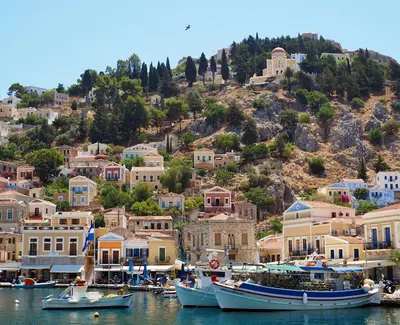
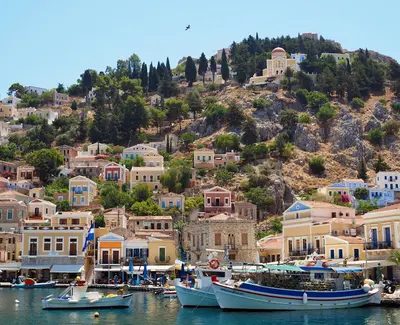
    Symi

    Symi is Greece's only island where an entire neoclassical port town is heritage-listed: New construction has been forbidden for decades, so Gialos looks like 1900. Sponge diving and shipbuilding funded the town, making the island rich and home to over 20,000 in the 19th century. Today, about 2,500 people live here; daily, the island fills with Rhodos day-trippers, leaving nightly.
    Patmos

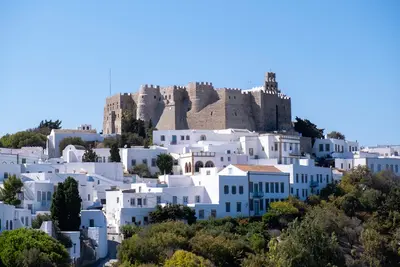
    Patmos

    Patmos is the Dodecanese's northernmost island and has been a monastic island for almost a thousand years: In 1088, a Byzantine emperor ceded it to the monk Christodoulos, and the monastery still shapes its layout, land ownership, and daily rhythm. The Monastery, the Cave of the Apocalypse, and the Chora are jointly on the UNESCO World Heritage List. Large hotels and nightlife are scarce; this is by design, not by chance.
    Dodecanese

    Dodecanese

    The Dodecanese, a long chain off the Turkish coast, has only belonged to Greece since 1948. Here, more than elsewhere, the Knights Hospitaller, Ottomans, and Italians shaped its character. The result is an architectural style that has little in common with the white cube houses of the Cyclades: knightly castles, mosques, monastic fortresses, and Italian administrative buildings. The group ranges from Rhodes, with over 100,000 inhabitants, to islands with just a few hundred.
    Rhodes (City)

    Rhodes (City)

    Rhodes Town captivates as a UNESCO World Heritage site with an exceptionally well-preserved medieval Old Town, deeply rooted in the history of the Knights of St. John. Here, you'll explore a fascinating blend of Crusader castles and Ottoman architecture, brought to life in winding alleys and historic squares. Unmissable highlights include the imposing Palace of the Grand Master and the impressive Street of the Knights. Outside the ancient walls, the modern part of the city entices with the picturesque Mandraki Harbour, the former site of the Colossus of Rhodes, as well as diverse shopping opportunities. To fully savor the unique atmosphere, you should explore the Old Town in the early morning or late afternoon hours. The months of May, June, and September are ideal for a visit to experience milder weather and fewer crowds.