Fernweh: Home
ExploreGuideDestinationsMy tripsMy trip
de|en
All Places & RegionsRound tripsNight trains in EuropeAll highlightsAbout FernwehFAQPrivacy PolicyImprint
Download on the App StoreGet it on Google Play
ExploreGuideDestinationsMy tripsMy trip
    • Overview
    • Places in the region
    • Food culture
    • Best travel time
    • Culture
    • Getting around
    • Round trips
    • Nearby
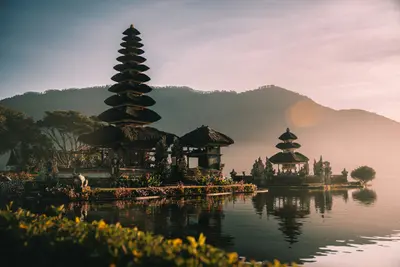
    East Java

    Photo: Unsplash

    Indonesia

    East Java

    Region

    East Java stretches from Surabaya to the Bali Strait. Most visitors come for the volcanoes: Bromo in the Tengger Massif, Semeru, Java's highest peak, and Ijen with its turquoise crater lake.

    by Felix Gillen

    1. Home
    2. Destinations
    3. Indonesia
    4. East Java
    East Java stretches from Surabaya to the Bali Strait. Most visitors come for the volcanoes: Bromo in the Tengger Massif, Semeru, Java's highest peak, and Ijen with its turquoise crater lake.
    Indonesia travel guideSee the round tripPlan a trip with East Java

    Contents

    • Overview
    • Places in the region
    • Food culture
    • Best travel time
    • Culture
    • Getting around
    • Round trips
    • Nearby
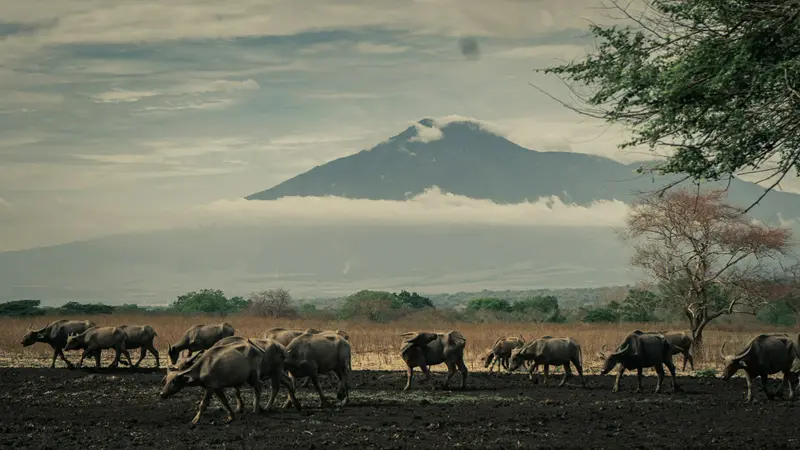
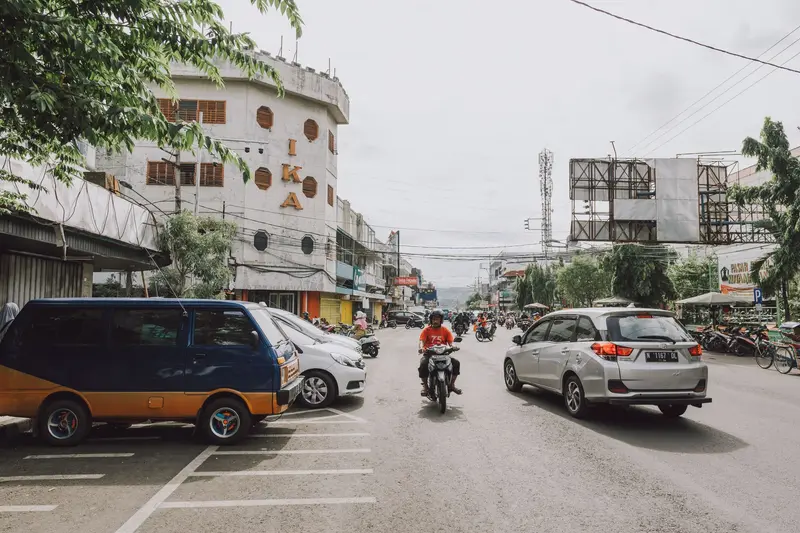
    East Java has around 41 million inhabitants, its capital is Surabaya. The classic route leads from Yogyakarta or Surabaya via Malang to Bromo and then on to Banyuwangi to Ijen, from where the ferry crosses to Bali. Thanks to its elevation, Malang is cool and a good starting point for Bromo and Semeru. In the northeast lies the island of Madura, known for bull races and Sate. Near Banyuwangi, Baluran National Park offers savanna and wildlife viewing. You usually visit both Bromo and Ijen at night or in the early morning.
    Banyuwangi

    Photo: Unsplash

    Place 1 of 4

    Banyuwangi

    Banyuwangi is located on the eastern tip of Java, opposite Bali. The city itself is quiet; for travelers, it mainly serves as a starting point for Ijen, the Baluran and Alas Purwo National Parks, and the ferry to Bali.

    Discover
    Bromo Tengger Semeru National Park

    Photo by Lim Jia Le on Pexels

    Place 2 of 4

    Bromo Tengger Semeru National Park

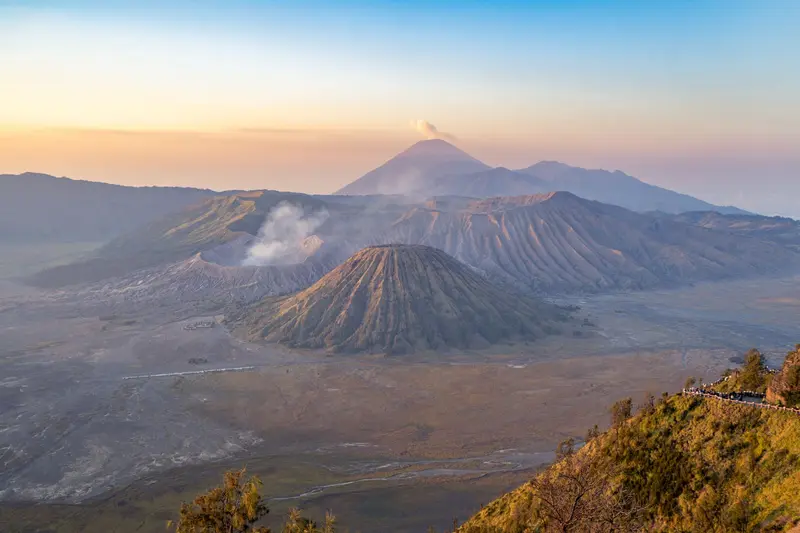
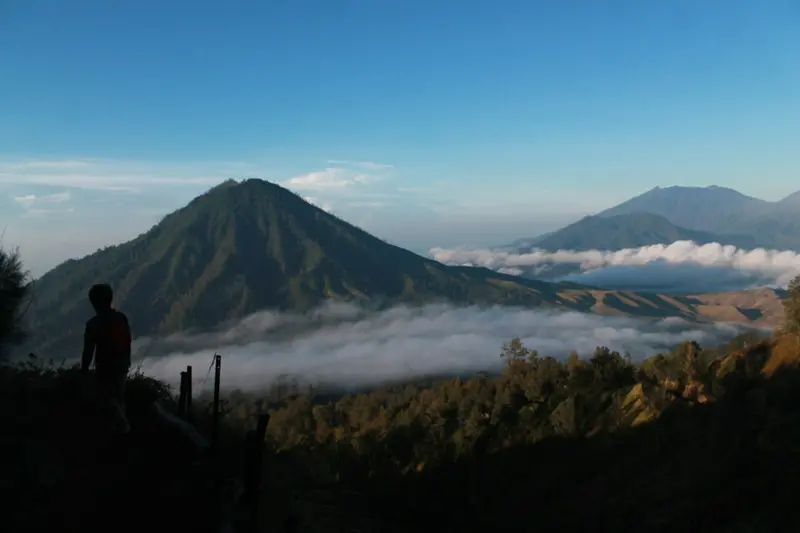
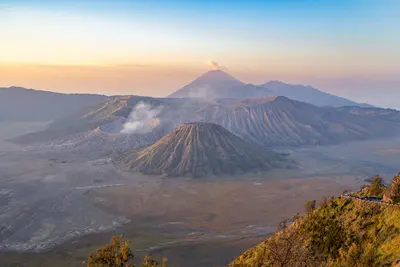
    The National Park encompasses the Tengger Caldera with the smoking Bromo, a vast sea of sand, and Semeru, at 3,676 m Java's highest mountain. The sunrise over the caldera is one of Indonesia's most famous views.

    Discover
    Ijen

    Photo by Ronald Pang on Pexels

    Place 3 of 4

    Ijen

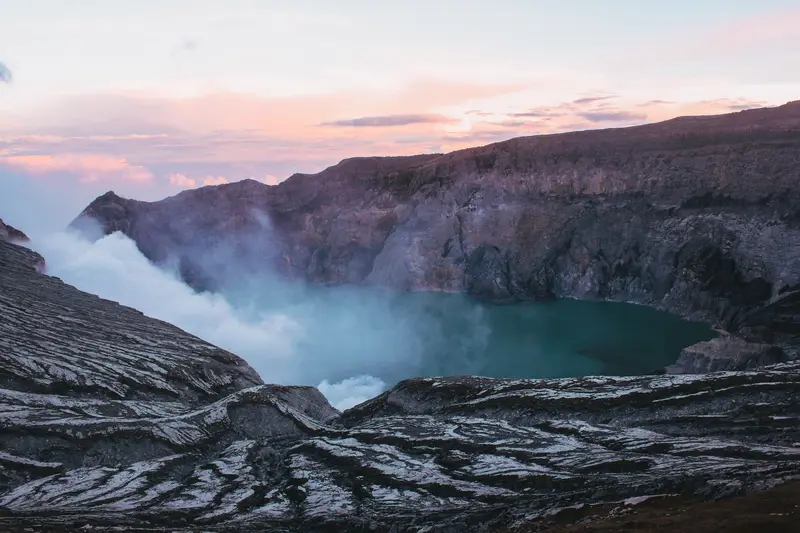
    The Ijen volcano in East Java harbors a turquoise, highly acidic crater lake. At night, blue flames from burning sulfur gases glow on the crater floor, by day, workers carry sulfur chunks from the crater.

    Discover
    Madura

    Photo by pierre matile on Pexels

    Place 4 of 4

    Madura

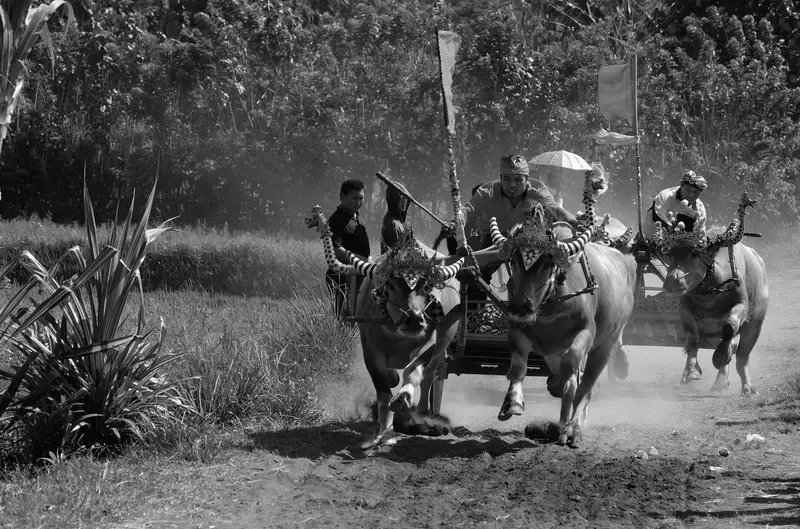
    Madura lies northeast of Surabaya and is accessible via the Suramadu Bridge. The dry, flat island is known for bull races, salt fields, Batik in vibrant colors, and its Sate cuisine, which is widespread throughout Indonesia.

    Discover

    More places in East Java

    Malang

    Tamba Budiarsana·Pexels

    Malang

    Malang is located at an altitude of around 450m in the highlands of East Java, and is cooler than Surabaya. Colonial streetscapes, many students, and its proximity to Bromo make the city a popular stopover.
    Surabaya

    Unsplash

    Surabaya

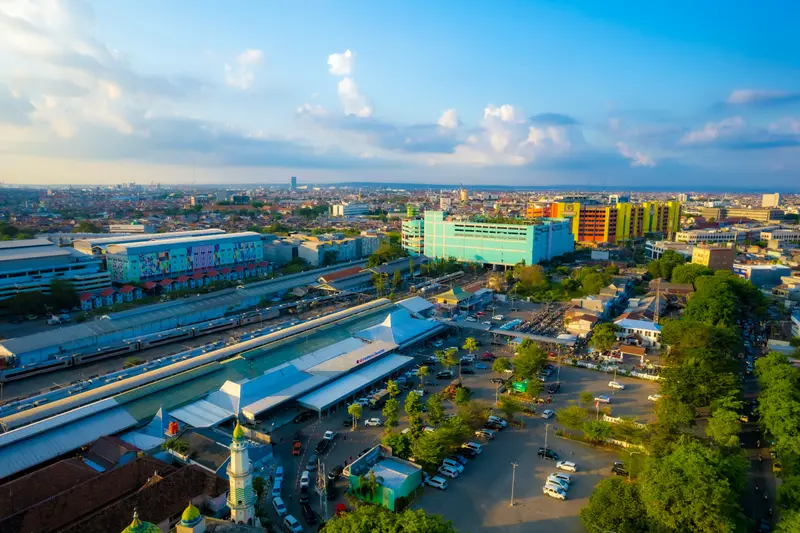
    Surabaya is the capital of East Java and, after Jakarta, Indonesia's second-largest city. The port city is primarily a transport hub, but it also boasts an old Arab quarter, colonial buildings, and a unique local cuisine.

    Sights in East Java

    Discover the most important sights and attractions

    Baluran National Park

    Anggysabrita / Wikimedia Commons / CC BY-SA 4.0, mod.

    National Park

    Baluran National Park

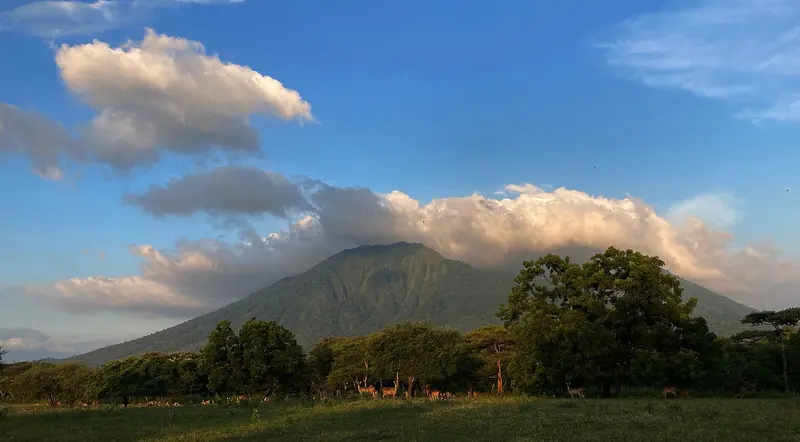
    National Park on Java's northeast tip with savanna, dry forest, and mangroves. On Bekol Savanna, you'll see Banteng cattle, deer, and monkeys.
    Open in Google Maps

    Food & Drink

    Local specialities

    In Ost-Java you'll find local restaurants, cafés and markets with regional specialities. Taste your way through the dishes typical of the region.

    Best Time to Visit

    When is the best time for your trip?

    May
    June
    July
    August
    September
    October
    27–28°C·7–102 mm(little rain)
    From May to October, it's the dry season in East Java, and visibility for sunrise at Bromo and Ijen is best then. In August and September, only 9 and 7 mm of rain fall in Surabaya.
    The monthly figures are for Surabaya (Juanda Airport) (1991-2020 climate normals from the World Meteorological Organization (WMO)). Most rain falls there in January with 272 mm. At Bromo and Ijen, above 2,000 m, temperatures drop to a few degrees at night, pack warm clothes.

    Seasons

    Jan
    Feb
    Mar
    Apr
    May
    Jun
    Jul
    Aug
    Sep
    Oct
    Nov
    Dec
    Dry season
    Shoulder months
    Monsoon
    Best Time to Visit
    ▶Show detailed monthly data
    MonthTemp (°C)Rain (mm)
    January27.1272
    February27.0251
    March27.2231
    April27.7164
    May27.8102
    June27.166
    July26.631
    August26.69
    September27.47
    October28.435
    November28.396
    December27.5214

    Culture and History

    HistoryIn 1293, Raden Wijaya founded the Hindu-Buddhist empire of Majapahit, with its capital near Trowulan. Under King Hayam Wuruk (1350 to 1389) and his chancellor Gajah Mada, it reached its greatest extent. Following succession disputes, it disintegrated and fell in 1527 to an attack by the Sultanate of Demak. In the far east, the Hindu kingdom of Blambangan persisted until it came under Dutch rule in the second half of the 18th century. In autumn 1945, Indonesian independence fighters battled British troops in Surabaya. To commemorate the battle, November 10th is observed nationwide as Heroes' Day (Hari Pahlawan).Religion and BeliefsThe majority of the population is Muslim. In Surabaya, the Ampel Mosque houses the tomb of Sunan Ampel, one of the nine saints (Wali Songo) credited with spreading Islam on Java. In the villages around Mount Bromo live the Tengger people, who practice a unique form of Hinduism. During the Yadnya Kasada festival on the 14th day of their month of Kasada, they journey to Pura Luhur Poten temple at the foot of the volcano and cast vegetables, fruits, animals, and money as offerings into the crater. This custom stems from the legend of Roro Anteng, who is said to have fled to Mount Bromo after the fall of Majapahit.Society and CustomsAround Banyuwangi live the Osing people, descendants of Blambangan's population, whose most famous art form is the Gandrung dance. On Madura, the Madurese people live with their own language. From approximately July to October, the bull races known as Karapan Sapi take place there, where pairs of bulls pull wooden sleds over a distance of around 130 meters; the finale is held in Pamekasan.Visitor EtiquetteIn mosques, cover your shoulders and knees and remove your shoes. During Ramadan, avoid demonstratively eating or drinking in public during the day. Kasada is a religious ceremony: keep your distance from priests and the procession, do not block the path, and photograph without flash.

    Getting There and Around

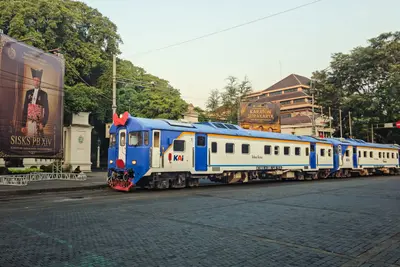
    Surabaya has the region's largest airport; Malang and Banyuwangi also receive flights. Trains connect Yogyakarta, Surabaya, Malang, and Banyuwangi. Jeeps and minibuses go to Bromo and Ijen; many book a tour that connects both volcanoes. From Ketapang near Banyuwangi, a ferry runs around the clock to Gilimanuk on Bali.

    Round trips through this region

    Java and Bali: Temples, Volcanoes and Rice Terraces

    Java and Bali: Temples, Volcanoes and Rice Terraces

    The route covers Yogyakarta (Borobudur, Prambanan), East Java's Bromo and Ijen volcanoes, and on Bali, Ubud, Sidemen, Amed, Nusa Lembongan, Uluwatu. Long-distance trains run between Yogyakarta and East Java. For Ijen, overnight in Banyuwangi; ferry from Ketapang crosses to Gilimanuk in about an hour. For Bali, a car with driver is most convenient.

    21 Days
    8 stops
    Open jaw

    Lim Jia Le·Pexels

    Nearby

    Pemuteran and Menjangan

    Pemuteran and Menjangan

    Pemuteran, in northwest Bali, is a quiet coastal village and a starting point for diving and snorkeling trips to Menjangan Island in West Bali National Park.

    Chafidwahyu·CC BY-SA 4.0

    Solo (Surakarta)

    Solo (Surakarta)

    Solo, officially Surakarta, is, alongside Yogyakarta, the second hub of Javanese court culture. Two royal houses, batik districts, and a distinctive cuisine characterize the city, which is quieter and less touristy than its neighbor.

    Andri Wijayanto·Pexels

    Lovina

    Lovina

    Lovina on Bali's north coast is a quiet string of coastal villages with dark sandy beaches. It is known for its morning dolphin boat trips, hot springs, and waterfalls in the hinterland.

    Ken Eckert·CC BY-SA 4.0

    Munduk

    Munduk

    Munduk is situated at about 800 meters in Bali's central highlands. Coffee and clove plantations, waterfalls, and the crater lakes Tamblingan and Buyan shape this cool, often misty landscape.

    Mike Dickison·CC BY 4.0

    Bali

    Bali

    Bali is Indonesia's sole majority Hindu island. Temple festivals, offerings, and dance shape daily life, rice terraces and volcanoes the interior. The south is heavily touristed, the east and north much quieter.

    Katarzyna Zygnerska·Unsplash

    Your next steps

    East Java is in Indonesia. Ways to carry on from here.

    • More in Indonesia

      Highlights, areas, routes and the best time to travel for all of Indonesia.

      Indonesia travel guide
    • Round trips with East Java

      One route passes through East Java, with stops, nights and a map.

      See the round trip
    • Plan a trip with East Java

      The Guide asks about season, length and who is coming, and suggests a trip with East Java.

      Plan the trip
    Sources & method

    • Photos: Wikimedia Commons, Unsplash. Each photo carries its credit.
    • Place data such as addresses and ratings comes from Google Maps.
    • The content is based on web research from public, traceable sources. How the content is made · The role of AI