Discover the most important sights and attractions
Sights in Erawan National Park
Erawan Water Fall level-4
The Erawan Waterfall on Level 4, known as อกนางผีเสื้อ (Ok Nang Phisuea) or 'Butterfly Breast', offers you another impressive natural experience in Erawan National Park. This level features a large, clear pool perfect for swimming and surrounded by lush vegetation. Here you'll find a distinctive rock formation that gives the waterfall its poetic name. The hike to this point is moderate and leads you through dense rainforest, where you can observe the local flora and fauna. The emerald green pools are a result of limestone deposits that filter the water and give it its characteristic color. Our Tip: To fully enjoy the tranquility and beauty of this spot and avoid the largest crowds, it is advisable to visit the waterfall early in the morning or on weekdays. For an undisturbed photo of the pool and its surrounding nature, you should use the side paths, which are often less frequented.
The Erawan Waterfall, Level 1, marks the beginning of your ascent through one of Thailand's most impressive natural wonders in Erawan National Park. This first level, also known as 'Lai Kuen Lung', is easily accessible and already offers a glimpse of the emerald pools and cascading waterfalls awaiting you on the higher levels. Here you often find quiet spots to enjoy nature and refresh yourself in the cool, clear waters. Although it's the lowest level, it's already a picturesque place for photos and to soak in the tropical surroundings. The entire waterfall is named after the three-headed elephant Erawan from Hindu mythology, whose form the seven levels of the waterfall are said to resemble. Our Tip: Visit Level 1 early in the morning, right after the park opens, to enjoy the tranquility and avoid the largest crowds, before you head up to the higher levels. Make sure to wear non-slip shoes, as the paths can be damp.
Erawan Waterfall Level 3, also known as “Phanom Phra”, is a particularly charming section within Erawan National Park in Thailand. You reach it via a well-maintained path that winds through the lush jungle. This level is characterized by its distinctive, emerald-green pools, which invite you to swim and offer a refreshing cool-down. The name of the entire waterfall is derived from the three-headed elephant Erawan from Hindu mythology, with the seven levels of the waterfall said to symbolize its heads. Level 3 is an excellent example of the natural beauty you will find here. Our Tip: It’s best to visit this section early in the morning on a weekday to fully enjoy the tranquility and cooler temperatures and avoid the largest crowds. The lighting conditions are also ideal for impressive photos of the clear pools. Ensure you wear non-slip footwear for the ascent.
The Erawan Waterfall in Erawan National Park is an impressive natural phenomenon, named after Erawan, the three-headed elephant of Hindu mythology. The seventh and highest level, often called Phu Pha Erawan, is considered the crowning glory of the waterfall and symbolizes the head of the mythical elephant. After a challenging but rewarding ascent through dense jungle, you reach this picturesque tier. Here awaits a large, emerald-green pool, inviting you to swim. The clear, cool water offers a welcome refreshment after the hike, and the natural surroundings provide a peaceful atmosphere. Look out for the small fish living in the pools. Our Tip: Start your ascent early in the morning, ideally before 9 AM, to avoid the biggest crowds and fully enjoy nature's tranquility. Sturdy footwear is essential for the partially slippery path.
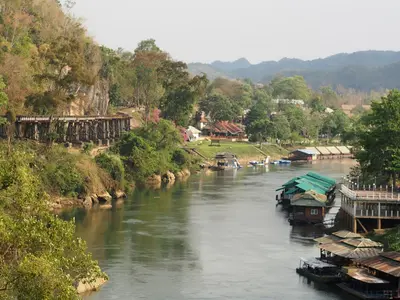
The experience at แพป้าตุ๋ยแม่น้ำใส เขื่อนศรีนครินทร์ ล่องแพกาญจนบุรี offers an authentic opportunity to discover the tranquil nature of Srinakarin Lake in Kanchanaburi province. This reservoir, created by the construction of the Srinakarin Dam in the late 1970s for energy generation and irrigation, has evolved into a popular ecotourism destination. You'll spend time on a traditional floating house, surrounded by lush vegetation and the clear waters of the lake, known for its vastness and numerous small islands.These floating houses, like Pa Tui's, are often simple yet comfortably furnished, offering direct access for swimming and relaxation. It's an ideal spot to escape the hustle and bustle and enjoy nature's serenity. Practical tip: Plan your visit during the dry season (November to February) for more pleasant temperatures and less rain. Be sure to bring swimwear, sun protection, and insect repellent. Reaching the floating house usually requires a boat transfer from one of the piers on the lake, which you should coordinate with the operator in advance.
These places are nearby — perfect for additional days or a day trip.
Sai Yok National Park
A spacious park with impressive waterfalls, caves, and a lush jungle landscape, ideal for nature explorations.
Hellfire Pass Interpretive Centre and Memorial Museum
A poignant memorial and open-air museum documenting the brutal history of the 'Death Railway' and the suffering of prisoners of war.
Kanchanaburi City
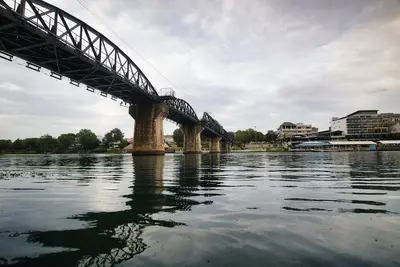
Kanchanaburi City, situated on the Mae Klong River, is a place of profound historical significance in Thailand. The city is world-renowned for the Bridge over the River Kwai, a central element of the infamous Death Railway from World War II. You can walk across the bridge and ride a section of the historic railway line to experience its history firsthand. The JEATH War Museum and the Allied War Cemeteries offer further insights into the fate of the prisoners of war. Beyond its wartime history, the nearby Erawan National Park, with its seven-tiered waterfalls, entices visitors for a refreshing day trip. For authentic insights into local life, a visit to the bustling night market is recommended. The months of November to February offer the most pleasant temperatures for your explorations.
West Thailand (Kanchanaburi and area)
West Thailand, shaped by the historic province of Kanchanaburi, offers a unique blend of poignant war history and breathtaking nature. From the iconic Bridge over the River Kwai to the majestic waterfalls of Erawan National Park, this region entices with unforgettable experiences and profound cultural significance.
Sangkhlaburi
Sangkhlaburi, in western Thailand, boasts a multicultural atmosphere and picturesque setting on Khao Laem Lake. Its most prominent landmark is the over 400-meter-long Mon Bridge (Saphan Mon), Thailand's longest wooden bridge, connecting the Mon village with the Thai side. It serves as a central meeting point and offers insights into the traditional morning alms collection by monks. During the drier months, the submerged temple Wat Saam Prasop becomes visible, a remnant of the old village flooded for the reservoir in 1980. Explore the local culture at the weekly market or visit unique Mon temples like Wat Wang Wiwekaram. The region is home to a diverse population of Mon, Karen, and Thai, reflected in its local cuisine and customs. For an authentic experience, a visit during the cooler months from November to February is recommended, to enjoy the pleasant climate and optimal visibility of the submerged temple.