Fernweh
    ExploreTravel GuidesMy Trips
    de|en
    About FernwehImprintFAQPrivacy Policy
    ExploreTravel GuidesMy Trips
    Hellfire Pass Interpretive Centre and Memorial Museum

    Hellfire Pass Interpretive Centre and Memorial Museum

    Point of InterestCulture
    1. Home
    2. Destinations
    3. Thailand
    4. West Thailand (Kanchanaburi and area)
    5. Hellfire Pass Interpretive Centre and Memorial Museum
    A poignant memorial and open-air museum documenting the brutal history of the 'Death Railway' and the suffering of prisoners of war.

    Sehenswürdigkeiten

    Discover the most important sights and attractions

    Hellfire Pass Interpretive Centre

    The Hellfire Pass Interpretive Centre in Thailand commemorates one of the darkest chapters of the Second World War. Here, you will learn the harrowing story of the construction of the Thailand-Burma Railway, also known as the 'Death Railway', built under inhumane conditions by Allied prisoners of war and Asian forced labourers. Hellfire Pass, or Konyu Cutting, was a particularly brutal section, primarily dug with hand tools and under extreme time pressure, claiming countless lives.The centre offers a comprehensive exhibition with artefacts, photos, and personal accounts that document the suffering and hardships of the labourers. From here, a well-maintained walking trail leads down to the pass itself, where you can explore the remnants of the railway track and the deep cutting. The silence and the scale of the place are deeply moving and invite reflection.Our Tip: Visit the centre early in the morning to avoid the oppressive heat and larger crowds. Allow at least two to three hours for your visit to the museum and the subsequent walk around the pass itself. Be sure to wear sturdy footwear and carry ample water, as the walking trail can be quite demanding. This is indeed a place of solemn remembrance and quiet contemplation, providing a profound insight into both human resilience and the sheer cruelty of war.
    Open in Google Maps

    Wat Hat Ngiew

    The Wat Hat Ngiew is a local Buddhist temple near the Hellfire Pass Interpretive Centre, offering an authentic glimpse into the region's spiritual life. Here you'll find a serene complex, typical of rural Thai Wats, featuring a central Ubosot (ordination hall) and a collection of Buddha statues. The architecture is simple yet appealing, often boasting colourful roofs and detailed gable decorations. The temple serves as an important gathering point for the local community and is a place of devotion and meditation. Take the opportunity to admire the murals inside the main hall, which often depict scenes from the life of Buddha or local legends. Our Tip: Please ensure appropriate attire, covering shoulders and knees, and remove your shoes before entering the prayer halls. An early morning visit allows you to experience the peaceful atmosphere without many visitors and perhaps even observe monks during their daily rituals.
    Open in Google Maps

    Essen & Trinken

    Accommodations in Hellfire Pass Interpretive Centre and Memorial Museum

    Accommodations in Hellfire Pass Interpretive Centre and Memorial Museum

    Find perfect stay in Hellfire Pass Interpretive Centre and Memorial Museum

    Booking.com
    Search Hotels
    Agoda
    Search Hotels
    Airbnb
    Vacation Rentals
    Hotels.com
    Hotels Worldwide
    Hostelworld
    Hostels

    Locations nearby

    These places are nearby — perfect for additional days or a day trip.

    Sai Yok National Park

    Sai Yok National Park

    A spacious park with impressive waterfalls, caves, and a lush jungle landscape, ideal for nature explorations.
    Erawan National Park

    Erawan National Park

    Famous for its seven-tiered, emerald-green waterfalls, which are considered among Thailand's most beautiful and beckon for refreshing dips.
    Kanchanaburi City

    Kanchanaburi City

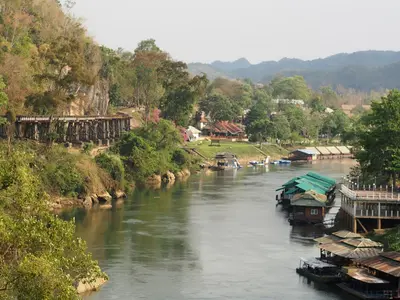
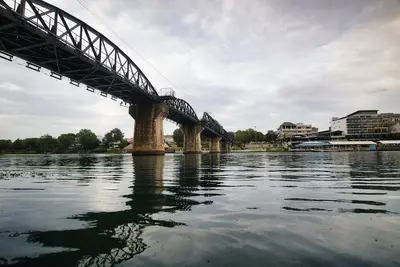
    Kanchanaburi City, situated on the Mae Klong River, is a place of profound historical significance in Thailand. The city is world-renowned for the Bridge over the River Kwai, a central element of the infamous Death Railway from World War II. You can walk across the bridge and ride a section of the historic railway line to experience its history firsthand. The JEATH War Museum and the Allied War Cemeteries offer further insights into the fate of the prisoners of war. Beyond its wartime history, the nearby Erawan National Park, with its seven-tiered waterfalls, entices visitors for a refreshing day trip. For authentic insights into local life, a visit to the bustling night market is recommended. The months of November to February offer the most pleasant temperatures for your explorations.
    West Thailand (Kanchanaburi and area)

    West Thailand (Kanchanaburi and area)

    West Thailand, shaped by the historic province of Kanchanaburi, offers a unique blend of poignant war history and breathtaking nature. From the iconic Bridge over the River Kwai to the majestic waterfalls of Erawan National Park, this region entices with unforgettable experiences and profound cultural significance.
    Sangkhlaburi

    Sangkhlaburi

    Sangkhlaburi, in western Thailand, boasts a multicultural atmosphere and picturesque setting on Khao Laem Lake. Its most prominent landmark is the over 400-meter-long Mon Bridge (Saphan Mon), Thailand's longest wooden bridge, connecting the Mon village with the Thai side. It serves as a central meeting point and offers insights into the traditional morning alms collection by monks. During the drier months, the submerged temple Wat Saam Prasop becomes visible, a remnant of the old village flooded for the reservoir in 1980. Explore the local culture at the weekly market or visit unique Mon temples like Wat Wang Wiwekaram. The region is home to a diverse population of Mon, Karen, and Thai, reflected in its local cuisine and customs. For an authentic experience, a visit during the cooler months from November to February is recommended, to enjoy the pleasant climate and optimal visibility of the submerged temple.