The Damnoen Saduak Floating Market is located in Ratchaburi Province, approximately 100 kilometres southwest of Bangkok, on a 32-kilometre-long canal dug between 1866 and 1868 by order of King Mongkut to connect the Mae Klong and Tha Chin…
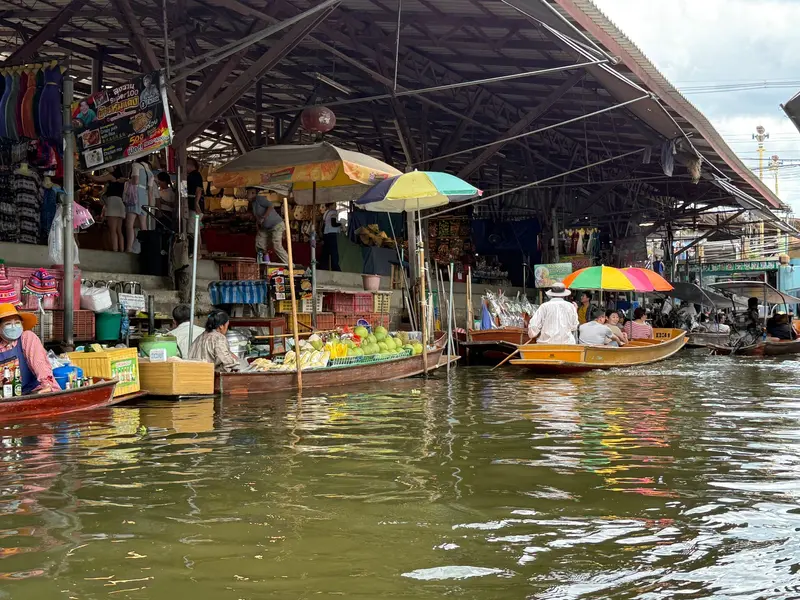
The Damnoen Saduak Floating Market is located in Ratchaburi Province, approximately 100 kilometres southwest of Bangkok, on a 32-kilometre-long canal dug between 1866 and 1868 by order of King Mongkut to connect the Mae Klong and Tha Chin rivers. Vendors sell fruit, noodle soups, and snacks from flat wooden boats.The market is very well-known and heavily geared towards visitors: Besides the vendor boats, souvenir stalls crowd the banks, and longtail boats take groups through the canals. It's busiest between approximately 7 and 9 AM; the market remains active until midday.Prices are negotiable, including for boat trips. An alternative with a predominantly Thai audience is the Amphawa evening market in Samut Songkhram, which takes place from Friday to Sunday.
Sehenswürdigkeiten
Discover the most important sights and attractions
Maeklong Railway Market (Talat Rom Hup)
In Samut Songkhram, the Maeklong Railway runs right through a fresh market. Just before each passage, traders pull back awnings and displays from the tracks; afterwards, everything is set up again. Hence the nickname Talat Rom Hup, Market of the Folded Umbrellas. Only a few trains run daily on this section, check the times beforehand.
One of the jetties where boat trips into the canals begin is located at the edge of the market area. The price is negotiated per boat and route, not per person. Before boarding, clarify how long the trip takes and if stops at souvenir shops are planned. From the jetty, the market can also be reached on foot via the riverside paths.
Village temple north of the market, also known as Wat Soon, active and without tourist traffic. Quiet courtyard with an ordination hall by the canal. A good antidote to the market crowds, just a few minutes away by boat or motorcycle taxi. Keep shoulders and knees covered, remove shoes before entering the halls.
The market's main canal, where boats, stalls, and visitors gather. Wooden houses on stilts line both sides. Mornings are the busiest, tapering off towards midday.
The market in Amphawa, on a Mae Klong tributary near Wat Amphawa Chetiyaram, is only open Fri-Sun, approx. 3-10 PM. The visitors are mostly Thai. A Damnoen Saduak alternative if too crowded, but only on weekends.
Restaurant with a café in Damnoen Saduak, quieter than the canal food stalls and with indoor seating. Handy if you need a shaded break after the market.
Mookata eatery on the road between Samut Songkhram and Bang Phae: domed grill plate over coals, broth simmering around it with vegetables and noodles. Eaten in groups for extended periods, evening operation.
Noodle spot in Damnoen Saduak, away from the market. Kuay Teow, with standard options. You pick noodle width and toppings. Small, quick, attracting locals, not market crowds.
Food is served on the water and along the banks: Some boats cook directly, while food stalls line the jetties. The selection is geared towards instant consumption in small portions – perfect for tasting, less ideal for a leisurely meal. Ratchaburi province is also renowned for its coconut sugar and fruits, sold directly from the boats.
Boat Noodles
The dark, hearty noodle soup, served from the boats. Portions are very small, so they can be passed over the water; you eat several small bowls in a row.
Coconut ice, coconut sugar
The region thrives on coconut palms. Ice cream in half coconut shells, coconut milk pudding, and palm sugar in small molds are sold, a typical souvenir from Ratchaburi.
Grilled from the Boat
Fish, squid, chicken skewers, and banana leaf parcels are grilled on charcoal grates directly in the boats. Served by hand, you eat standing.
Fruit from the canals
Pomelo, mango, rambutan, and banana are seasonal, often pre-cut. Ask for the price before you choose; sliced fruit is priced differently than whole.
Kanui Coffee and Cold Drinks
At the jetties, you'll find Thai iced coffee, iced tea, and freshly squeezed juices. A most practical purchase in the morning heat on the shadeless riverside paths.
Canals, Trade, and what has become of it
The Damnoen Saduak Canal was dug between 1866 and 1868 under King Mongkut to connect Mae Klong and Tha Chin. It is approximately 32 kilometers long, with many smaller khlongs branching off it. Water trade was long the practical solution due to the scarcity of usable roads.With the construction of roads, this necessity disappeared. Today, the market is primarily a tourist attraction, and goods are often more expensive than elsewhere. Nevertheless, the canal landscape, the wooden houses by the water, and the vendors in their boats are still worth seeing.For those seeking fewer crowds, the region offers alternatives: the evening market in Amphawa from Friday to Sunday starting in the afternoon, and the railway market Maeklong, where stalls are pulled back with each passing train.Prices are negotiable, but not aggressively. If you don't want to buy, politely say no and move on.Before photographing vendors, briefly ask for permission or buy something.In some places, photos with chained animals are offered. If you don't wish to support this, simply walk past.
Out and about locally
The market is located in Ratchaburi province, about 100 kilometers southwest of Bangkok. Its core is the canal Khlong Ton Khem with its branches. Along its banks, paths and jetties wind between the stalls, allowing you to explore the market on foot.Getting there: Minivans and buses depart from Bangkok's Southern Bus Terminal; the journey takes about two hours, depending on traffic. Many day tours combine this market with the Maeklong Railway Market. If you have your own vehicle, you'll arrive earlier than the tours.Best time: The busiest period is between approximately 7 and 9 AM, with operations continuing until noon.Boating: Motorized longtail boats navigate the outer canals and are noisy, while paddle boats stay within the market area. Prices are negotiated per boat. Clarify duration and route before boarding, and refuse unwanted stops at souvenir shops.On foot: The riverside paths are narrow and can get crowded. Watch out for the edges of the jetties and your valuables.Payment: Cash in small denominations; card payment is the exception at the stalls.
Accommodations in Floating Market Damnoen Saduak
Find perfect stay in Floating Market Damnoen Saduak