ExploreTravel GuidesPlan a trip
    de|en
    All Places & RegionsAbout FernwehFAQPrivacy PolicyImprint
    ExploreTravel GuidesPlan a trip
    Redwood National and State Parks
    Michael Schweppe / Wikimedia Commons / CC BY-SA 2.0

    United States

    Redwood National and State Parks

    Point of Interest

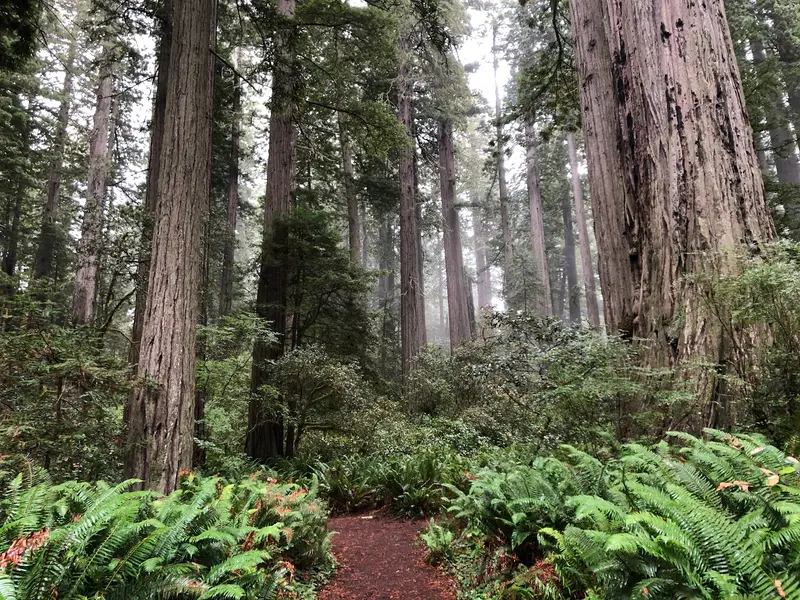
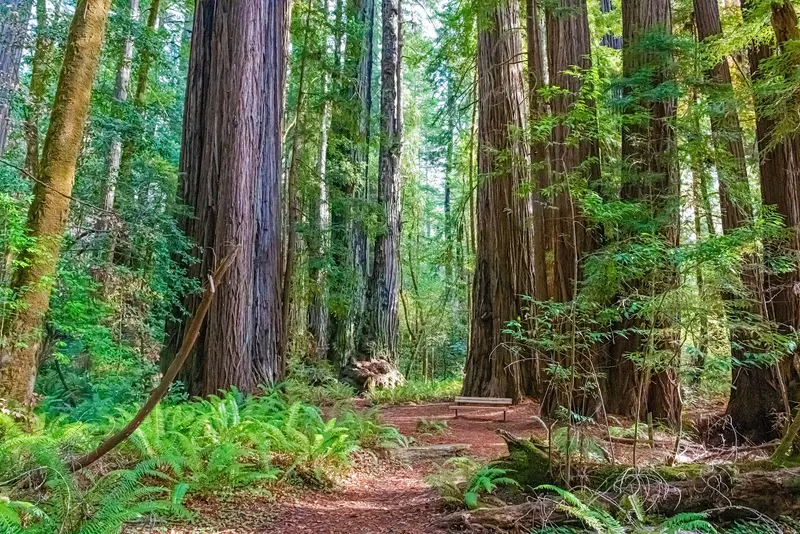
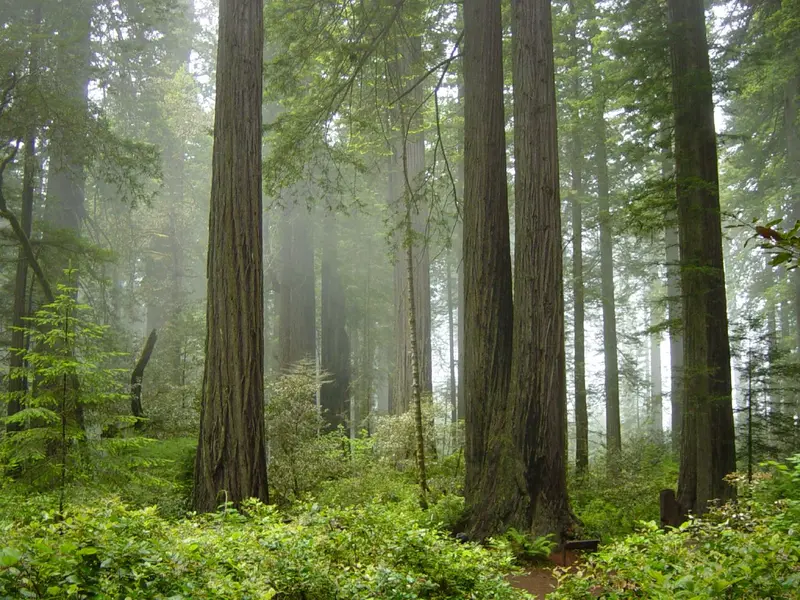
    In California's far north, Redwood National Park and the three State Parks – Jedediah Smith Redwoods, Del Norte Coast Redwoods, and Prairie Creek Redwoods – jointly protect the world's tallest trees.

    1. Home
    2. Destinations
    3. United States
    4. California
    5. Redwood National and State Parks
    In California's far north, Redwood National Park and the three State Parks – Jedediah Smith Redwoods, Del Norte Coast Redwoods, and Prairie Creek Redwoods – jointly protect the world's tallest trees. The National Park Service and California State Parks have jointly managed the area since 1994, and it has been a UNESCO World Heritage site since 1980.Approximately 96 percent of the original old-growth coast redwood forests were logged. Today, the parks preserve 45 percent of California's remaining old-growth stands. The tallest known tree measures 379 feet, or about 115 meters, and stands in the Redwood Creek watershed. Besides the forests, the parks also encompass prairies, oak woodlands, rivers, and approximately 64 kilometers of coastline.Admission to Redwood National Park is free, and there are no entrance stations. Fees apply only in some State Park areas, such as for access to Gold Bluffs Beach and Fern Canyon. With over 160 kilometers of hiking trails, four campgrounds, and five visitor centers, it's worth more than a quick stop along US 101.

    Sights in Redwood National and State Parks

    Discover the most important sights and attractions

    Lady Bird Johnson Grove
    National Park

    1Lady Bird Johnson Grove

    A 2.4-kilometer loop trail takes 45 to 60 minutes through old-growth Coast Redwoods; a plaque en route commemorates the former First Lady. The trailhead is about a ten-minute drive north of Orick on the narrow Bald Hills Road, not recommended for RVs and trailers.
    Open in Google Maps
    Tall Trees Grove
    Attraction

    2Tall Trees Grove

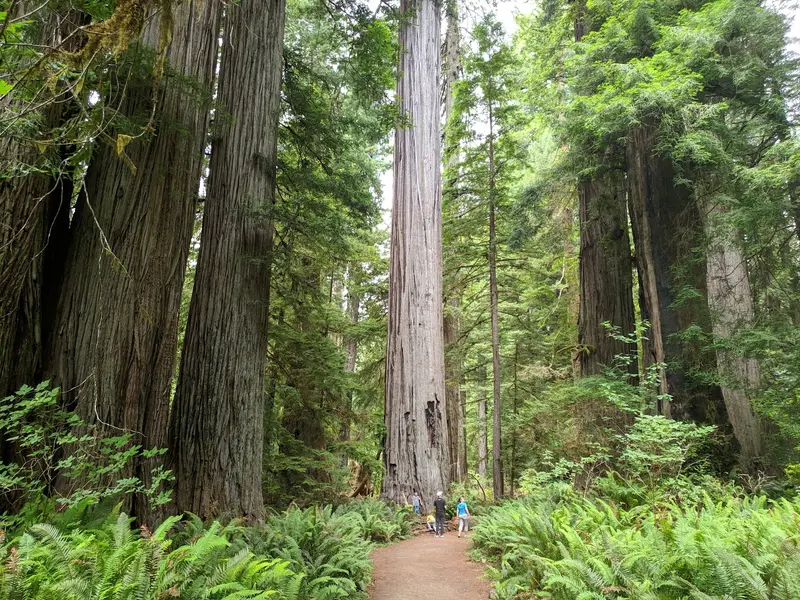
    Many trees in this grove along Redwood Creek are over 106 meters tall; a 1963 National Geographic article helped garner support for the national park. The trail is approximately 6.5 kilometers round trip with about 490 meters of elevation gain; allow 3 to 6 hours. You need a free online permit; only 50 groups are allowed per day.
    Open in Google Maps
    Fern Canyon

    3Fern Canyon

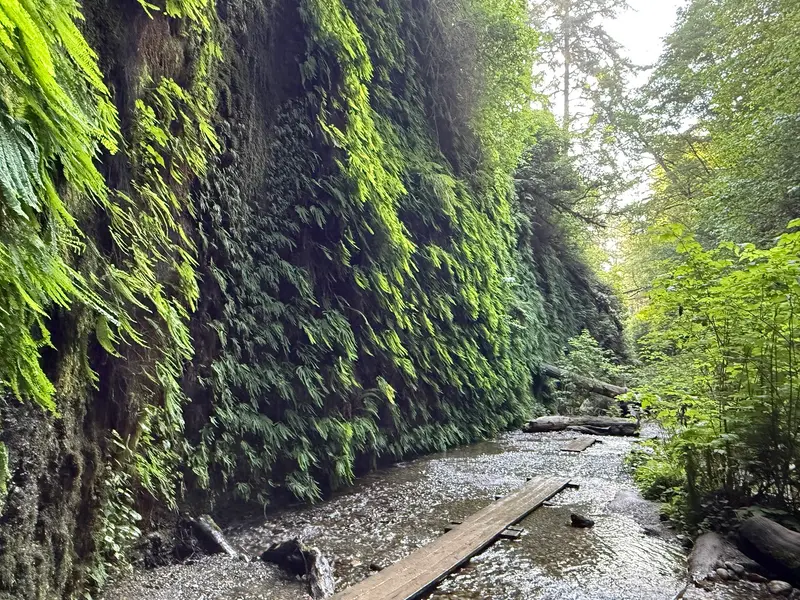
    Home Creek's narrow gorge, with approx. 15m high, fern-covered walls, served as a filming location for The Lost World: Jurassic Park, among others. The 1.6 km loop trail includes narrow wooden footbridges over the creek from June to September. Access via Davison Road requires online reservation; daily fee is $12.
    Open in Google Maps
    Big Tree Wayside
    Attraction

    4Big Tree Wayside

    Directly on the Newton B. Drury Scenic Parkway, barely a kilometer north of the Prairie Creek Visitor Center, stands an ancient Coast Redwood, its age estimated at over 1,500 years. From the parking lot, it's under 200 meters; a short forest loop trail begins next door.
    Open in Google Maps

    Restaurants in Redwood National and State Parks

    Getting There & Around

    The parks are located along US 101, which runs for about 80 kilometers through the area between Crescent City and Orick. From San Francisco, it's about 520 kilometers north; expect a good six-hour drive. From Oregon, you arrive via US 199 from Grants Pass, which meets the parks at Hiouchi.Visitor CentersThomas H. Kuchel Visitor Center: the largest, about 1.5 kilometers south of Orick on US 101, and the best starting point for a first visit.Prairie Creek Visitor Center: in the state park of the same name, near the meadows where you can observe elk.Hiouchi Visitor Center: on US 199 near Jedediah Smith Redwoods State Park.Crescent City Information Center: 1111 Second Street, convenient if arriving from the north.Airports and BusesThe nearest major airport is Arcata-Eureka (ACV) in McKinleyville, about 40 kilometers from the Kuchel Visitor Center, with direct flights by United Express to San Francisco, Los Angeles, and Denver. From Crescent City (CEC), Contour Airlines flies to Oakland. Redwood Coast Transit connects Crescent City, Klamath, Orick, and Arcata by bus.Getting Around the ParksWithout a car, it's difficult to reach the trailheads. Davison Road to Gold Bluffs Beach and Fern Canyon is a single-lane gravel track, nearly 13 kilometers long, closed to RVs over 24 feet and trailers; you'll cross two streams along the way. For Fern Canyon, you need an online reservation through the Redwood Parks Conservancy; for Tall Trees Grove, a free permit. Don't rely on digital maps in the parks.

    Accommodations in Redwood National and State Parks

    Find perfect stay in Redwood National and State Parks

    Booking.com* (Affiliate link)
    Search Hotels
    Agoda* (Affiliate link)
    Search Hotels
    Airbnb
    Vacation Rentals

    * Affiliate link: if you book through it, we earn a small commission. The price stays the same for you.

    Campgrounds in Redwood National and State Parks

    Find perfect campground in Redwood National and State Parks

    Search via Google Maps
    Campgrounds nearby (15km)
    Camping.info
    Find Campgrounds
    Park4Night
    RV Parks & Camping

    Nearby

    Oregon

    Oregon

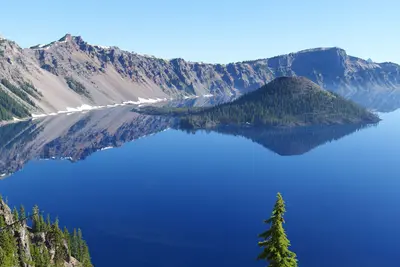
    Located on the Pacific Coast between California and Washington, Oregon offers a diverse landscape within a short distance: wild coastline, volcanoes, waterfalls, and Crater Lake, the deepest lake in the USA. The main starting point is usually Portland, the state's largest city, known for its vibrant food and beer culture.East of Portland, the Columbia River Gorge, featuring Multnomah Falls nestled between basalt cliffs, stretches inland. Above it rises Mount Hood, Oregon's highest peak at 11,249 feet (3,429 m). To the west, about 80 miles away, you'll find Cannon Beach and its iconic Haystack Rock. In the southern Cascades, Crater Lake fills the crater of a volcano that collapsed approximately 7,700 years ago.South of Portland lies the Willamette Valley, Oregon's premier wine-growing region, renowned especially for its Pinot Noir. The best time for a road trip is summer, when the higher elevations around Crater Lake are also snow-free.
    San Francisco

    San Francisco

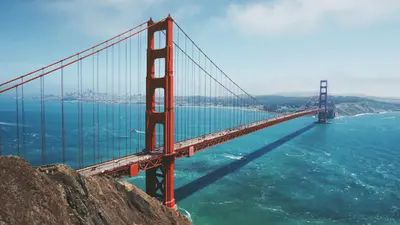
    San Francisco lies in Northern California at the northern tip of a peninsula between the Pacific and San Francisco Bay. The city, founded in 1776 with around 874,000 residents, is known for its steep hills, the Cable Cars, and the Golden Gate Bridge.Opened in 1937, the 2.7-kilometer-long Golden Gate Bridge connects the city with Marin County. The Cable Cars, a National Historic Landmark since 1964, operate on three lines, the two Powell lines running from Market Street to Fisherman's Wharf. Chinatown is considered North America's oldest Chinatown. Ferries to the former prison island Alcatraz depart from Pier 33; day tickets for adults cost 47.95 dollars and can be booked up to 90 days in advance.BART, Caltrain, light rail, and buses serve the city and region. Expect fog and cool winds from the Golden Gate: In summer, San Francisco is one of the coolest major cities in the USA; a jacket is advisable even in July.
    Lake Tahoe

    Lake Tahoe

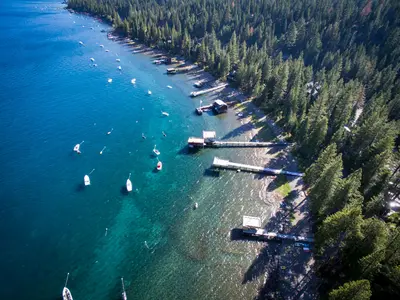
    Lake Tahoe is North America's largest alpine lake, situated at 1,897 meters in the Sierra Nevada, on the border between California and Nevada, about a two-hour drive east of Sacramento. You come for the deep blue, clear waters, the granite coves, and a shoreline that combines hiking, swimming, and paddling in summer with skiing in winter.At up to 501 meters deep, it's the second-deeperest lake in the USA, after Crater Lake. Approximately two-thirds of the lake and its shore belong to California, one-third to Nevada. The Californian highlight is Emerald Bay with Vikingsholm Castle; on the south shore, the Heavenly Gondola takes you high above the lake.Plan at least two days, and set aside a full day for a scenic drive around the lake. In peak summer, parking at popular coves is often full by morning.
    Portland

    Portland

    Portland is Oregon's largest city, situated on the Willamette River near its confluence with the Columbia River, on the border with Washington. You come for the gardens in the West Hills, Powell's colossal bookstore, over 500 food carts, more than 80 breweries, and because the Columbia River Gorge, Mount Hood, and the Pacific Coast are on your doorstep.The city is compact, green, and easy to explore on foot, by bike, and by light rail. To the west, Forest Park, a forested hill area, directly borders the residential neighborhoods, while the entertainment and dining districts are located on the river's east side.
    Yosemite National Park

    Yosemite National Park

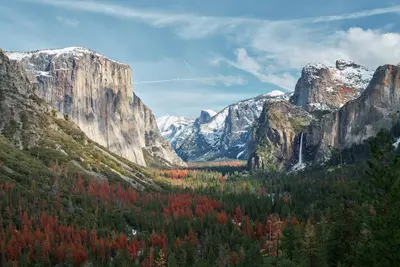
    The Yosemite National Park is located in the Sierra Nevada in California, about 300 km east of San Francisco. You go there for the Yosemite Valley with its steep rock faces, high waterfalls, and the giant sequoias in the south of the park.Above the valley, El Capitan rises about 914 m, and the Yosemite Falls plunge 739 m in total over three tiers. Near the south entrance, the Mariposa Grove hosts over 500 mature giant sequoias; a shuttle connects the parking lot and the grove. The park has existed since 1890 and has been a UNESCO World Heritage site since 1984.Admission costs 35 US dollars per car for 7 days. Visitors not residing in the USA pay an additional 100 US dollars per person from age 16, unless they have the America the Beautiful annual pass (250 US dollars). An entry reservation is not required in 2026. Tioga Road and Glacier Point Road are usually closed from November until the end of May or early June.