Fernweh
    ExploreTravel GuidesMy Trips
    de|en
    About FernwehImprintFAQPrivacy Policy
    ExploreTravel GuidesMy Trips
    Alentejo

    Alentejo

    Region
    1. Home
    2. Destinations
    3. Portugal
    4. Alentejo
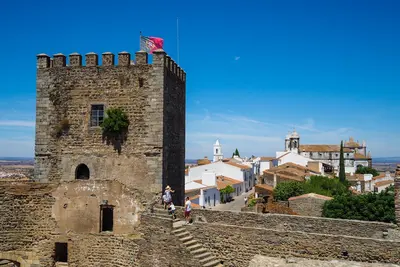
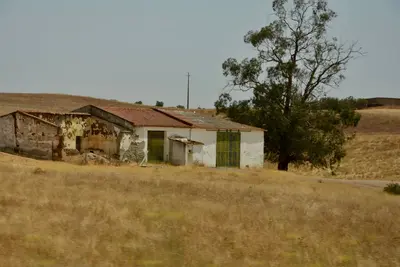
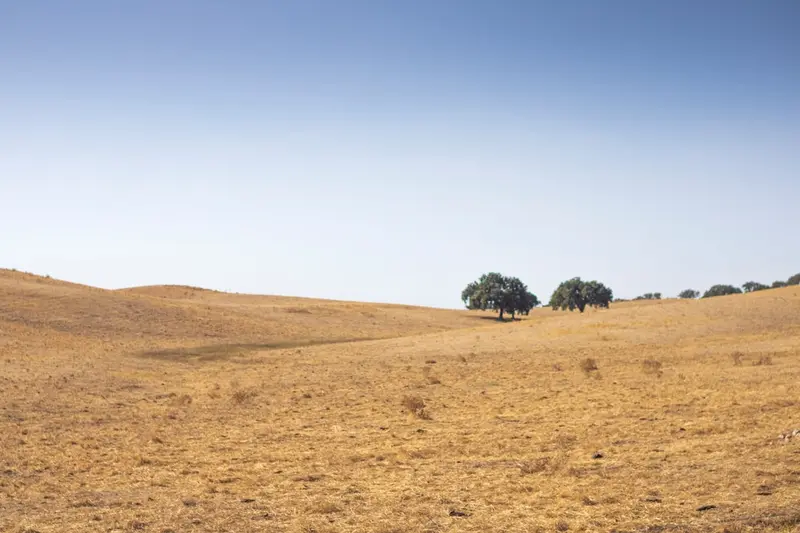
    The Alentejo, Portugal's largest region, enchants with its seemingly endless expanses, gentle hills, gnarled cork oaks, and picturesque historic towns. Here, where time seems to slow down, UNESCO World Heritage sites, excellent wines, and hearty cuisine invite you to a truly special journey of discovery.
    • Overview
    • Places in the region
    • Eat & drink
    • Culture
    • Nearby
    • Overview
    • Places in the region
    • Eat & drink
    • Culture
    • Nearby
    Der Alentejo, Portugals weitläufigste Region, prägt sich durch Korkeichenhaine, Olivenbaumfelder und sanfte Hügel mit ruhiger Atmosphäre. Im Zentrum liegt Évora, eine UNESCO-Welterbestadt, deren römischer Tempel, Kathedrale und Knochenkapelle tiefe historische Einblicke gewähren. Erkunde malerische Festungsdörfer wie Marvão und Monsaraz mit ihren mittelalterlichen Burgen und weiten Panoramen. Die Region ist bekannt für exzellente Weine und eine bodenständige Küche, die du in lokalen Tavernen genießen kannst. Für mildes Klima und weniger Besucher empfiehlt sich ein Besuch im Frühling oder Herbst, ideal für Weingüter und Megalithanlagen wie den Cromlech von Almendres.

    Places in Alentejo

    Vila Nova de Milfontes

    Vila Nova de Milfontes

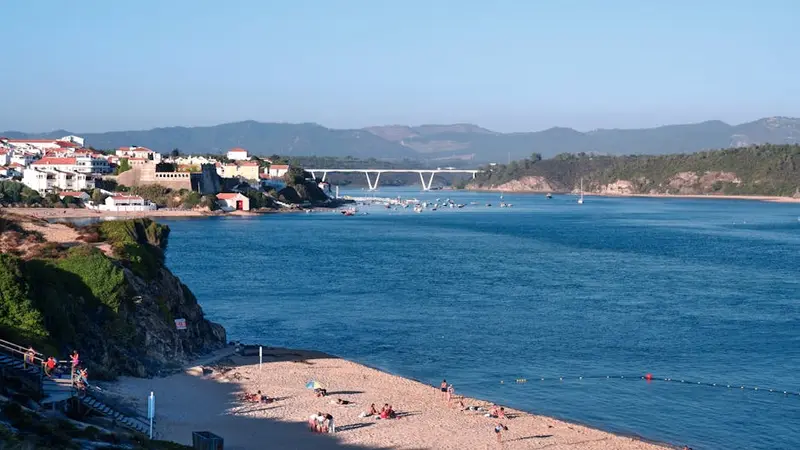
    Vila Nova de Milfontes is a picturesque coastal town at the mouth of the Mira River, that will enchant you with its relaxed atmosphere and breathtaking nature. Here, where golden beaches meet dramatic cliffs and the deep blue of the Atlantic, you'll find the perfect mix of adventure and relaxation off the beaten path. Be captivated by the charming old town, the excellent fish restaurants, and the unspoiled beauty of the Alentejo Coast.
    Comporta

    Comporta

    Discover Comporta, a **paradise of relaxed elegance** on the coast of Portugal, where endless sandy beaches meet expansive rice fields and a chic bohemian atmosphere. Here you'll find the perfect blend of untouched nature, excellent gastronomy, and a touch of luxury that will immediately captivate you.
    Beja

    Beja

    The city of Beja, often referred to as the 'Capital of Lower Alentejo', attracts with its imposing castle, the Convent Nossa Senhora da Conceição, and a vibrant historic center.
    Elvas

    Elvas

    Elvas, an impressive fortress city in Alentejo, is a UNESCO World Heritage site and known for its unique military architecture. Here you will discover the world's largest bastioned fortification system, which has protected the city since the 17th century. Key attractions include the monumental Aqueduto da Amoreira and the mighty forts Forte de Santa Luzia and Forte da Graça. A stroll through the old town will lead you to historic churches and charming squares. For a comprehensive experience, it is advisable to visit the fortifications early in the morning or late in the afternoon to avoid the heat and enjoy the expansive views. The former cathedral, the Igreja de Nossa Senhora da Assunção, also offers insights into the regional history.
    Estremoz

    Estremoz

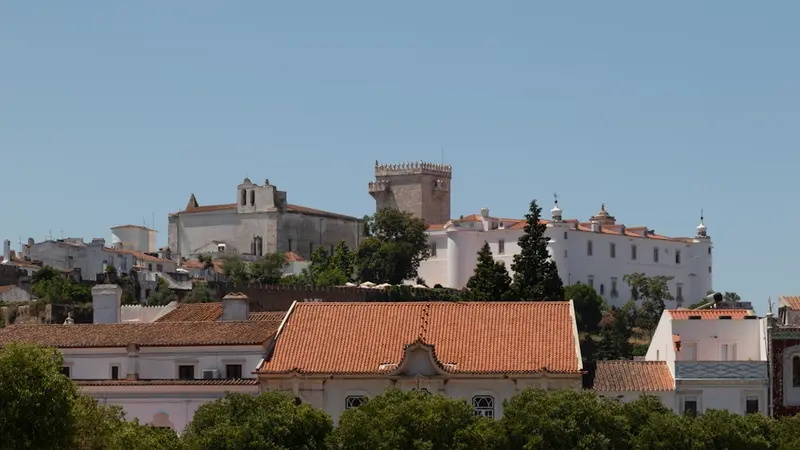
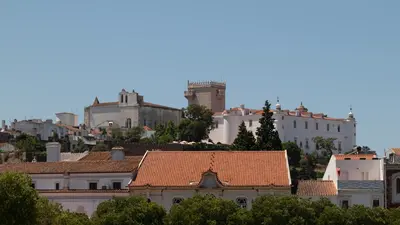
    Estremoz in the Alentejo is defined by its omnipresent white marble and rich history. The upper town is dominated by an imposing medieval castle district, whose Castelo de Estremoz offers wide views over the region and is linked to Rainha Santa Isabel. The Rossio Marquês de Pombal in the lower town hosts a lively weekly market on Saturdays with regional products and the famous "Bonecos de Estremoz" clay figures. For a pleasant visit, it's best to avoid the summer heat; spring and autumn offer milder temperatures. Explore the narrow streets of the historic upper town on foot to authentically experience the local atmosphere.
    Monsaraz

    Monsaraz

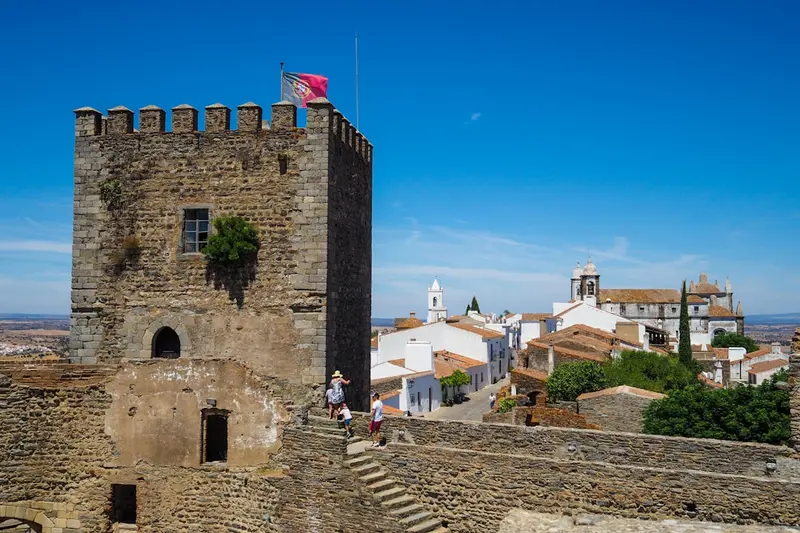
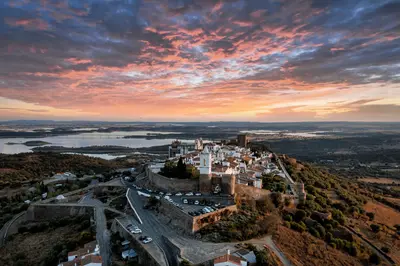
    Monsaraz is a picturesque medieval village in Alentejo, perched on a hilltop offering far-reaching views over the region. Its impressive castle and well-preserved town walls attest to its strategic importance over centuries, particularly during the Reconquista. Within the walls, narrow, cobblestone streets wind past whitewashed houses with slate details and small artisan shops. Visit the Igreja Matriz de Nossa Senhora da Lagoa, a church with Manueline and Baroque elements that defines the village centre. From the castle, enjoy a spectacular panoramic view of the Alqueva Reservoir, Europe's largest artificial lake, and the surrounding landscape. Plan your visit for late afternoon to witness the sunset over the lake, which provides breathtaking photo opportunities. Be sure to try the local wines and cheese, which reflect the culinary diversity of Alentejo.
    Mértola

    Mértola

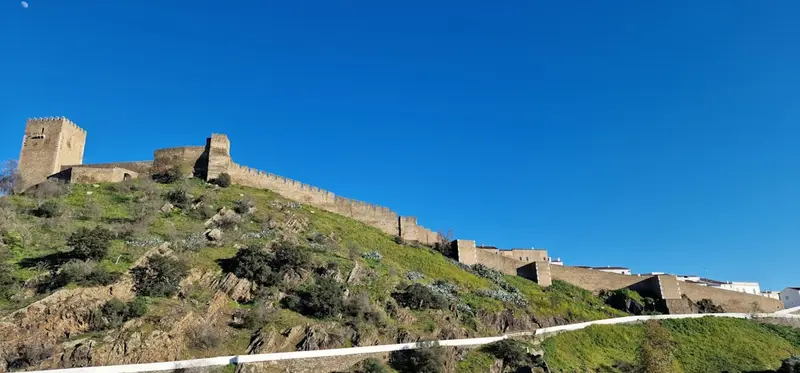
    Mértola, picturesquely situated on a hill above the Guadiana River, is a historical gem in Portugal's Alentejo region. The town bears witness to a rich past, shaped by Roman, Visigothic, and especially Moorish influences that continue to mould its architecture and culture today. The imposing Castelo de Mértola towers over the town, offering extensive panoramic views of the river landscape. Particularly noteworthy is the Igreja Matriz, a unique former mosque whose Islamic prayer niche (Mihrab) is still clearly visible. In the versatile Museu de Mértola, spread across several buildings, you'll discover archaeological finds from the Roman period to the Islamic era. It's best to visit the town in spring or autumn to enjoy the pleasant temperatures and explore the historical sites at your leisure.
    Évora

    Évora

    The UNESCO World Heritage city of Évora impresses with its well-preserved Roman temple, an impressive cathedral, and the macabre Chapel of Bones, nestled in a charming historic centre.

    Sights in Alentejo

    Discover the most important sights and attractions

    Portugal Skydive - Skydiving School

    Portugal Skydive in Alentejo is one of Southern Europe’s leading addresses for skydiving, having built a reputation for professionalism and safety over the years. Here you have the opportunity to experience the vast landscape of the Alentejo from a completely new perspective. The school offers tandem jumps for first-timers as well as courses for experienced skydivers, always under the guidance of certified instructors. You will receive a comprehensive briefing before plunging from several thousand meters up. The free fall over the golden fields and cork oak forests is an unforgettable experience, followed by a gentle glide under the open parachute. Our tip: Book your jump early, especially during peak season, to secure your preferred date. For the best weather conditions and a calmer atmosphere, a morning jump is recommended.
    Open in Google Maps

    Outside Mind Games

    Outside Mind Games in Alentejo offers you a unique, interactive art experience that stimulates reflection. This installation, often integrated into the vast landscape of the Alentejo, challenges you to question your perception and playfully discover new perspectives. It's not a traditional museum, but rather a space where art and nature merge to create an immersive environment. The works often utilize local materials and the natural topography to convey their message, establishing an interesting connection to the region. You won't find fixed paths here; instead, you are invited to independently explore and interact with the various elements. Our Tip: Visit the installation preferably in the early morning hours or late afternoon to utilize the soft light of the Alentejo sun for impressive photos and find the greatest tranquility. Make sure to wear comfortable footwear, as you'll be moving through nature.
    Open in Google Maps

    Römischer Tempel

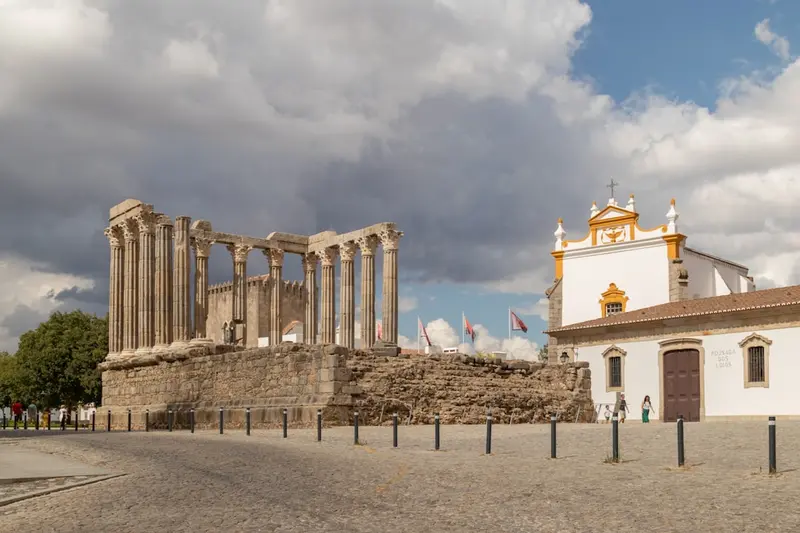
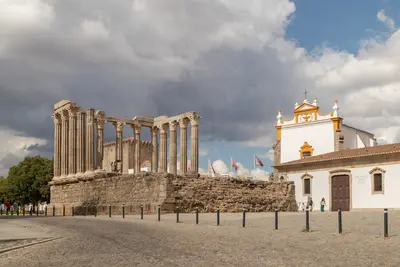
    The Roman Temple of Évora, often mistakenly called the Temple of Diana, is an outstanding testament to the Roman presence in Portugal. You'll find it prominently in the historic center of Évora, a UNESCO World Heritage site in Alentejo. This Corinthian temple was presumably erected in the 1st century AD in honor of Emperor Augustus. Its well-preserved columns with their intricate capitals stand on a podium, offering an impressive insight into Imperial Roman architecture. Over the centuries, the temple served various purposes, including as part of a medieval fortress and later as a slaughterhouse, which contributed to its unusual preservation. Today, you can freely visit its majestic remains and soak in the atmosphere of this ancient site. Our tip: Visit the temple in the early morning or late afternoon to avoid the crowds and make the most of the soft light for photos. From the surrounding gardens, you also have an excellent perspective on the entire structure.
    Open in Google Maps

    Igreja e Mosteiro de São Francisco

    The Igreja e Mosteiro de São Francisco in Évora, Alentejo, is an outstanding example of Portugal's Gothic-Manueline architecture. Built between the late 15th and early 16th centuries, it once served as a royal church and attests to the region's religious and artistic golden age. You will be impressed by its imposing façade and spacious interior, which exudes a serene atmosphere. The absolute highlight, however, is the Capela dos Ossos, the Chapel of Bones, located directly next to the main church. This unique chapel was built by Franciscan monks in the 16th century and is fully lined with human skulls and bones from approximately 5000 people. The inscription at the entrance, "Nós ossos que aqui estamos, pelos vossos esperamos", powerfully reminds you of life's transience. For an optimal experience, it is advisable to visit the chapel in the early morning or late afternoon to avoid the largest tourist crowds. This way, you can calmly absorb the special atmosphere and historical details. A visit here offers not only architectural insights but also a profound cultural reflection.
    Open in Google Maps

    Kathedrale von Évora

    The Évora Cathedral, also known as Sé de Évora, is an outstanding example of transitional architecture between Romanesque and Gothic styles in Portugal. Its construction began in 1186 and continued throughout the 13th century, resulting in a fascinating blend of architectural styles. As one of the largest and most significant medieval cathedrals in the country, it has been part of Évora's UNESCO World Heritage site since 1988. Upon entering the cathedral, you will be impressed by its imposing granite structure and the understated elegance of its interior. Note the unique octagonal lantern tower, known as the Cimborium, which directs light into the nave. The Gothic cloister offers an oasis of tranquility and impresses with its delicate arches and central garden. An absolute highlight is the ascent to the cathedral's rooftop. From there, you'll enjoy unparalleled panoramic views over Évora's red rooftops, the surrounding Alentejo plain, and the adjacent cork oak forests. This is the ideal spot for impressive photos of the city. Our Tip: Visit the cathedral early in the morning, shortly after opening, to avoid the crowds and fully savor the peaceful atmosphere. Also, allow time for the integrated museum, which houses sacred art treasures.
    Open in Google Maps

    Dining & Drinks

    Alentejo: History and Heritage

    The Alentejo is a region of Portugal whose cultural heritage is deeply rooted in its long and complex history. From prehistoric megaliths to Roman ruins and medieval castles, the landscape bears witness to continuous human settlement and cultural development.Important epochs shaped the Alentejo: Roman rule left monumental traces, such as the Diana Temple in Évora, a city that is itself a UNESCO World Heritage site. The Moorish occupation shaped architecture and agriculture, followed by the Reconquista, which produced a multitude of fortresses and castles. These buildings often reflect a mixture of Gothic and later Manueline elements, as found in the fortified towns of Monsaraz or Marvão.Typical of the region are the traditional whitewashed villages with their blue or yellow colour accents, which harmoniously blend into the vast landscape. Cultural peculiarities include the Cante Alentejano, a polyphonic chant recognised by UNESCO as intangible cultural heritage and reflecting the identity of its people. Handicrafts such as the ceramics from São Pedro do Corval and the artistic wool carpets from Arraiolos are also living traditions passed down through generations.Alentejan culture is also characterised by a deep connection to the land, which is reflected in the local gastronomy and the slow, conscious pace of life.

    Locations nearby

    These places are nearby — perfect for additional days or a day trip.

    Évora

    Évora

    The UNESCO World Heritage city of Évora impresses with its well-preserved Roman temple, an impressive cathedral, and the macabre Chapel of Bones, nestled in a charming historic centre.
    Estremoz

    Estremoz

    Estremoz in the Alentejo is defined by its omnipresent white marble and rich history. The upper town is dominated by an imposing medieval castle district, whose Castelo de Estremoz offers wide views over the region and is linked to Rainha Santa Isabel. The Rossio Marquês de Pombal in the lower town hosts a lively weekly market on Saturdays with regional products and the famous "Bonecos de Estremoz" clay figures. For a pleasant visit, it's best to avoid the summer heat; spring and autumn offer milder temperatures. Explore the narrow streets of the historic upper town on foot to authentically experience the local atmosphere.
    Monsaraz

    Monsaraz

    Monsaraz is a picturesque medieval village in Alentejo, perched on a hilltop offering far-reaching views over the region. Its impressive castle and well-preserved town walls attest to its strategic importance over centuries, particularly during the Reconquista. Within the walls, narrow, cobblestone streets wind past whitewashed houses with slate details and small artisan shops. Visit the Igreja Matriz de Nossa Senhora da Lagoa, a church with Manueline and Baroque elements that defines the village centre. From the castle, enjoy a spectacular panoramic view of the Alqueva Reservoir, Europe's largest artificial lake, and the surrounding landscape. Plan your visit for late afternoon to witness the sunset over the lake, which provides breathtaking photo opportunities. Be sure to try the local wines and cheese, which reflect the culinary diversity of Alentejo.
    Beja

    Beja

    The city of Beja, often referred to as the 'Capital of Lower Alentejo', attracts with its imposing castle, the Convent Nossa Senhora da Conceição, and a vibrant historic center.
    Elvas

    Elvas

    Elvas, an impressive fortress city in Alentejo, is a UNESCO World Heritage site and known for its unique military architecture. Here you will discover the world's largest bastioned fortification system, which has protected the city since the 17th century. Key attractions include the monumental Aqueduto da Amoreira and the mighty forts Forte de Santa Luzia and Forte da Graça. A stroll through the old town will lead you to historic churches and charming squares. For a comprehensive experience, it is advisable to visit the fortifications early in the morning or late in the afternoon to avoid the heat and enjoy the expansive views. The former cathedral, the Igreja de Nossa Senhora da Assunção, also offers insights into the regional history.