The route starts in Catania, leads to Taormina and Mount Etna, then south via Syracuse and Noto to Agrigento, and along the north coast via Cefalù to Palermo. For a good two weeks, you'll need a rental car. The longest leg from Noto to Agrigento takes approximately three hours.
17 Days / 16 Nights
April–June & September–October
RV Friendly
8 stops
Why This Route?
For self-drivers looking to combine Greek temples, Baroque towns, volcano, and beaches on a Sicily round trip.
Hidden Gems
Giardino della Kolymbetra, a citrus garden in a hollow in the Valley of the Temples of Agrigento
Fonte Aretusa on Ortigia in Syracuse, a freshwater spring with papyrus right by the sea
Lavatoio medievale in Cefalù, the medieval washhouse on Via Vittorio Emanuele
Itinerary
Stop 1 • 2 Nights
Catania
City
Rich in culture and history. Perfect for an exciting city trip and Culinary highlights.
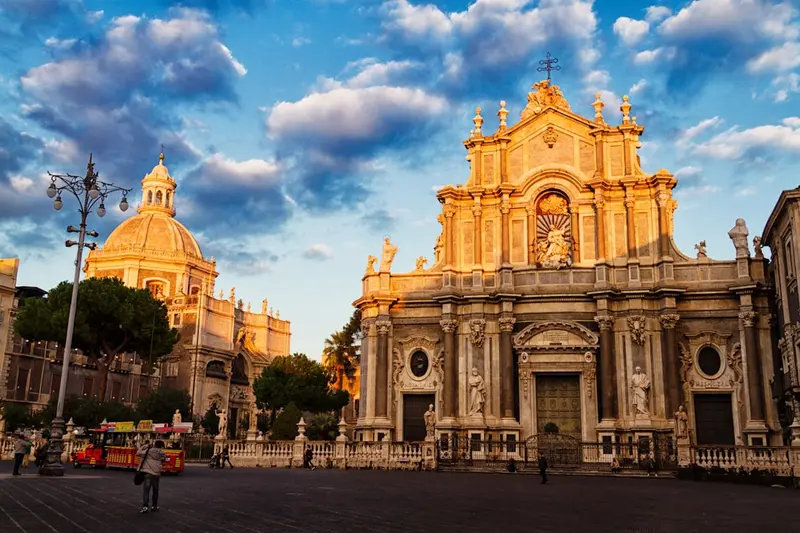
Catania is Sicily's second-largest city, located on the east coast at the foot of Mount Etna. Following the major eruption of 1669 and the earthquake of 1693, the old town was rebuilt in Baroque style, often using dark lava rock. Since 2002, it has been part of the UNESCO World Heritage site of the Baroque Towns of Val di Noto. Its focal point is the Piazza del Duomo, featuring the Elephant Fountain and the Cathedral; just next to it is the fish market. In the evenings, many gather in the old town around Via Crociferi. The city's airport serves as a starting point for many travelers exploring Eastern Sicily and Mount Etna.
9 Sights
6 Restaurants
History and Culture
Between Volcano and SeaCatania was founded as the Greek colony Katane in the 8th century BC. From Roman times date the theatre and the adjacent Odeon. The proximity to Mount Etna has repeatedly shaped the city: in 1669, a lava flow reached the city, pushing the coast south of Castello Ursino out into the sea, and in 1693, an earthquake destroyed the city.Baroque ReconstructionAfter 1693, Catania was rebuilt with wide, straight streets like Via Etnea. The architect Giovanni Battista Vaccarini created the cathedral's facade and the Elephant Fountain. The Benedictine Monastery and Via Crociferi are among the most impressive testimonies of this period.Bellini and Sant'AgataThe opera composer Vincenzo Bellini hailed from Catania; the opera house, the city park Villa Bellini, and the airport are named after him. From February 3rd to 6th, the city celebrates its patron saint Agatha with processions, during which the silver Fercolo with the reliquary bust is drawn through the streets.
Rich in culture and history. Perfect for unwinding and relaxation and Perfect for an exciting city trip.
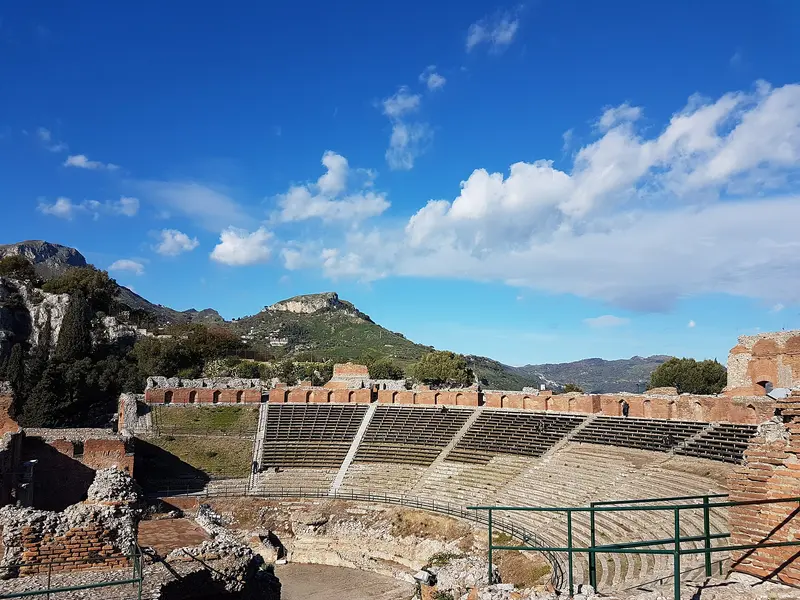
Taormina is located on the east coast of Sicily, about 200 meters above the Ionian Sea, between Messina and Catania. From here, views stretch along the coast to Mount Etna. Its main attraction is the ancient theatre, originally built by the Greeks and later modified by the Romans. The Corso Umberto runs through the old town, passing palaces, churches, and Piazza IX Aprile. Below the town are Mazzarò and the bay of Isola Bella. Since the 19th century, Taormina has been an international resort; it is accordingly crowded in summer.
8 Sights
7 Restaurants
History and Culture
Greeks and RomansTaormina dates back to ancient Tauromenion, which arose in the 4th century BC above Naxos, Sicily's first Greek colony. The theatre was laid out in the 3rd century BC and later remodelled by the Romans. From the Middle Ages date the Cathedral and palaces such as Palazzo Corvaja.Destination Since 18th CenturyGoethe visited the theatre in 1787 and described the view in his Italian Journey. In the 19th century, painters, writers, and wealthy travellers arrived, including the photographer Wilhelm von Gloeden and Friedrich Nietzsche. The Englishwoman Florence Trevelyan laid out the current city park and bought Isola Bella in 1890.FestivalsThe ancient theatre is a venue for concerts and the Taormina Film Fest. In May 2017, the G7 summit took place in Taormina.
For adventure seekers. Breathtaking mountain views and Stunning nature and outdoors.
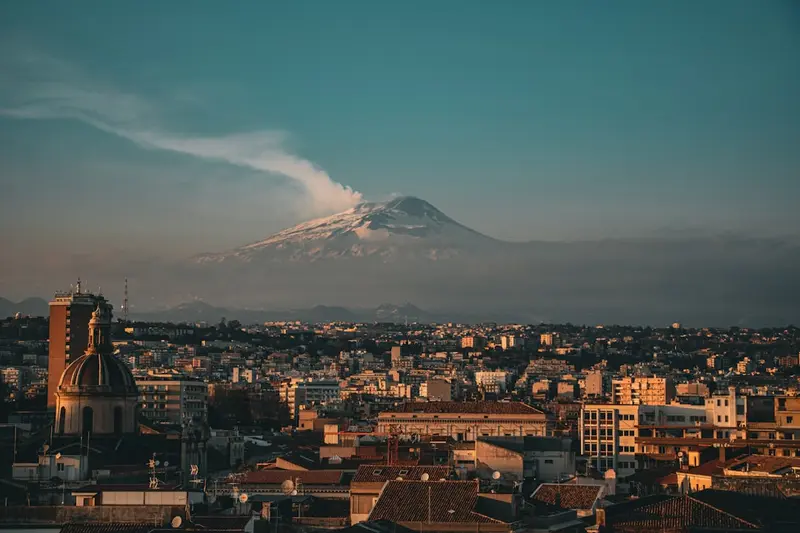
Mount Etna, on the eastern coast of Sicily, is Europe's highest active volcano, standing over 3,300 meters tall; its exact height changes by several dozen meters with each eruption. Since 2013, it has been a UNESCO World Heritage site. On the south side, a road leads up to nearly 2,000 meters and a cable car to around 2,500 meters. You hike over cooled lava flows, past secondary craters, and gaze out from the upper slopes over the Ionian Coast. On the lower slopes, wine, pistachios, and fruit grow in fertile volcanic soil.
5 Sights
2 Restaurants
Volcano and People
A Volcano in Constant MotionMount Etna has been active for millennia; its height and the shape of its summit craters change with major eruptions. In 1669, a lava flow reached the city of Catania, destroying parts of it. The National Institute of Geophysics and Volcanology (INGV) monitors the mountain and regularly publishes reports.Life on the VolcanoDespite the danger, the slopes are densely populated. In villages such as Nicolosi, Zafferana Etnea, Linguaglossa, and Bronte, wine, pistachios, and fruit are cultivated. In Greek mythology, Hephaestus' forge was located beneath Mount Etna.World Heritage and ParkThe Parco dell'Etna was established in 1987 and protects the mountain from the summit zones down to the forests. In 2013, UNESCO inscribed Etna on the World Natural Heritage List.
Rich in culture and history. Stunning nature and outdoors and Dreamy beaches.
Syracuse on the southeast coast of Sicily was in antiquity one of the most powerful cities in the Greek world. The old town is located on the small island of Ortigia: alleys, Baroque palaces and the Cathedral, which was built into a Greek temple of Athena. On the mainland are the Neapolis archaeological park with its large Greek Theatre and the Paolo Orsi Archaeological Museum. Together with the Rock Necropolis of Pantalica, Syracuse has been a UNESCO World Heritage site since 2005. Ortigia is well-suited for accommodation.
8 Sights
5 Restaurants
Heritage and Culture
Ancient Greek PowerhouseSettlers from Corinth led by Archias founded Syracuse on Ortigia in the 8th century BC. Under tyrants such as Gelon, Hieron I, Dionysius I, and Hieron II, the city became Sicily's leading power and rivaled Athens, whose attempt to conquer Syracuse failed. The mathematician Archimedes hailed from Syracuse and, in 212 BC, led its defense against the besieging Romans.After AntiquityByzantines, Arabs, and Normans followed. After the earthquake of 1693, Ortigia and many churches were rebuilt in Baroque style, including the Cathedral's facade.Saint Lucia and the Ancient TheaterThe city's patron saint is Saint Lucia, who died here as a martyr in 304 AD. On December 13th, her statue is carried in a procession from Cathedral Square to the Church of Santa Lucia al Sepolcro, returning on December 20th. Since 1914, the Istituto Nazionale del Dramma Antico has staged classical tragedies and comedies in the Greek Theater.
Rich in culture and history. Perfect for an exciting city trip.
Noto, in southeastern Sicily, 30 km from Syracuse, is considered a prime example of Sicilian Baroque. After the 1693 earthquake, the city was rebuilt 8 km from its old site, with squares, staircases, and light stone palaces. Since 2002, it and other Val di Noto Baroque towns are UNESCO World Heritage sites. Along Corso Vittorio Emanuele are the Cathedral, palaces, and churches. Nearby are the Vendicari Nature Reserve and the ruins of Noto Antica.
7 Sights
3 Restaurants
History and Culture
Reconstruction After the EarthquakeThe earthquake of January 11, 1693, destroyed large parts of southeastern Sicily, including old Noto on Monte Alveria. The city was subsequently rebuilt in a new location, about eight kilometers away, on the slopes of Monte Meti. Architects such as Rosario Gagliardi, Vincenzo Sinatra, and Paolo Labisi shaped the cityscape.Val di NotoSince 2002, Noto has been part of the UNESCO World Heritage site "Late Baroque Towns of the Val di Noto," along with cities like Ragusa, Modica, Scicli, and Catania. In 1996, the cathedral's dome collapsed; the church reopened in 2007.InfiorataSince 1980, every year on the third Sunday in May, artists have been creating images from flower petals on the pavement of Via Corrado Nicolaci, each year with a different theme.
Rich in culture and history. Perfect for relaxed travel without rush and Ideal for families with children.
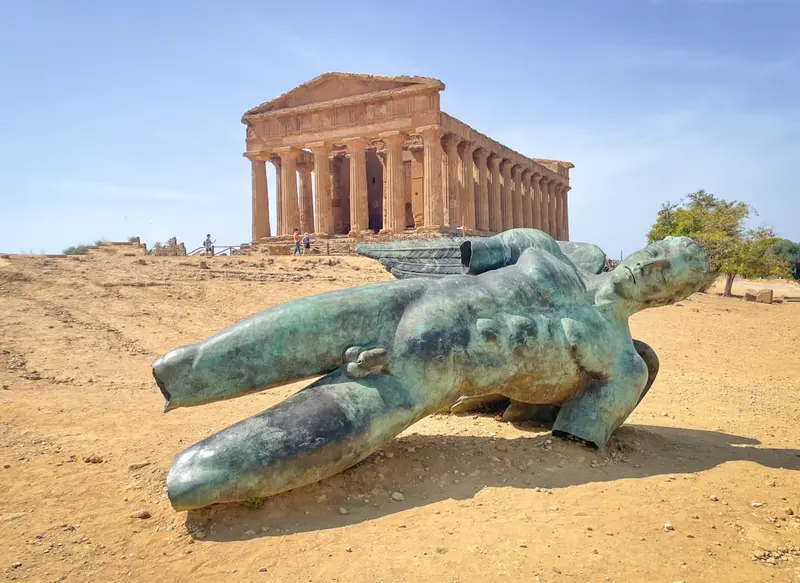
Agrigento lies on a hill on Sicily's south coast, about four kilometers from the sea. Beneath the city lies the Valley of the Temples, the ruins of the Greek city Akragas, a UNESCO World Heritage site since 1997. The Doric temples from the 5th century BC, especially the Temple of Concordia, are among the best preserved in the Greek world. The Archaeological Museum and the Garden of Kolymbethra complement the visit. The Old Town up on the slope is medieval: its main street is Via Atenea; at the hill's highest point stands San Gerlando Cathedral; the Church of Santa Maria dei Greci is also in the Old Town. The Temple Valley has little shade; in summer, you should avoid the hottest hours.
7 Sights
5 Restaurants
History and Culture
AkragasThe city of Akragas was founded around 580 BC by settlers from Gela and Rhodes, rapidly becoming one of Sicily's richest Greek cities. Its golden age was the 5th century BC; under tyrant Theron, construction began on grand temples like the Temple of Zeus. Philosopher Empedocles was from Akragas. In 406 BC, Carthaginians conquered and plundered the city, which never regained its former might. The Romans named it Agrigentum.From Girgenti to AgrigentoDuring the Middle Ages, the settlement retreated to the hill where the old town stands today. The cathedral's construction began in the second half of the 11th century, and it was consecrated in 1099 by Bishop Gerlando. The city was known as Girgenti until 1927, when it received the ancient-inspired name Agrigento.Pirandello & FestivalsThe writer Luigi Pirandello, Nobel Literature laureate of 1934, was born in 1867 at the Caos estate near Agrigento; his birthplace is a museum. Agrigento's Mandorlo in Fiore festival marks the February almond blossom. The Festival of Saint Calogero, with processions, is held on July's first two Sundays. Agrigento was Italian Capital of Culture in 2025.
Perfect for unwinding and relaxation. Rich in culture and history.
Cefalù is located on Sicily's north coast, about 70 kilometers east of Palermo, nestled between a sandy beach and the steep Rocca cliff. The small old town is dominated by the Norman Cathedral, commissioned by King Roger II in 1131 and a UNESCO World Heritage site since 2015. Its narrow streets house the medieval washhouse and the Mandralisca Museum, featuring a portrait by Antonello da Messina. The climb up the Rocca leads to the remains of a castle and offers sweeping views over the town and coast. In summer, Cefalù is crowded and parking is scarce; it's quieter in spring and autumn.
6 Sights
3 Restaurants
History and Culture
From Kephaloidion to the Norman CityThe ancient name Kephaloidion derives from the Greek word for head, likely referring to the shape of the promontory. On the Rocca stands the so-called Temple of Diana, a structure of large stone blocks dating from pre-Roman times. Later came the Romans, Byzantines, Arabs, and Normans. Roger II had the Cathedral built from 1131; the apse mosaic with Christ Pantocrator is dated 1148 by an inscription.World HeritageSince 2015, the Cathedral has been part of the UNESCO World Heritage site “Arab-Norman Palermo and the Cathedrals of Cefalù and Monreale”. Besides the Cathedral, a cloister with figured capitals belongs to the complex.FestivalsThe patron saint is Santissimo Salvatore. The patronal festival from August 2nd to 6th combines processions with the 'Ntinna a mari on the afternoon of the last day, where participants balance across a greased pole.Excursions into the SurroundingsIn the hinterland lies the Madonie Mountains, whose highest peak, Pizzo Carbonara, reaches 1,979 meters. Castelbuono boasts a Ventimiglia castle from 1317; above Cefalù lies the Sanctuary of Gibilmanna. Further east, along the Tusa River, spreads the Fiumara d'Arte, an open-air sculpture park.
Rich in culture and history. Perfect for an exciting city trip and Culinary highlights.
Palermo, the capital of Sicily, is located on the north coast in the plain of the Conca d'Oro beneath Monte Pellegrino. Phoenicians, Arabs, Normans, Hohenstaufen, and Spaniards have shaped the city, a legacy still visible in its urban landscape today: churches with red domes, Byzantine gold mosaics, Baroque churches, and fountains. Since 2015, nine sites in Palermo, Cefalù, and Monreale have been part of the UNESCO World Heritage Site "Arab-Norman Palermo", seven of which are in Palermo itself. Equally renowned are its markets and street food. With the Cathedral, Norman Palace, and Quattro Canti, most sights are within walking distance.
9 Sights
5 Restaurants
History and Culture
From Phoenician Founding to Norman CapitalPhoenicians founded the city between the 7th and 6th centuries BC. In 831, Muslims from North Africa conquered Palermo, and in 1071/72, the Normans under Roger I captured the city. Under Roger II, it became the capital of the new Kingdom of Sicily; the Normans blended Arab, Byzantine, and Latin traditions, resulting in structures like the Cappella Palatina, the Martorana, and San Giovanni degli Eremiti.Hohenstaufens and SpaniardsUnder Henry VI and Frederick II, Palermo was the capital of the Holy Roman Empire; Frederick II is buried in the Cathedral. During Spanish rule, the Quattro Canti were built between 1609 and 1620. In World War II, bombing raids in 1943 devastated large parts of the city.Santa RosaliaSaint Rosalia is the city's patron saint. From July 10th to 15th, Palermo celebrates the Festino with a parade of a large float and fireworks. On September 4th, her feast day is at the sanctuary on Monte Pellegrino. In 2018, Palermo was the Italian Capital of Culture.