Fernweh: Home
ExploreGuideDestinationsMy tripsMy trip
de|en
  • Why go
  • Highlights
  • Regions
  • Round trips
  • Local food
  • Good to know
  • Best time to visit
  • Travel advice
Panama

Photo by vianet ramos on Pexels

Travel Guide Panama

Check the UK FCDO travel advice for Panama: as of 15 November 2026 the FCDO does not advise against travel to any part of the country, but warns of a risk of violence near the Colombian border east of a line between Punta Carreto (Guna…

by Felix Gillen

Why Go To Panama?

At Miraflores Locks, you'll see container ships journeying between Atlantic and Pacific, and just under an hour later, you'll hike through rainforest in Soberanía National Park. In Guna Yala, experience indigenous self-governance on Caribbean islands; in the Chiriquí Highlands, Geisha coffee, fetching record prices at auctions, grows. From Volcán Barú's 3,474-meter summit, the country's highest point, you can, on a clear day, see both the Pacific and Caribbean at once.

Contents

  • Highlights
  • Regions
  • Round trips
  • Local food
  • Good to know
  • Best time to visit
  • Travel advice

Where in Panama?

Pick an area. The highlights, road trips and places below follow your choice.

Highlights in Panama

What you should have seen
Casco Viejo

Photo by Luis Quintero on Pexels

Highlight 1 of 4

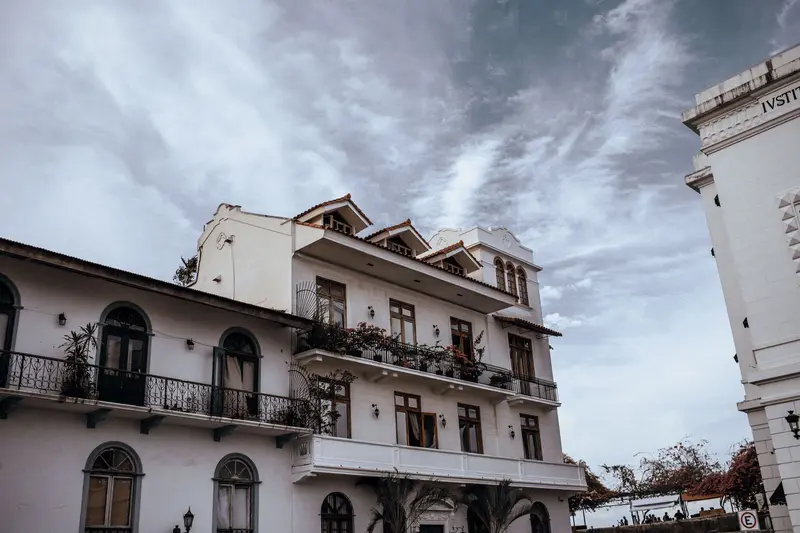
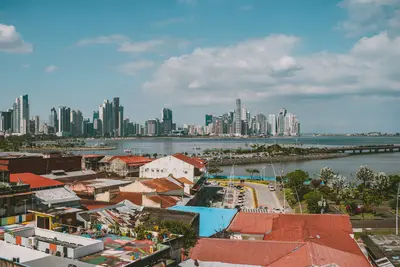
Casco Viejo

Casco Viejo is the old town of Panama City, located on a peninsula on the Pacific and a UNESCO World Heritage site since 1997. Amidst churches, squares, and the old city walls, you have views of the skyline and the ships at the canal entrance.

Discover
Panamá Viejo

xiquinhosilva / Wikimedia Commons / CC BY 4.0, mod.
Highlight 2 of 4

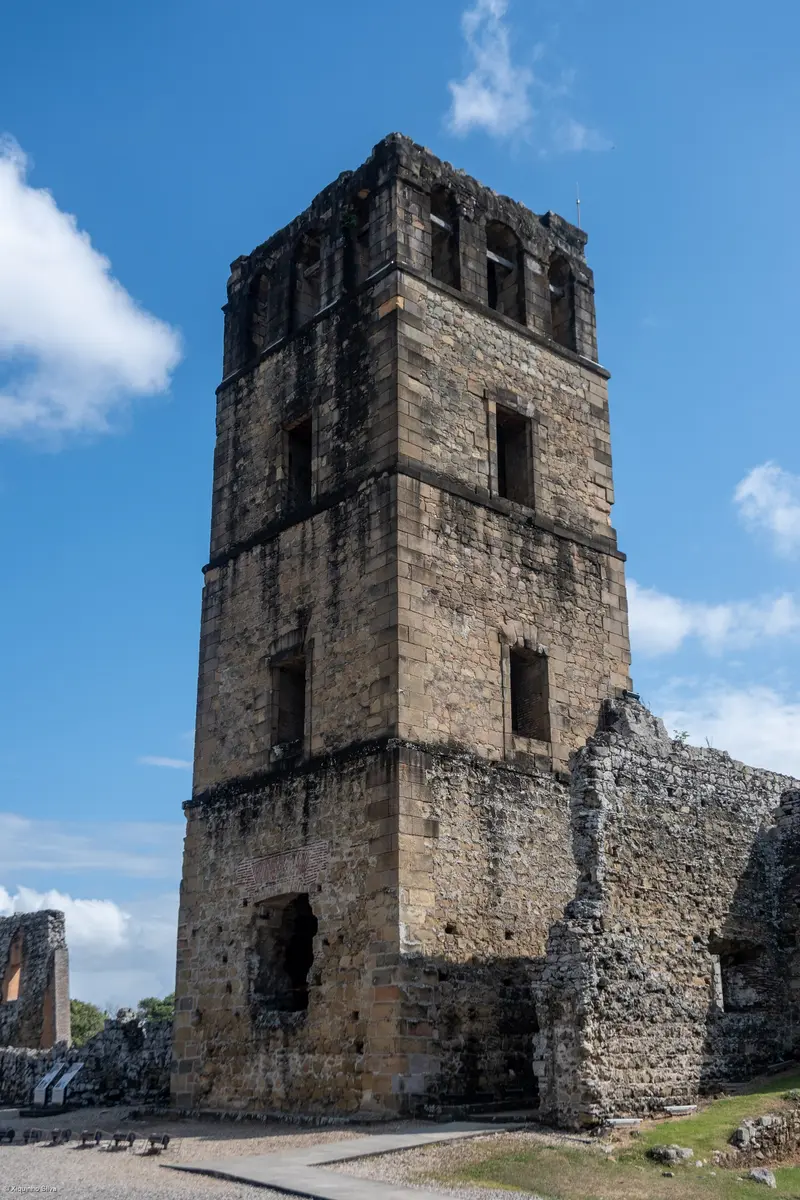
Panamá Viejo

Panamá Viejo are the ruins of the first Spanish city on the Pacific coast of the Americas, on the eastern edge of Panama City.

Discover
Panama Canal and Gatun Lake

Photo by Kevin Alvarez on Pexels

Highlight 3 of 4

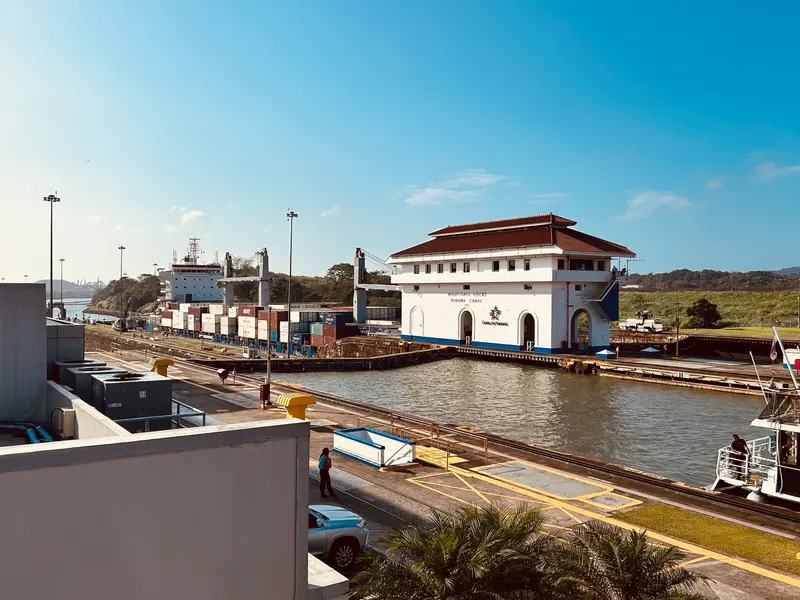
Panama Canal and Gatun Lake

The Panama Canal connects the Pacific and Caribbean, starting right at the edge of Panama City. At the visitor centers of Miraflores on the Pacific side and Agua Clara near Colón, you can watch ships navigate the locks.

Discover
Portobelo

Mariordo (Mario Roberto Durán Ortiz) / Wikimedia Commons / CC BY-SA 4.0, mod.

Highlight 4 of 4

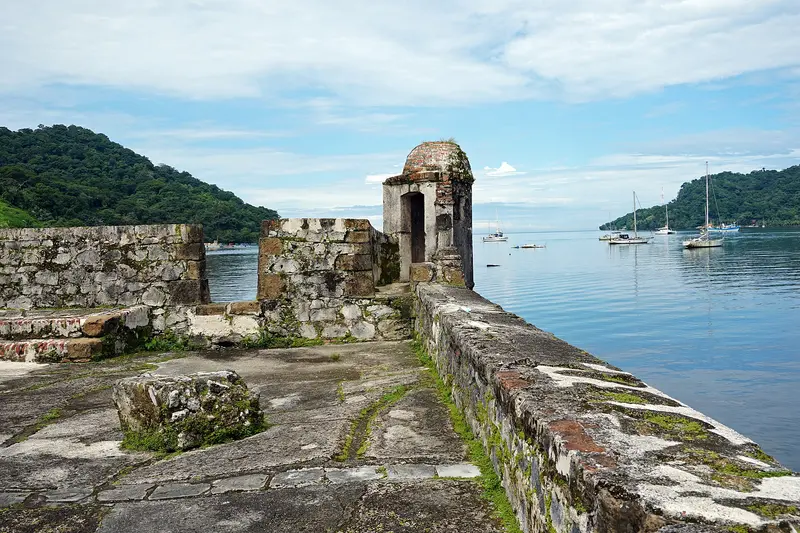
Portobelo

Portobelo is a small town on a Caribbean bay in the province of Colón, about one and a half to two hours' drive from Panama City.

Discover

More highlights in Panama

Guna Yala (San Blas)

Guna Yala (San Blas)

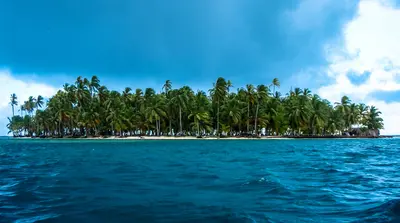
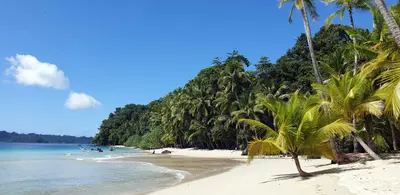
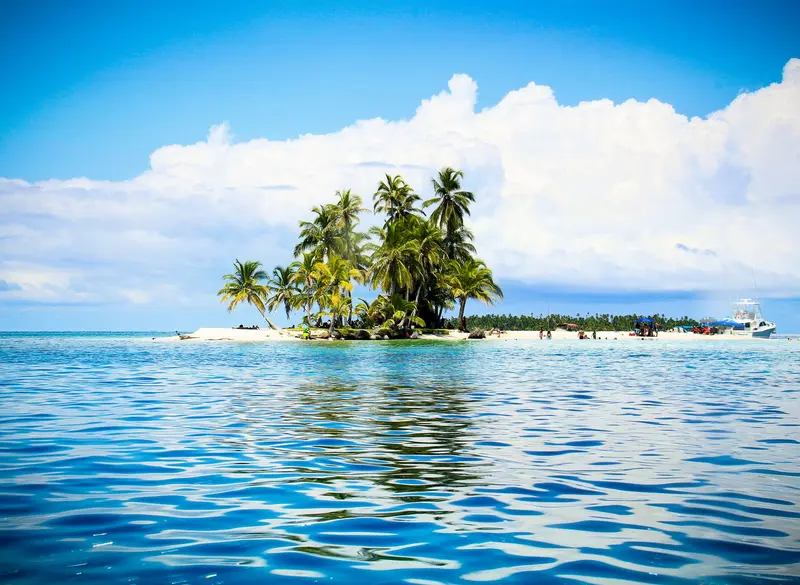
Guna Yala is a self-governed territory of the Guna people on the Caribbean coast east of Panama City, with an archipelago of several hundred flat coral islands, only a small number of which are inhabited. You come for the palm-fringed islands, the clear water and an indigenous culture that sets its own rules for its territory. After the Tule Revolution of 1925, the area was recognised as the Guna's own territory. Non-Guna may not live here, so tourist lodgings and boat trips are run by the communities. Indigenous law applies in the comarca. The region is also a focus of climate change: in 2024 the community of the flood-threatened…

Cotopaxi5897·CC BY-SA 4.0

The Valley of Antón

The Valley of Antón

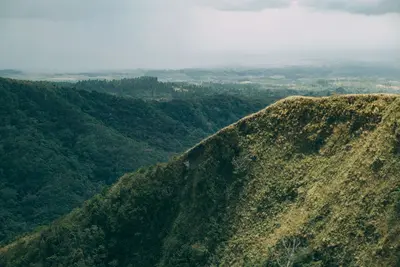
El Valle de Antón is a mountain village in the Coclé province, nestled in the crater of an extinct volcano, about two hours west of Panama City. Visitors are drawn by the hiking trails to India Dormida, the waterfalls, ancient rock carvings, and the mild climate. The iconic La India Dormida mountain ridge is a major landmark. Along its ascent lies La Piedra Pintada, the valley's most renowned rock featuring pre-Columbian petroglyphs. In the village center, you'll find a market selling handicrafts, fruits, and vegetables. El Níspero Zoo hosts an amphibian conservation center. The EVACC foundation is dedicated to protecting the…

Luis Quintero·Pexels

Boquete

Boquete

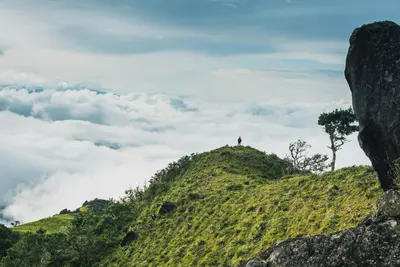
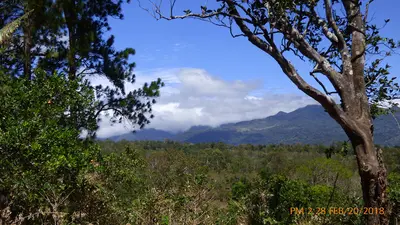
Boquete is located in a green valley on the slopes of Volcán Barú in the Chiriquí Highlands, approximately 40 km north of David. You come for the cool mountain climate, the hiking trails in the cloud forest, and the coffee, including the Geisha variety.The town stretches along the Río Caldera. Bajo Boquete with the main square is the center; north of it, around Los Naranjos, are the coffee areas and the access to Volcán Barú National Park.Every year in January, the Feria de las Flores y del Café takes place here, with its 53rd edition in 2026 from January 7 to 18.

Cristhian Carreño·Unsplash

Bocas del Toro

Bocas del Toro

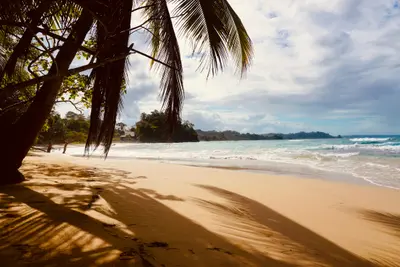
Bocas del Toro is an archipelago of forested islands and many small cays on the Caribbean coast of north-western Panama, near the Costa Rican border. You come for the beaches, the coral reefs of Isla Bastimentos National Marine Park and the laid-back island villages linked by water taxis. The three main islands are Isla Colón with the main town, Bocas Town, Isla Carenero just opposite, and Isla Bastimentos with the Afro-Caribbean village of Old Bank. Much of Bastimentos and the Cayos Zapatilla belong to the Parque Nacional Marino Isla Bastimentos, established in 1988. On Playa Larga on Bastimentos, sea turtles nest roughly from…

Azzedine Rouichi·Unsplash

Pearl Isles

The Archipiélago de las Perlas lies in the Gulf of Panama, in the Pacific Ocean off Panama City. The main island for visitors is Isla Contadora, boasting over ten beaches, and from July to October, humpback whales migrate through its waters.Contadora offers the most accommodations and facilities in the archipelago. Ferries depart from the Calzada de Amador in Panama City; alternatively, flights are available from Albrook City Airport. According to the Foreign Office, freely anchored yachts may be targeted by attacks.
Coiba National Park

Coiba National Park

Der Nationalpark Coiba liegt im Golf von Chiriquí vor der Pazifikküste Panamas und umfasst die Insel Coiba, 38 kleinere Inseln und das umgebende Meer. Seit 2005 ist er UNESCO-Welterbe, vor allem wegen der vielen endemischen Arten und der großen Meeresvielfalt. Von 1919 bis 2004 war Coiba eine Strafkolonie, deshalb blieb der Wald weitgehend unberührt. Im Juni 2026 beschloss die Regierung, Hochrisiko-Häftlinge vorübergehend in Einrichtungen des Grenzschutzes SENAN auf der Insel zu verlegen, wie lange, ist offen. Hier leben unter anderem der Coiba-Brüllaffe und Hellrote Aras. Im Meer siehst du Mantarochen, Walhaie und Hammerhaie. Die…

Chema Photo·Unsplash

Volcán Barú National Park

Volcán Barú National Park

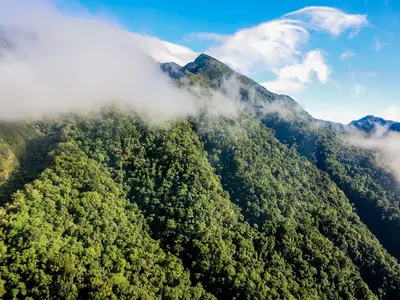
Volcán Barú, between Boquete and Volcán in the Chiriquí Highlands, is Panama's highest point at 3,474 m. You ascend it because from the summit on clear days you can see both the Pacific and the Caribbean. The National Park encompasses cloud forest on the volcano's slopes. Here lives the Quetzal, which you are most likely to see between February and May. On the lower slopes are the cultivation areas of Boquete and Cerro Punta. The main trail to the summit begins above Boquete; from the west, a more difficult trail leads up from Paso Ancho near Volcán. The Sendero Los Quetzales connects Boquete with Cerro Punta on the north side of…

FranHogan·CC BY-SA 4.0

How to plan your trip to Panama

From the guide to the road: here is what comes next.

  1. 1
    Sunrise over alpine peaks and a sea of clouds
    1234

    Round trip

    12 days · 4 stops

    Saved

    Pick a route

    Pick a ready-made one or save places and plan your own.

    Browse routes
  2. 2

    Trip to Panama

    Live
    • 1Casco Viejo3 days
    • 2Panamá Viejo4 days
    • 3Panama Canal and Gatun Lake5 days
    Budget

    Plan your trip

    The planner sorts stops, days and budget. Plan together in real time.

    Go to My Trips
  3. 3
    9:41 No signal
    Panama
    Available offline

    Photo by vianet ramos on Pexels

    Use it on the road

    Download the guide to your phone and use it on site, even offline.

Regions to Discover

Explore the diverse regions of Panama.
Guna Yala (San Blas)

Guna Yala (San Blas)

Guna Yala is a self-governed territory of the Guna people on the Caribbean coast east of Panama City, with an archipelago of several hundred flat coral islands, only a small number of which are inhabited. You come for the palm-fringed islands, the clear water and an indigenous culture that sets its own rules for its territory. After the Tule Revolution of 1925, the area was recognised as the Guna's own territory. Non-Guna may not live here, so tourist lodgings and boat trips are run by the communities. Indigenous law applies in the comarca. The region is also a focus of climate change: in 2024 the community of the flood-threatened…

Cotopaxi5897·CC BY-SA 4.0

Pearl Isles

The Archipiélago de las Perlas lies in the Gulf of Panama, in the Pacific Ocean off Panama City. The main island for visitors is Isla Contadora, boasting over ten beaches, and from July to October, humpback whales migrate through its waters.Contadora offers the most accommodations and facilities in the archipelago. Ferries depart from the Calzada de Amador in Panama City; alternatively, flights are available from Albrook City Airport. According to the Foreign Office, freely anchored yachts may be targeted by attacks.
Panama Canal and Gatun Lake

Panama Canal and Gatun Lake

The Panama Canal connects the Pacific and Caribbean, starting right at the edge of Panama City. At the visitor centers of Miraflores on the Pacific side and Agua Clara near Colón, you can watch ships navigate the locks. The heart of the canal route is Gatun Lake, a reservoir formed by the damming of the Río Chagres. Its largest island, Barro Colorado, has been a protected area since 1923; a research station opened there in 1924, operated by the Smithsonian since 1946. On the east bank lies Soberanía National Park with Pipeline Road, one of the country's most famous birdwatching trails. Two bridges cross the canal on the Pacific…

Kevin Alvarez·Pexels

Bocas del Toro

Bocas del Toro

Bocas del Toro is an archipelago of forested islands and many small cays on the Caribbean coast of north-western Panama, near the Costa Rican border. You come for the beaches, the coral reefs of Isla Bastimentos National Marine Park and the laid-back island villages linked by water taxis. The three main islands are Isla Colón with the main town, Bocas Town, Isla Carenero just opposite, and Isla Bastimentos with the Afro-Caribbean village of Old Bank. Much of Bastimentos and the Cayos Zapatilla belong to the Parque Nacional Marino Isla Bastimentos, established in 1988. On Playa Larga on Bastimentos, sea turtles nest roughly from…

Azzedine Rouichi·Unsplash

Recommended Itineraries

Discover the best routes through Panama.
Panama in 15 Days: Canal, Guna Yala, Highlands and Caribbean

Panama in 15 Days: Canal, Guna Yala, Highlands and Caribbean

This round trip links the capital and the canal with the Guna Islands, the crater village El Valle, the cool highlands around Boquete, and the Caribbean islands of Bocas del Toro. Most journeys are by coach or 4x4, finally flying from Bocas del Toro back to Panama City.

15 Days
Stops at a glance
  1. 1.Panama City
  2. 2.Guna Yala (San Blas)
  3. 3.Panama City
  4. 4.The Valley of Antón
  5. 5.Boquete
  6. 6.Bocas del Toro
View Route Details →

What you eat in Panama

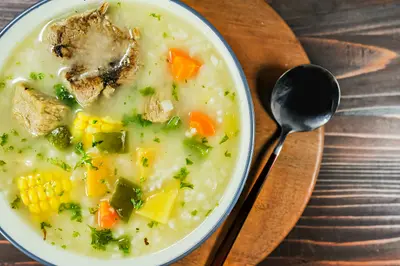
Panamanian Sancocho

Keesha's Kitchen·Unsplash

Panamanian Sancocho

Chicken stew, national dish

This hearty chicken soup is Panama's national dish. Besides chicken, yuca, plantains, taro and other roots go in, seasoned with cilantro. Served with white rice.

Carimañola

Filled Maniok Fritters

Yuca dough is filled with beef, chicken, or cheese and fried, crispy on the outside and soft on the inside. Carimañolas are mainly served for breakfast or as a snack.
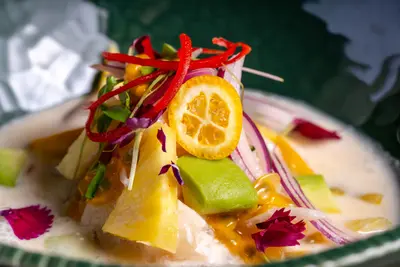
Ceviche de Corvina

Nano Erdozain·Pexels

Ceviche de Corvina

Marinated Fish

Raw fish, usually corvina, cures in lime juice, alongside variations with shrimp, squid, or mussels. Ceviche is often served with crackers, with the selection at Panama City's Mercado de Mariscos being especially famous.

Hojaldras

Deep-fried yeast pastry

The round wheat dough flatbreads are fried in hot fat. In Panama, they are eaten savory for breakfast, with ham, cheese, and eggs.

Patacones

Plantains, deep-fried twice

Green plantains are fried in slices, flattened, and fried a second time. Patacones are one of the most common side dishes for fish and meat.
Geisha Coffee from Boquete

Gkbayro·CC BY-SA 4.0

Geisha Coffee from Boquete

Noble coffee from the Highland

The Geisha variety, originally from Ethiopia, grows in the Chiriquí highlands around Boquete. At the annual Best of Panama auction in 2025, a washed Geisha from Boquete fetched a record price of 30,204 US dollars per kilogram.

Good to Know

Essential info for your trip planning.

Key facts

Panama City · 4.1 million (2023) · 75,517 km²

Land & People

GeographyPanama forms the land bridge between Central and South America.

History & Society

Colonial Era and IndependenceAfter Spanish conquerors reached the Pacific in 1513, Panamá Viejo was founded in 1519,…

Food & Drink

What's on the PlateEveryday meals are based on rice, beans or lentils with some chicken, meat or fish.

Practical Info

For up-to-date and binding travel, safety and health advice, check the UK FCDO travel advice for Panama (gov.

Getting Around

ArrivalInternational flights land at Tocumen Airport (PTY) east of Panama City.

Traveling with Kids

Panama CityAt the Biomuseo, designed by Frank Gehry, interactive exhibitions explain how the land bridge formed and how…

Best Time to Visit

When is the best time for your trip?

January
February
March
April
27–28°C·12–71 mm(little rain)
From mid-December to April, the Pacific side, Panama City, the Canal, and the Boquete highlands have their dry season. For Bocas del Toro on the Caribbean, September and October are also good months. During the rainy season from May to November, it rains regularly and sometimes heavily, most in October and November.
Pacific side and Panama City: Dry season from approximately mid-December to April, rainy season from May to November, peaking in October and November.Chiriquí Highlands (Boquete): significantly cooler than the coast, driest from mid-December to mid-April.Caribbean coast: wetter year-round than the Pacific side, driest from February to April.Bocas del Toro: Rain is possible at any time, the driest months are February and March, as well as September and October.Hurricane season from May to November with tropical storms, heavy rainfall, and landslides.Climate data: Panama City, normal values 1991 to 2020 (WMO, ETESA).

Seasons

Jan
Feb
Mar
Apr
May
Jun
Jul
Aug
Sep
Oct
Nov
Dec
Dry season (Pacific side)
High season
Raintime
Best Time to Visit
▶Show detailed monthly data
MonthTemp (°C)Rain (mm)Sun (h)
January26.8247.9
February27.1128.3
March27.5148.0
April28.0716.5
May27.62224.5
June27.22423.9
July27.21904.3
August27.22214.2
September26.92683.8
October26.63113.6
November26.62594.4
December26.91256.0

Travel advice

Safety, entry requirements and health: the official, up-to-date advice for Panama is published by the UK government on GOV.UK.

Go to GOV.UK

Sources & method

  • Photos: Wikimedia Commons, Unsplash, Pexels. Each photo carries its credit.
  • The content is based on web research from public, traceable sources. How the content is made · The role of AI
Felix at Kuirau Park in Rotorua, New Zealand

Who's behind Fernweh?

Hi, I'm Felix.

I love to travel, and I love planning even more. Fernweh.guide is my attempt at building a really good online travel guide.

About Fernweh

All places in Panama

  • Bocas del Toro
  • Bocas Town (Isla Colón)
  • Boquete
  • Casco Viejo
  • Coiba National Park
  • Guna Yala (San Blas)
  • Panama Canal and Gatun Lake
  • Panama City
  • Panamá Viejo
  • Pearl Isles
  • Portobelo
  • The Valley of Antón
  • Volcán Barú National Park

More about Panama

  • Best Time to Visit Panama
  • Panama with Kids
All Places & RegionsRound tripsNight trains in EuropeAll highlightsAbout FernwehFAQPrivacy PolicyImprint
Download on the App StoreGet it on Google Play
ExploreGuideDestinationsMy tripsMy trip