Fernweh: Home
    ExploreTravel GuidesPlan a tripMy tripLast visited
    de|en
    All Places & RegionsAll highlightsAbout FernwehFAQPrivacy PolicyImprint
    ExploreTravel GuidesPlan a tripMy tripLast visited
    • Why go
    • Highlights
    • Explore regions
    • Round trips
    • Local food
    • Good to know
    • Best time to visit
    • Travel advice
    Ireland

    Travel Guide Ireland

    Ireland lies on the western edge of Europe.

    by Felix Gillen

    Contents

    • Why go
    • Highlights
    • Explore regions
    • Round trips
    • Local food
    • Good to know
    • Best time to visit
    • Travel advice

    Why Go To Ireland?

    Ireland combines a rugged Atlantic coast of cliffs, peninsulas and offshore islands with a cultural landscape featuring traces from the over 5,000-year-old passage tombs in the Boyne Valley to the early Christian monasteries on Skellig Michael. Additionally, cities like Dublin, Galway and Cork boast a vibrant pub and music culture, alongside regions in the west where Irish is still an everyday language.

    Where in Ireland?

    Pick a region. The highlights, road trips and places below follow your choice.
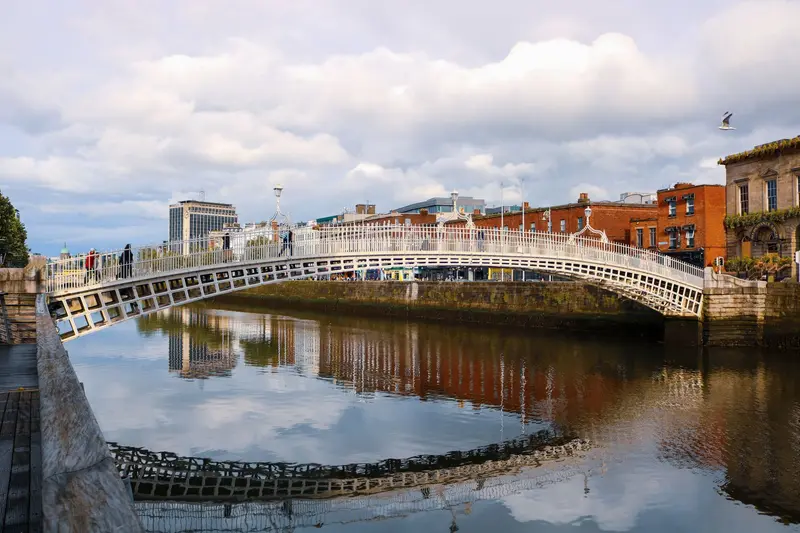
    Dublin
    Highlight 1 of 8

    Dublin

    Dublin is the capital of Ireland and, with around 1.26 million inhabitants in the urban area including suburbs, is by far the country's largest city. The Liffey divides it into Northside and Southside; on its banks, Vikings established a fortified base in 841.

    Discover
    Brú na Bóinne (Newgrange)
    Graham Hogg / Wikimedia Commons / CC BY-SA 2.0
    Highlight 2 of 8

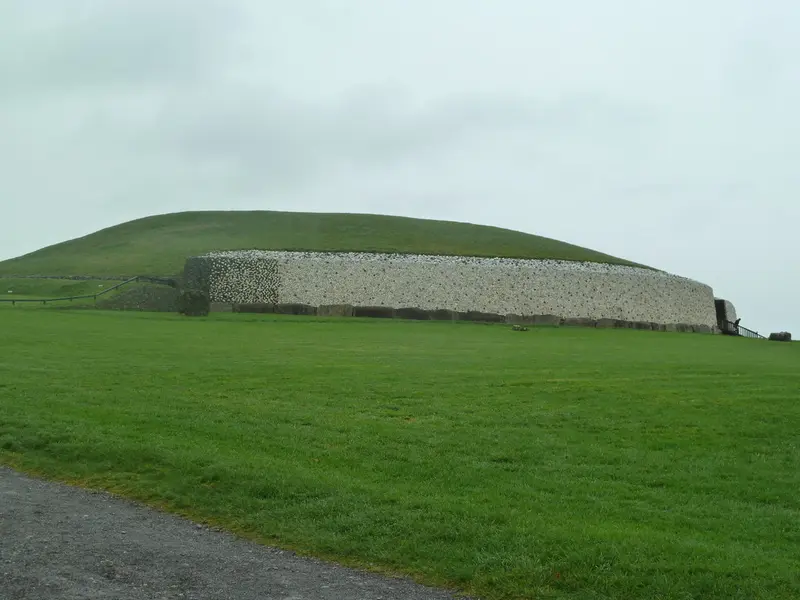
    Brú na Bóinne (Newgrange)

    Brú na Bóinne in the Boyne Valley north of Dublin is one of Europe's most significant Stone Age landscapes and has been a UNESCO World Heritage site since 1993.

    Discover
    Giant's Causeway & Causeway Coast
    Highlight 3 of 8

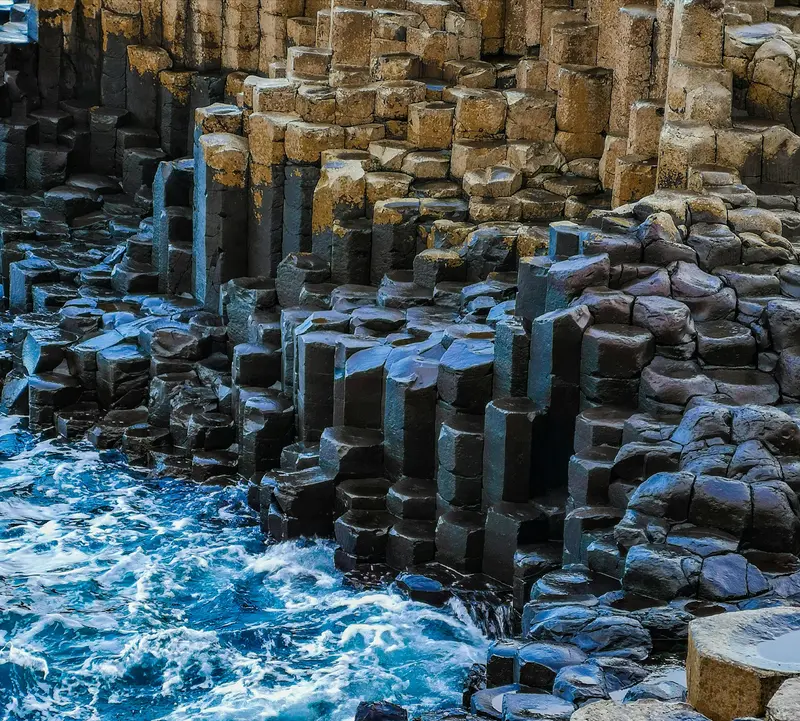
    Giant's Causeway & Causeway Coast

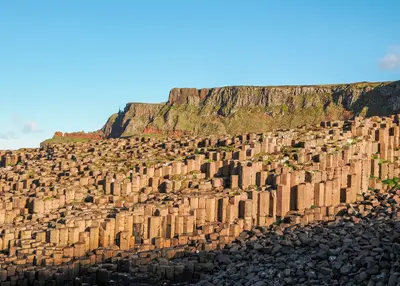
    The Giant's Causeway on Northern Ireland's north coast consists of around 40,000 regularly shaped basalt columns, formed 50 to 60 million years ago by volcanic activity.

    Discover
    Connemara
    Highlight 4 of 8

    Connemara

    Connemara in the west of County Galway is a landscape of moors, lakes, and the Twelve Bens mountain ranges.

    Discover
    Galway
    Highlight 5 of 8

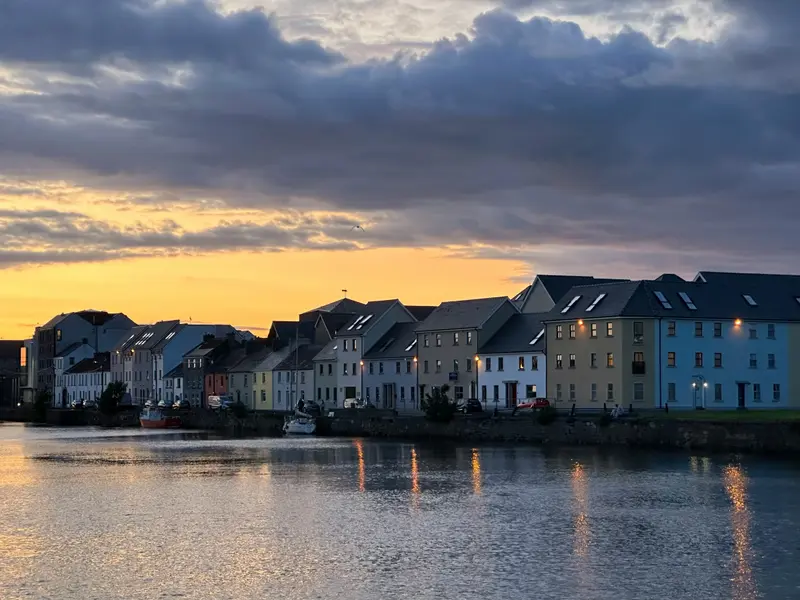
    Galway

    With around 86,000 inhabitants, Galway is the largest city on the west coast and was European Capital of Culture in 2020.

    Discover
    Cliffs of Moher
    Highlight 6 of 8

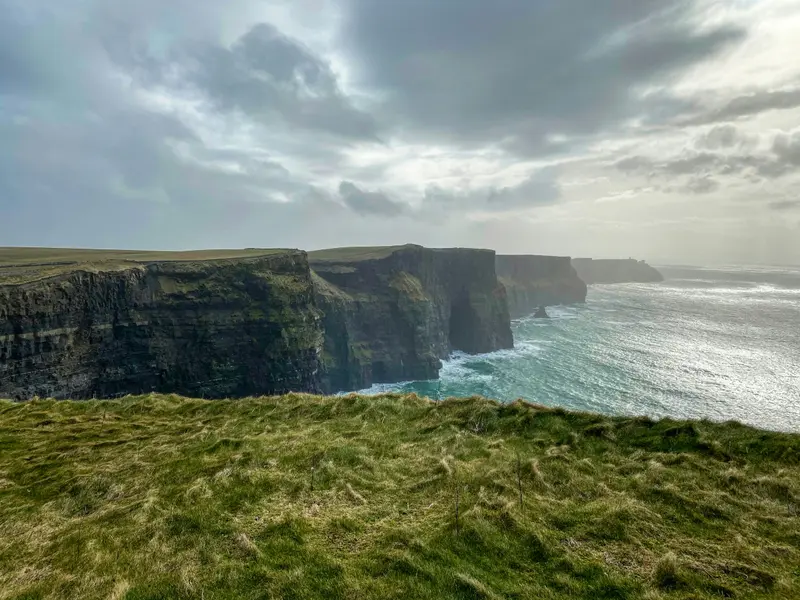
    Cliffs of Moher

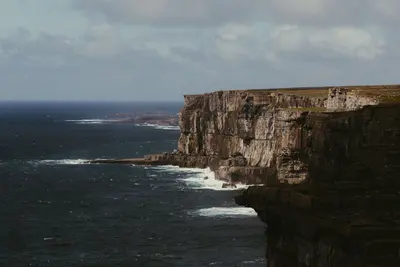
    The Cliffs of Moher on the Atlantic coast of County Clare reach a height of 214 meters north of O'Brien's Tower and are Ireland's most visited natural attraction.

    Discover
    Highlight 7 of 8

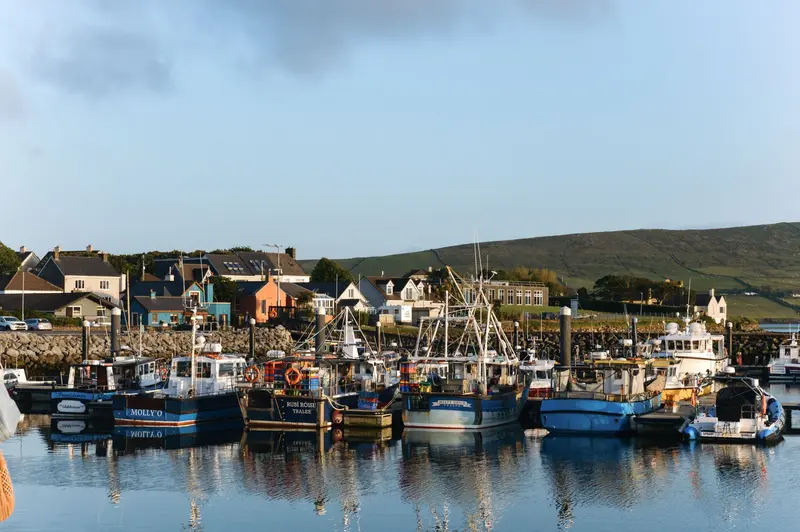
    Dingle is a small harbour town on the southwest coast in County Kerry and a starting point for the Dingle Peninsula, whose cliffs, beaches, and stone monuments are among Ireland's most impressive landscapes.

    Discover
    Highlight 8 of 8

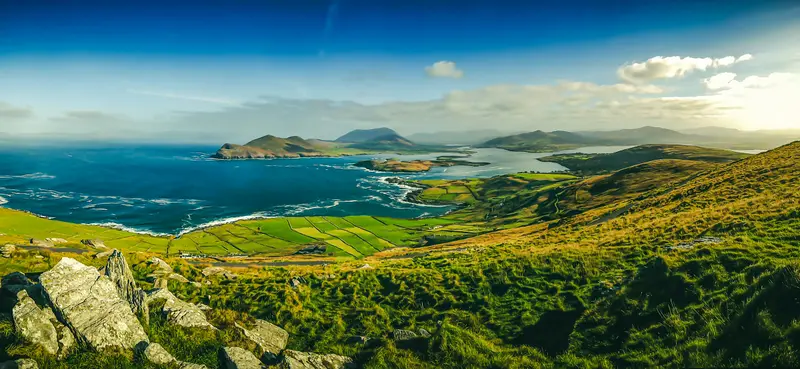
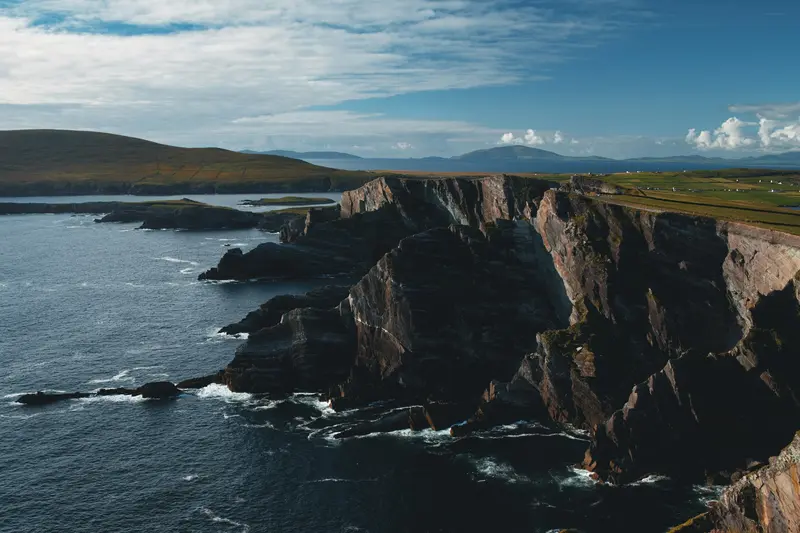
    The Ring of Kerry is a 179-kilometre-long scenic drive around the Iveragh Peninsula in southwest Ireland, starting and ending in Killarney.

    Discover

    More highlights in Ireland

    Unique experiences that make Ireland unforgettable.
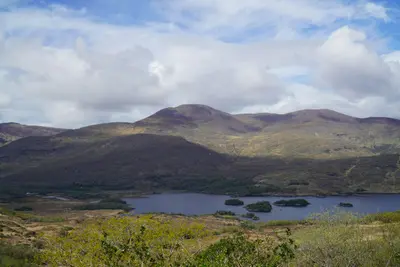
    Killarney & Killarney National Park

    Killarney & Killarney National Park

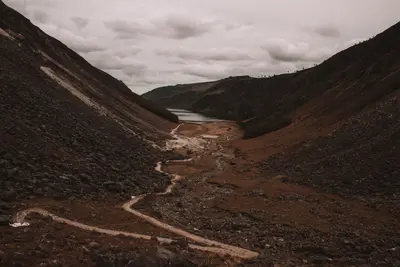
    Killarney National Park in County Kerry, Ireland's first national park, was founded in 1932. It covers some 10,000 hectares, with three lakes, oak forests, and the foothills of the MacGillycuddy's Reeks. It is home to Ireland's only native red deer herd; since 1981, the area has been a UNESCO Biosphere Reserve. Classic sights include Muckross House (completed 1843), Ross Castle on Lough Leane, and the approx. 20-meter-high Torc Waterfall, only minutes from the car park. The Gap of Dunloe, an 11-kilometer glacial pass, can be explored on foot, by bike, or horse-drawn carriage; return by boat across the lakes to Ross Castle.
    Skellig Michael

    Skellig Michael

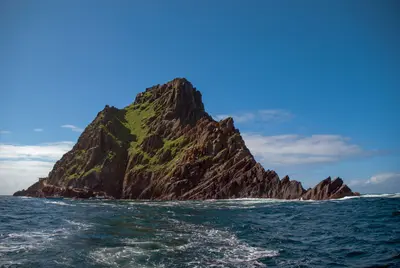
    Skellig Michael is a steep rocky island approximately twelve kilometres off the coast of Kerry, on whose summit monks built a monastery with beehive-shaped stone huts between the 6th and 8th centuries. The exceptionally well-preserved site has been a UNESCO World Heritage site since 1996; on the neighbouring island of Little Skellig, one of the world's largest gannet colonies breeds. You may only land in summer with one of the licensed boat operators, for example from Portmagee, and only in calm seas; children under 12 years are not permitted. The ascent via approximately 600 steps is steep and unsecured. Book early, as the number…
    Kilkenny

    Kilkenny

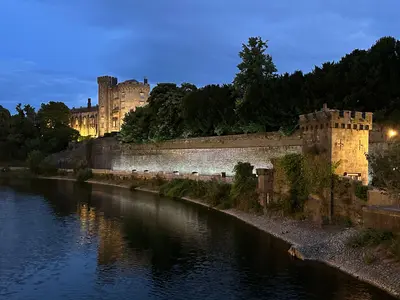
    Kilkenny in southeast Ireland is a city with approximately 27,000 inhabitants and one of the best-preserved medieval cityscapes in the country. It lies on both banks of the River Nore; it owes its nickname "Marble City" to the dark limestone of the area, and from 1642 to 1649, the Confederation of Kilkenny met here. The Medieval Mile connects Kilkenny Castle, a 13th-century castle with Victorian alterations and a freely accessible park, with St Canice's Cathedral (1202–1285), whose approximately 30-meter-high 9th-century round tower you can climb. Along the way are the Medieval Mile Museum, Rothe House, the merchant's house, the…
    Glendalough & Wicklow Mountains

    Glendalough & Wicklow Mountains

    Glendalough is a glacial valley with two lakes in the Wicklow Mountains south of Dublin, where Saint Kevin founded a monastery in the 6th century. Preserved are a round tower approximately 30 metres high, several churches like St Kevin's Church, and high crosses, which are among Ireland's most famous early Christian sites. The valley belongs to the Wicklow Mountains National Park, opened in 1991, which covers approximately 20,500 hectares. Nine marked trails start at the Visitor Centre or the National Park's information office, from short walks by the Lower Lake to the Spink Circuit above the Upper Lake. The monastic site is freely…

    How to plan your trip to Ireland

    From the guide to the road: here is what comes next.

    1. 1
      Sunrise over alpine peaks and a sea of clouds
      1234

      Round trip

      12 days · 4 stops

      Saved

      Pick a route

      Pick a ready-made one or save places and plan your own.

      Browse routes
    2. 2

      Trip to Ireland

      Live
      • 1Dublin3 days
      • 2Brú na Bóinne (Newgrange)4 days
      • 3Giant's Causeway & Causeway Coast5 days
      Budget

      Plan your trip

      The planner sorts stops, days and budget. Plan together in real time.

      Go to My Trips
    3. 3
      9:41 No signal
      Ireland
      Available offline

      Use it on the road

      Download the guide to your phone and use it on site, even offline.

    Regions to Discover

    Explore the diverse regions of Ireland.
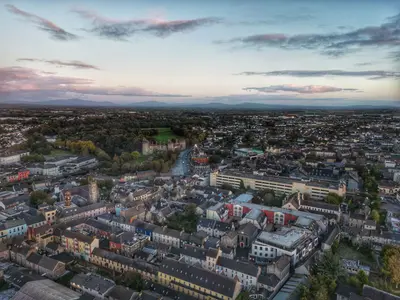
    The Southeast combines medieval towns with a gentle hill and river landscape. Kilkenny, with its castle, cathedral, and the Medieval Mile, preserves one of Ireland's most intact medieval townscapes, Waterford dates back to a Viking foundation in 914, and the Rock of Cashel in Tipperary is home to the former seat of the Kings of Munster.The region is located on the way from Dublin to Cork and Kerry and is suitable for a stopover of one to three days. The Waterford Greenway is worth exploring by bike, a roughly 46-kilometre-long rail trail to Dungarvan on the coast.
    Sligo & Donegal

    Sligo & Donegal

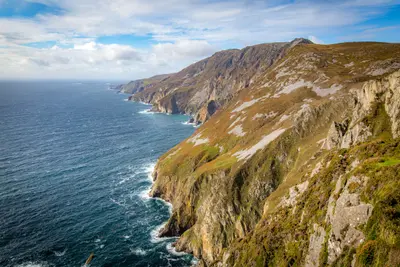
    The Northwest is the most remote and least visited part of the Republic. In County Sligo, the landscape is shaped by the flat-topped Benbulben, surf beaches, and the memory of poet W. B. Yeats; in Donegal, the Slieve League cliffs plunge over 600 meters down to the sea, and in Glenveagh National Park, a castle stands by a lonely lake.The distances are long and the roads are narrow, but beaches and viewpoints are often empty even in summer. Without a car, the region is difficult to explore.
    Cork & Kerry

    Cork & Kerry

    For many, the Southwest is Ireland's most scenically impressive corner: The Iveragh and Dingle peninsulas stretch far into the Atlantic, with Ireland's highest mountains, the lakes of Killarney National Park, and the monastic island Skellig Michael off the coast.Cork, the Republic's second-largest city, is a good starting point with its airport and ferry port. For Kerry, you should plan several days; Killarney is suitable as a base for the National Park and the Ring of Kerry, Dingle for its namesake peninsula.
    Midlands & Shannon

    Midlands & Shannon

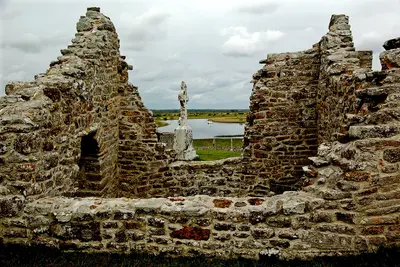
    The Midlands are Ireland's tranquil interior, featuring bogs, lakes, and the Shannon, the country's longest river. From a tourism perspective, they are overshadowed by the coasts, but they lie on the route from Dublin to Galway and are worth a stopover.The most important destination is the monastic city of Clonmacnoise on the banks of the Shannon south of Athlone, one of Ireland's most significant early Christian sites.
    Dublin & East Coast

    Dublin & East Coast

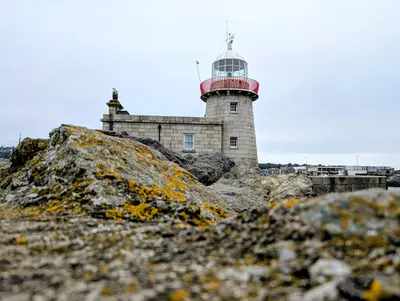
    The East is the starting point for most travelers: The capital Dublin lies at the mouth of the Liffey into the Irish Sea and, with its airport and ferry port, is the gateway to the country. To the south, the Wicklow Mountains begin with the monastic valley of Glendalough; to the north, the Boyne Valley with the over 5,000-year-old passage tombs of Brú na Bóinne.All three destinations are accessible from Dublin as day trips; for Wicklow and the Boyne Valley, a car or a guided tour is most convenient.

    Northern Ireland is part of the United Kingdom; here, you pay with Pound Sterling, and EU citizens need an electronic travel authorisation (ETA) for entry, even if there are no checks at the land border with the Republic. The capital Belfast tells of its shipyard history with the Titanic Belfast museum, and of decades of conflict through murals and peace walls. Along the Causeway Coast on the north coast are the basalt columns of the Giant's Causeway, the Carrick-a-Rede Rope Bridge, and the ruins of Dunluce Castle. From Dublin, you can reach Belfast by car, bus, or the Enterprise train, which crosses the border without changing.

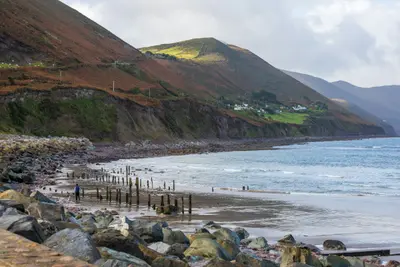
    The West is the heartland of the Wild Atlantic Way: In County Clare, the Cliffs of Moher plunge up to 214 metres into the Atlantic, behind which lies the karst landscape of the Burren. Galway is the West Coast's liveliest city and a gateway to the Aran Islands and the mountains and bogs of Connemara.Further north in County Mayo are the Georgian town of Westport, the pilgrimage mountain Croagh Patrick and Achill, Ireland's largest island. In parts of Connemara, on the Aran Islands and on Achill, Irish is still an everyday language.

    Recommended Itineraries

    Discover the best routes through Ireland.
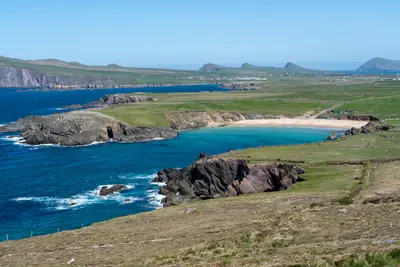
    Ireland Classics: South & West in 12 Days

    Ireland Classics: South & West in 12 Days

    The classic route connects the capital with medieval Kilkenny, the lakes and peninsulas of Kerry, and the west coast between the Cliffs of Moher and Galway. Along the way lie the Rock of Cashel, the Ring of Kerry, the Dingle Peninsula, and the Burren; from Galway you can reach Connemara or the Aran Islands as a day trip.

    13 Days
    Stops at a glance
    1. 1.Dublin
    2. 2.Kilkenny
    3. 3.Killarney & Killarney National Park
    4. 4.Dingle & Dingle-Halbinsel
    5. 5.Cliffs of Moher
    6. 6.Galway
    7. 7.Dublin
    View Route Details →
    Wild Atlantic Way North to the Causeway Coast

    Wild Atlantic Way North to the Causeway Coast

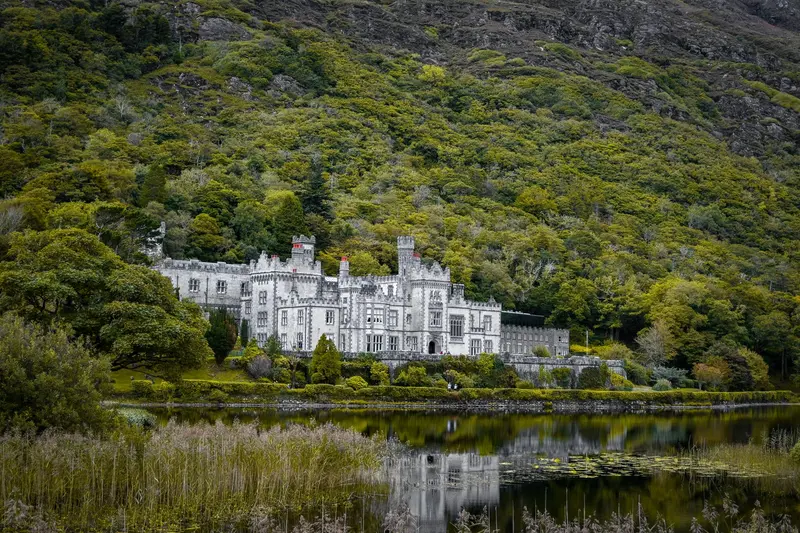
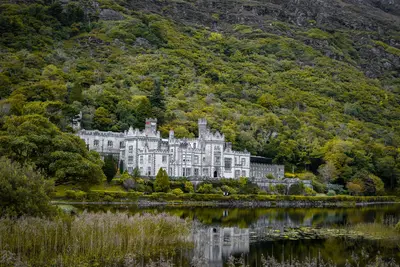
    The route follows the northern part of the west coast from Galway through Connemara and Mayo to Donegal, ending at the Causeway Coast and in Belfast. Along the way are Kylemore Abbey, pilgrim mountain Croagh Patrick, Achill Island, table mountain Benbulben, cliffs of Sliabh Liag and the Giant's Causeway.

    12 Days
    Open jaw
    8 stops

    What you eat in Ireland

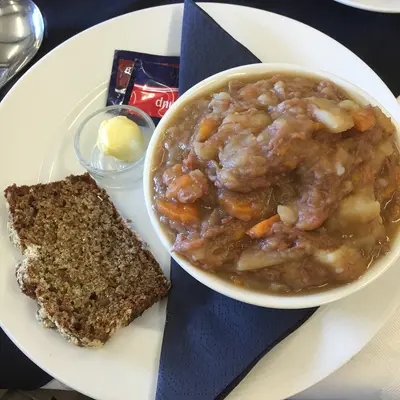
    Irish Stew

    Irish Stew

    Hearty Irish Stew

    The stew is considered a national dish. Traditionally, it's slow-cooked with lamb or mutton, potatoes, and onions, often with added carrots; beef variants are common. It is usually served with a slice of Brown Bread.
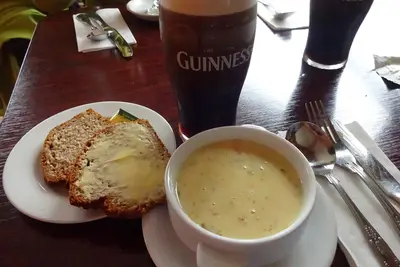
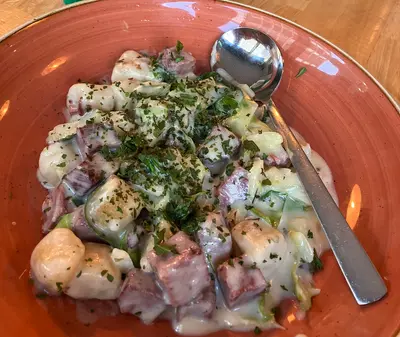
    Seafood Chowder

    Seafood Chowder

    Cream-based Fish Soup

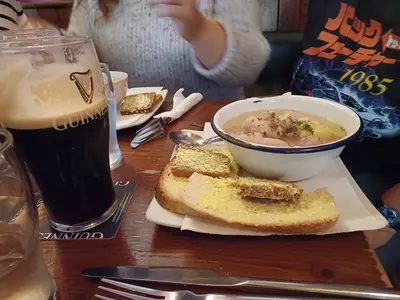
    A creamy soup with haddock, salmon, mussels or prawns, served with potatoes and leeks. You'll find it in coastal towns and pubs nationwide, almost always with brown soda bread and butter.
    Dublin Coddle

    Dublin Coddle

    Dublin Sausage and Potato Stew

    A stew made of sausages, bacon (rashers), onions, and potatoes, originating from Dublin and originally used to utilize leftovers. Today, it is primarily found on the menu in traditional pubs across the capital.
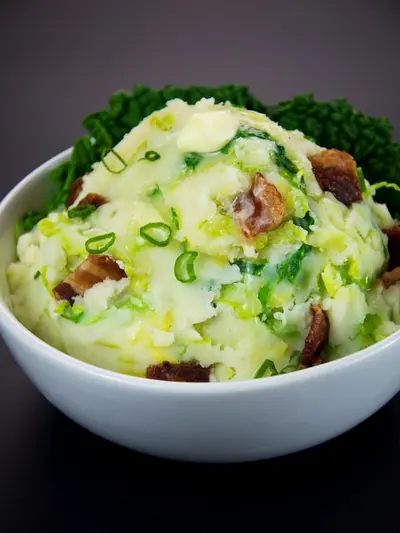
    Colcannon

    Colcannon

    Potato Mash with Cabbage

    Creamy mashed potatoes with white cabbage or kale and plenty of butter. It is eaten as a side dish with meat and sausages; the related variant with spring onions is called Champ.
    Boxty

    Boxty

    Potato Griddlecakes

    A potato pancake from the Midlands. In restaurants today, it's often served filled as a main course, and as a side for breakfast.
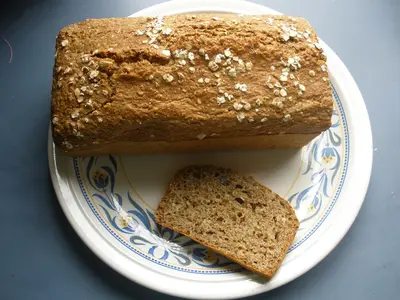
    Soda Bread

    Soda Bread

    No-yeast bread

    This bread is quickly made with baking soda and buttermilk, not yeast. Available in light and dark wholemeal types; Brown Bread for soups, chowder and breakfast.

    Good to Know

    Essential info for your trip planning.

    Land & People

    Population and Daily LifeIn the Republic of Ireland, the 2022 census counted around 5.

    History & Society

    Stone Age, Celts and Early ChristianityTraces of human settlement in Ireland date back to the Middle Stone Age.

    Food & Drink

    Hearty Cuisine with Quality IngredientsIrish cuisine is hearty and thrives on what pastures and the sea provide: lamb…

    Practical Info

    Entry Requirements and DocumentsAs an EU citizen, you can enter the Republic of Ireland with a valid ID card or…

    Getting Around

    Getting ThereMost travellers arrive by plane. The main airports are Dublin (DUB), Shannon (SNN) near Limerick, and Cork…

    RV Travel

    Is Ireland worth it with a motorhome?The coastal routes in the west, especially the Wild Atlantic Way, are very popular…

    Traveling with Kids

    Ireland as a Family DestinationShort distances between beaches, castles, and farms, an English-speaking environment,…

    Best Time to Visit

    When is the best time for your trip?

    May
    June
    September
    12–15°C·60–75 mm(moderate rain)
    Diese Monate bieten ein angenehmes Gleichgewicht aus milderen Temperaturen, längeren Tagen und moderateren Besucherzahlen im Vergleich zur Hochsaison. Der Niederschlag ist tendenziell geringer als in den Wintermonaten.
    Irland ist bekannt für sein gemäßigtes, maritimes Klima, das stark vom warmen Golfstrom beeinflusst wird. Dies führt zu relativ milden Wintern und kühlen Sommern ohne extreme Temperaturen.Wettercharakteristik: Das Wetter in Irland ist notorisch wechselhaft. Es ist nicht ungewöhnlich, „vier Jahreszeiten an einem Tag“ zu erleben. Häufige Regenfälle, oft als leichter Nieselregen oder kurze Schauer, sind das ganze Jahr über zu erwarten. Sonnige Abschnitte können sich schnell mit bewölkten Phasen abwechseln.Regionale Unterschiede: Die Westküste Irlands ist aufgrund ihrer direkten Exposition zum Atlantik tendenziell feuchter, windiger und milder als die Ostküste. Der Osten, insbesondere die Region um Dublin, ist etwas trockener und weist eine geringfügig größere Temperaturschwankung zwischen Sommer und Winter auf.Niederschlag: Obwohl es das ganze Jahr über regnet, sind die Monate Herbst und Winter (Oktober bis Januar) in der Regel die niederschlagsreichsten.Wind: Irland ist oft windig, besonders an den Küsten und auf höher gelegenen Flächen.Empfehlung für Reisende: Unabhängig von der Reisezeit ist es ratsam, wetterfeste Kleidung in Schichten (Zwiebellook), eine wind- und wasserdichte Jacke sowie bequemes, wasserdichtes Schuhwerk einzupacken.

    Seasons

    Jan
    Feb
    Mar
    Apr
    May
    Jun
    Jul
    Aug
    Sep
    Oct
    Nov
    Dec
    Hauptsaison
    Übergangssaison
    Nebensaison
    Best Time to Visit
    ▶Show detailed monthly data
    MonthTemp (°C)Rain (mm)Sun (h)
    January5.0851.5
    February5.0702.5
    March7.0653.5
    April9.0555.5
    May12.0606.5
    June15.0657.0
    July16.0606.0
    August16.0805.5
    September14.0754.5
    October11.0903.0
    November8.0952.0
    December6.0901.5

    Travel advice

    Safety, entry requirements and health: the official, up-to-date advice for Ireland is published by the UK government on GOV.UK.

    Go to GOV.UK
    Sources & method

    • Photos: Wikimedia Commons, Unsplash, Pexels. Each photo carries its credit.
    • The content is based on web research from public, traceable sources. How the content is made · The role of AI
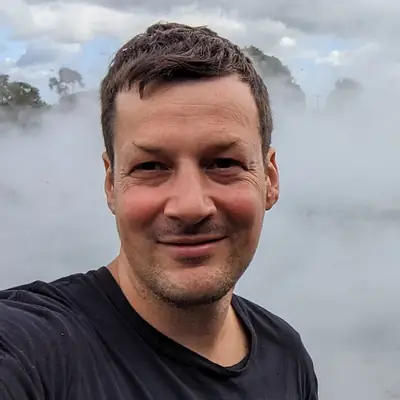
    Felix at Kuirau Park in Rotorua, New Zealand

    Who's behind Fernweh?

    Hi, I'm Felix.

    I love to travel, and I love planning even more. Fernweh.guide is my attempt at building a really good online travel guide.

    About Fernweh

    All places in Ireland

    • Achill Island
    • Aran Islands
    • Belfast
    • Brú na Bóinne (Newgrange)
    • Cliffs of Moher
    • Clonmacnoise
    • Connemara
    • Cork
    • Cork & Kerry
    • Docklands
    • Dublin
    • Dublin & East Coast
    • Galway
    • Georgian-era Dublin
    • Giant's Causeway & Causeway Coast
    • Glendalough & Wicklow Mountains
    • Glenveagh National Park
    • Kilkenny
    • Killarney & Killarney National Park
    • Midlands & Shannon
    • Rock of Cashel
    • Skellig Michael
    • Slieve League (Sliabh Liag)
    • Sligo & Donegal
    • Temple Bar & Historic Medieval Dublin
    • Waterford
    • Westport & Croagh Patrick

    More about Ireland

    • Best Time to Visit Ireland
    • Ireland with Kids
    • Ireland by RV