Fernweh: Home
    ExploreTravel GuidesPlan a tripMy tripLast visited
    de|en
    All Places & RegionsAll highlightsAbout FernwehFAQPrivacy PolicyImprint
    ExploreTravel GuidesPlan a tripMy tripLast visited
    • Why go
    • Highlights
    • Explore regions
    • Round trips
    • Local food
    • Good to know
    • Best time to visit
    • Travel advice
    Peru

    Travel Guide Peru

    Peru stretches from the coastal desert on the Pacific, across the Andean highlands, to the Amazon lowlands.

    by Felix Gillen

    Contents

    • Why go
    • Highlights
    • Explore regions
    • Round trips
    • Local food
    • Good to know
    • Best time to visit
    • Travel advice

    Why Go To Peru?

    Peru brings together three very distinct landscapes: the desert coast on the Pacific, the Andean highlands, and the Amazon lowlands. Beyond Inca sites like Machu Picchu and the former Inca capital Cusco, you'll discover evidence of much older cultures, from the Nazca Lines to Caral, recognized by UNESCO as the oldest center of civilization in the Americas. Adding to this is a cuisine where indigenous ingredients meet Spanish, African, Chinese, and Japanese influences.
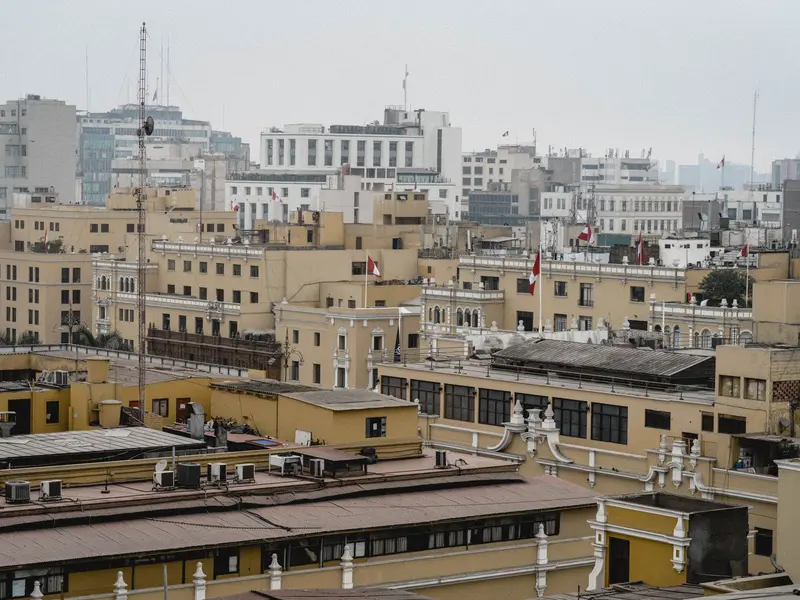
    Lima
    Highlight 1 of 8

    Lima

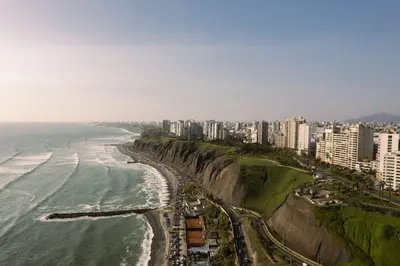
    Peru's capital lies on the Pacific coast and is the first stop for most travelers. Francisco Pizarro founded it in 1535; as the seat of the Viceroyalty, it became Spanish South America's most important city.

    Discover
    Paracas
    PsamatheM / Wikimedia Commons / CC BY-SA 4.0
    Highlight 2 of 8

    Paracas

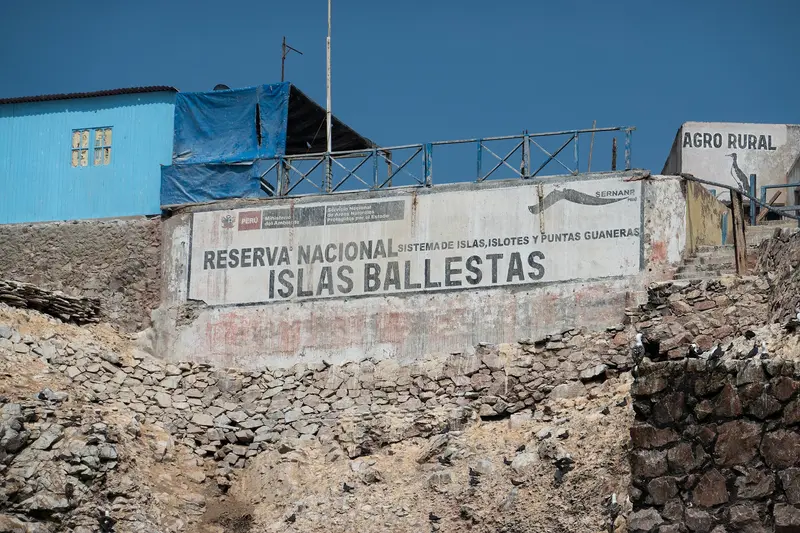
    The coastal resort of Paracas on the Pacific coast is the starting point for two of the most famous natural experiences on the Peruvian coast.

    Discover
    Highlight 3 of 8

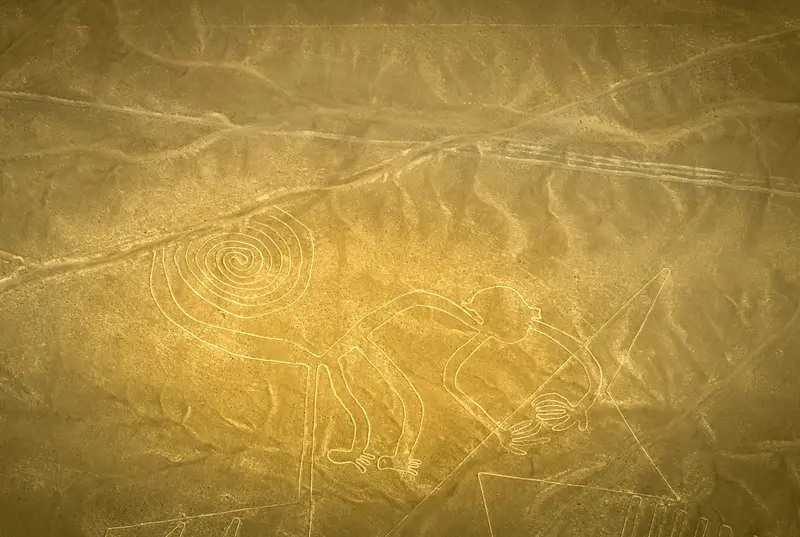
    The Nazca Lines are immense geoglyphs etched into the desert on Peru's southern coast, primarily created by the Nazca culture, which lived here roughly between 100 BC and 800 AD.

    Discover
    Highlight 4 of 8

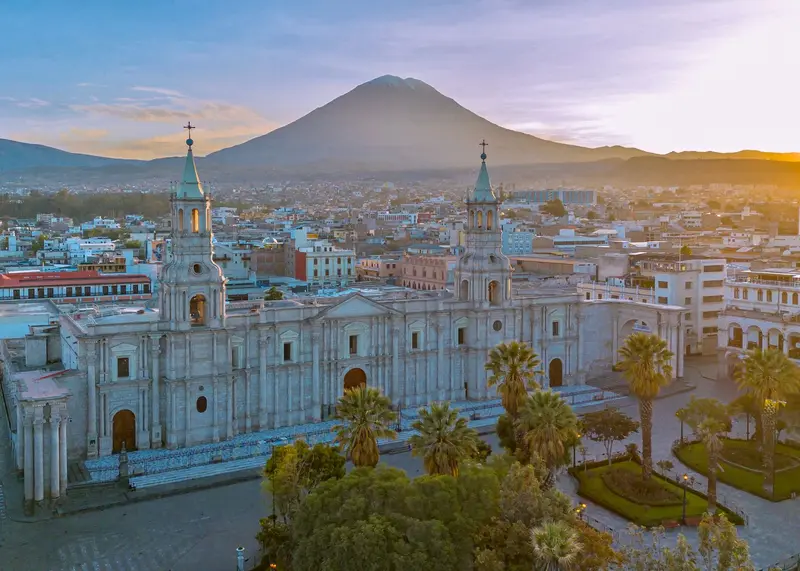
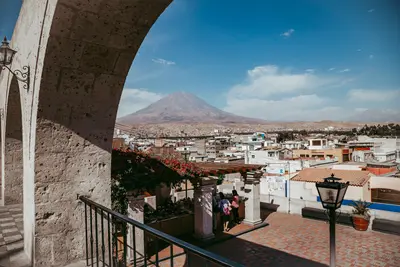
    Arequipa is located in southern Peru at around 2,400 meters, at the foot of Misti volcano. The Spanish founded the city on August 15, 1540.

    Discover
    Colca Canyon
    Highlight 5 of 8

    Colca Canyon

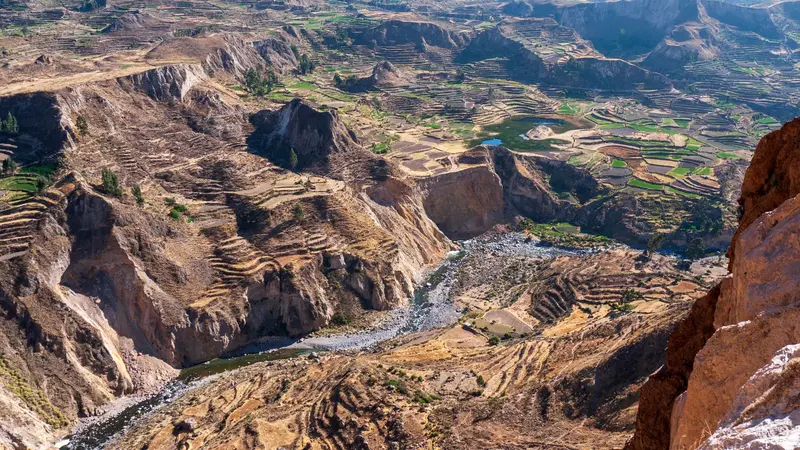
    The Colca Canyon is located approximately 160 kilometers northwest of Arequipa and is one of the deepest canyons in the world. Along the valley, villages still cultivate ancient agricultural terraces, some of which date back to pre-Incan times.

    Discover
    Titicaca Lake
    Diego Delso / Wikimedia Commons / CC BY-SA 4.0
    Highlight 6 of 8

    Titicaca Lake

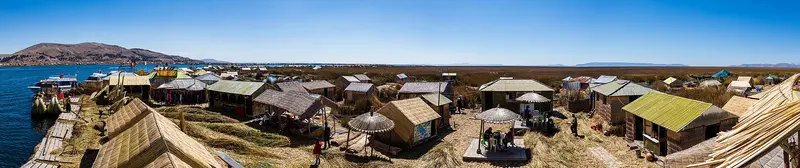
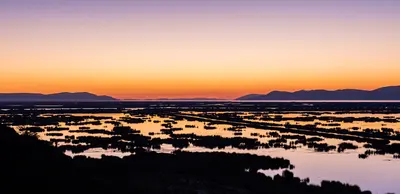
    Lake Titicaca lies at an altitude of approximately 3,810 meters in the Altiplano and is shared by Peru and Bolivia. It is considered the world's highest navigable lake.

    Discover
    Cusco
    Highlight 7 of 8

    Cusco

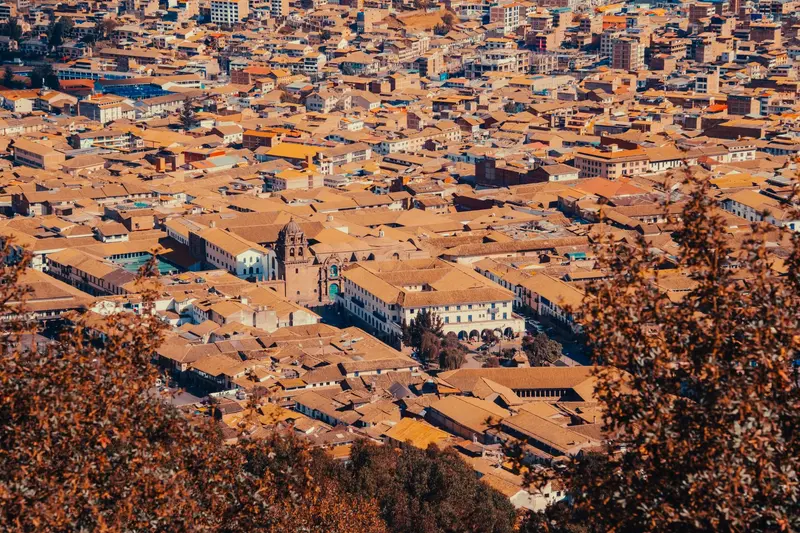
    Cusco was the capital of the Inca Empire and is now the starting point for almost every trip to Machu Picchu. Under Pachacútec, a planned city with religious and administrative areas emerged.

    Discover
    Highlight 8 of 8

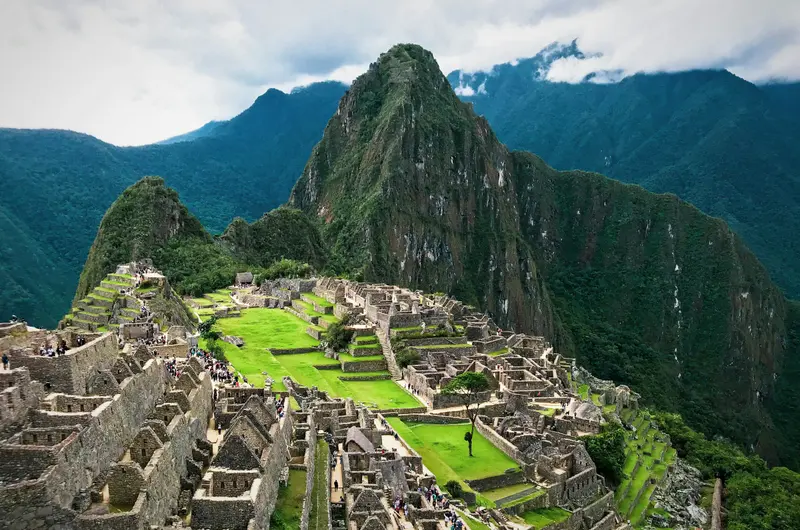
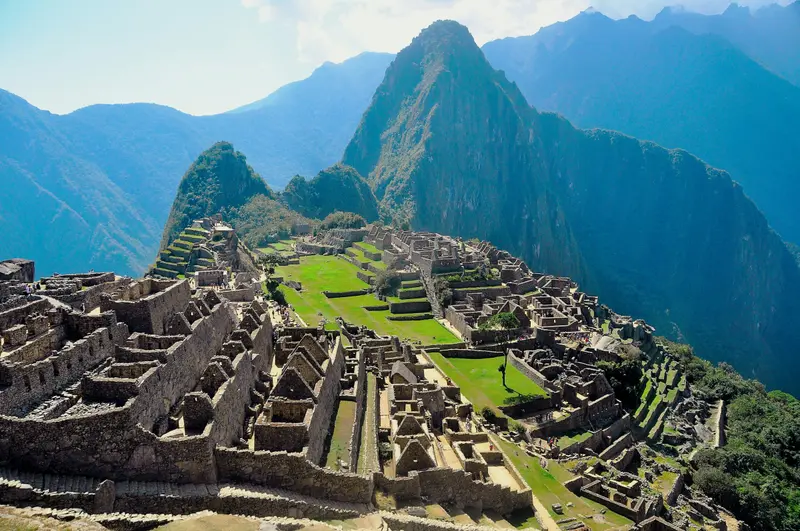
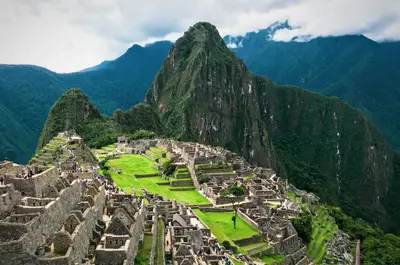
    Machu Picchu is the most famous Inca site and the reason most travelers come to Peru.

    Discover

    More highlights in Peru

    Unique experiences that make Peru unforgettable.
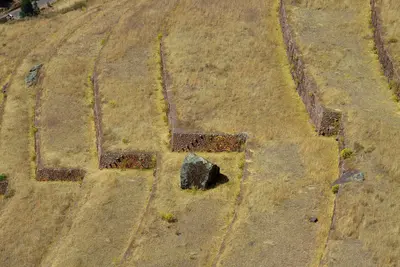
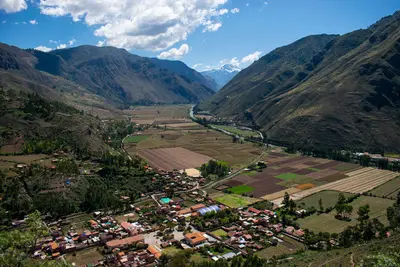
    The Sacred Valley follows the Río Urubamba northwest of Cusco and was an important agricultural region for the Inca. The town of Pisac is located about 30 kilometers from Cusco, known for its handicraft market, especially on Sundays, and the terraces and temples of the Inca site on the mountain above the town. On the high plateau above the valley are the circular terraces of Moray , which the Inca presumably used for agricultural experiments, and the salt pans of Maras , where salt still evaporates from a spring today. At the western end of the valley lies Ollantaytambo, with the train station to Machu Picchu. Pisac, Ollantaytambo,…
    Tambopata National Reserve

    Tambopata National Reserve

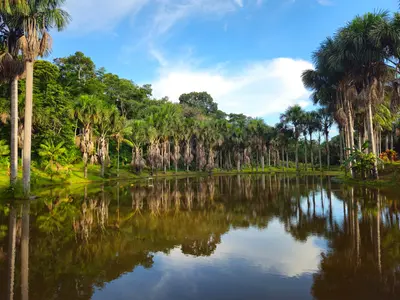
    The Tambopata National Reserve protects Amazon rainforest south of Puerto Maldonado and is the most easily accessible rainforest area in Southern Peru. Accommodations are lodges on the Tambopata and Madre de Dios rivers, which organize guided excursions, usually as multi-day packages. Lago Sandoval: an oxbow lake about 15 kilometers from Puerto Maldonado, which you explore by rowboat after a boat trip and a walk. Birds, monkeys, and caimans are often spotted en route. Clay Licks (Collpas): On riverbanks, parrots and macaws gather early in the morning to eat mineral-rich clay. The Collpa Chuncho is accessible by an early boat trip.…
    Huascarán National Park

    Huascarán National Park

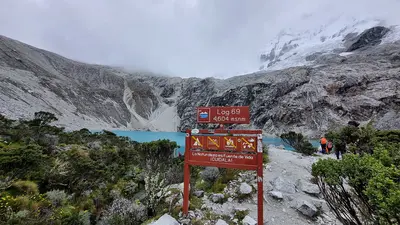
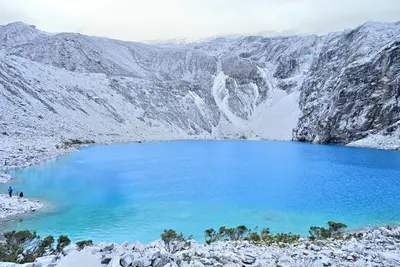
    Huascarán National Park encompasses almost the entire Cordillera Blanca: glaciers, hundreds of high-altitude lakes, and Huascarán, Peru's highest mountain at 6,768 meters. The park was founded in 1975, has been a biosphere reserve since 1977, and a UNESCO World Heritage site since 1985. Laguna 69: the most famous day hike, a turquoise glacial lake at around 4,600 meters. The starting point is Cebollapampa, and the round trip takes about six to seven hours. Lagunas de Llanganuco: two lakes at around 3,850 meters on the way to Laguna 69, also a stop for day trips from Huaraz. Laguna Churup above Huaraz is suitable as an…

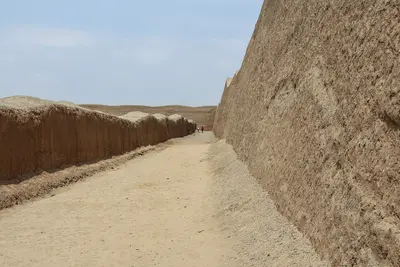
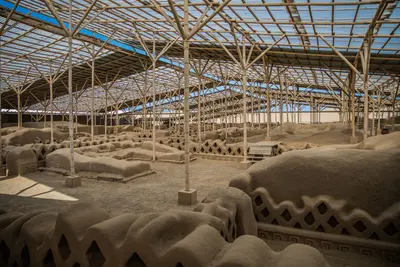
    Chan Chan was the capital of the Chimú Empire, which dominated Peru's northern coast until the Inca conquered it around 1470. The city on the outskirts of Trujillo covered approximately 20 square kilometers and is considered the largest adobe city in the Americas. Its core consists of walled palace compounds with courtyards, storerooms, and walls into which reliefs of fish, birds, and geometric patterns are sculpted. UNESCO inscribed Chan Chan on its World Heritage List in 1986 and simultaneously placed it on the List of World Heritage in Danger, because rain and wind attack the adobe. Visitors can primarily explore the restored…

    How to plan your trip to Peru

    From the guide to the road: here is what comes next.

    1. 1
      Sunrise over alpine peaks and a sea of clouds
      1234

      Round trip

      12 days · 4 stops

      Saved

      Pick a route

      Pick a ready-made one or save places and plan your own.

      Browse routes
    2. 2

      Trip to Peru

      Live
      • 1Lima3 days
      • 2Paracas4 days
      • 3Colca Canyon5 days
      Budget

      Plan your trip

      The planner sorts stops, days and budget. Plan together in real time.

      Go to My Trips
    3. 3
      9:41 No signal
      Peru
      Available offline

      Use it on the road

      Download the guide to your phone and use it on site, even offline.

    Regions to Discover

    Explore the diverse regions of Peru.
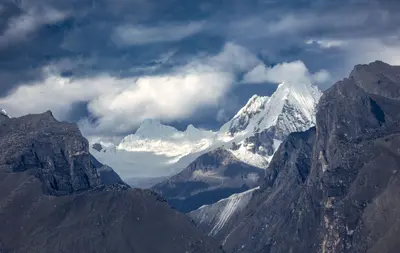
    Huaraz and Cordillera Blanca

    Huaraz and Cordillera Blanca

    In the Ancash region of northern Peru rises the Cordillera Blanca, the world's highest tropical mountain range. Nearly the entire massif belongs to Huascarán National Park, a UNESCO World Heritage site since 1985, named after Huascarán, Peru's highest peak at 6,768 meters. The city of Huaraz is the starting point for day hikes, trekking tours, and mountaineering.
    Arequipa and Colca

    Arequipa and Colca

    The southern region links colonial Arequipa (approx. 2,400m) to the Andean highlands. Above the city rise volcanoes Misti, Chachani, and Pichu Pichu. Roughly 160 km northwest, Colca Canyon offers Inca terraces and the Cruz del Cóndor viewpoint for observing Andean condors. Arequipa is a common stopover for the Puno and Cusco highlands.
    Lima and Central Coast

    Lima and Central Coast

    The region around the capital is located on the central Pacific coast. Lima, founded in 1535 by Francisco Pizarro, is the main arrival point for international flights; its historic center has been a UNESCO World Heritage site since 1988. Approximately 200 kilometers to the north, in the Supe Valley, lies the Sacred City of Caral, considered by UNESCO to be the oldest center of a civilization in the Americas.
    Puno and Lake Titicaca

    Puno and Lake Titicaca

    In the Altiplano on the border with Bolivia lies Lake Titicaca at an altitude of approximately 3,810 meters, the highest navigable lake in the world. The city of Puno on the west shore is the starting point for boat tours to the floating reed islands of the Uros and to Taquile Island, whose textile art UNESCO has recognized as intangible cultural heritage. In February, Puno celebrates the Fiesta de la Candelaria, also a UNESCO cultural heritage. The region is accessible by flight to Juliaca, by bus, or by train from Cusco.

    On the north coast around Trujillo were the centers of two great pre-Inca cultures: The Moche built here the Huacas del Sol y de la Luna, the Chimú their capital Chan Chan, the largest adobe city in the Americas. The fishing village of Huanchaco, with its reed boats and surf waves, is just a few kilometers away. For Trujillo and parts of the region, a state of emergency is temporarily in effect; please note the current travel advisories from the Foreign Office before your trip.
    Southcoast (Ica)

    Southcoast (Ica)

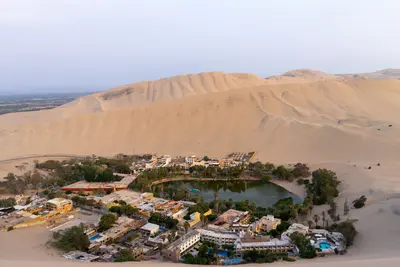
    The Ica region lies south of Lima on the desert coast and is easily accessible via the Panamericana. From Paracas, boat tours depart for the Islas Ballestas, home to sea lions and Humboldt penguins, alongside which lies the Reserva Nacional de Paracas, the country's largest coastal protected area. Around the city of Ica, Pisco is distilled; on the city's outskirts lies the Huacachina oasis, nestled between high dunes. Further south, the Nazca Lines stretch across the desert, a UNESCO World Heritage site since 1994.
    Amazon Region (Tambopata)

    Amazon Region (Tambopata)

    The Amazon lowlands begin in the Departamento Madre de Dios in southeastern Peru. The city of Puerto Maldonado is accessible by short flights from Lima and Cusco and serves as a starting point for stays in lodges within and around the Tambopata National Reserve. There, you can observe parrots and macaws at clay licks, monkeys, caimans, and numerous bird species. Before your trip, inform yourself at your foreign ministry about health risks in the lowlands and recommended vaccinations.
    Cusco and Sacred Valley

    Cusco and Sacred Valley

    The region around Cusco is the heartland of the Incas and Peru's most important travel destination. The former Inca capital, Cusco, is situated at around 3,500 meters, its center has been a UNESCO World Heritage site since 1983. Northwest lies the Sacred Valley of the Urubamba with the ruins and markets of Pisac, the Inca town of Ollantaytambo, and the terraces of Moray and Maras. At the end of the valley is Machu Picchu, accessible by train to Aguas Calientes.

    Recommended Itineraries

    Discover the best routes through Peru.
    Peru's South: From the Coast to Machu Picchu

    Peru's South: From the Coast to Machu Picchu

    Eighteen days from Lima via Paracas, Huacachina, and Nazca to Arequipa and the Colca Canyon, then on to Lake Titicaca, and finally to Cusco, the Sacred Valley, and Machu Picchu. You travel to Cusco comfortably by long-distance bus; return to Lima by plane.

    17 Days
    Stops at a glance
    1. 1.Lima
    2. 2.Paracas
    3. 3.Huacachina
    4. 4.Nazca-Linien
    5. 5.Arequipa
    6. 6.Colca Canyon
    7. 7.Puno
    8. 8.Cusco
    9. 9.Ollantaytambo
    10. 10.Machu Picchu
    11. 11.Cusco
    View Route Details →
    Glaciers and Clay Pyramids: Huaraz and the North Coast

    Glaciers and Clay Pyramids: Huaraz and the North Coast

    Twelve days from Lima to the Cordillera Blanca in Huaraz and on to the North Coast in Trujillo. Between Lima, Huaraz, and Trujillo, you travel by long-distance buses, returning to Lima by plane.

    12 Days
    5 stops

    What you eat in Peru

    Ceviche

    Ceviche

    Marinated raw fish in lime juice

    Raw fish is marinated in lime juice with onions, chili, and cilantro and usually served with sweet potato and corn. In 2004, Peru declared ceviche a cultural heritage of the nation, celebrated on June 28.
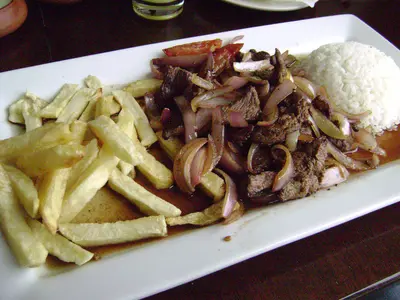
    Lomo Saltado

    Lomo Saltado

    Beef dish from the Wok

    Beef strips are stir-fried in a wok with soy sauce, red onions, tomatoes, and Ají, and served with rice and potatoes. The dish represents Chifa cuisine, which combines Chinese immigrants and Peruvian ingredients.
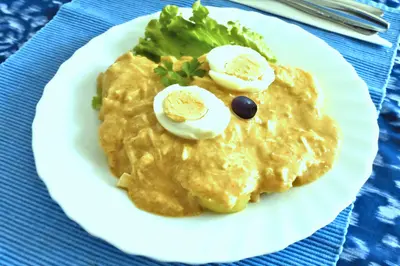
    Ají de Gallina

    Ají de Gallina

    Chicken in creamy Ají sauce

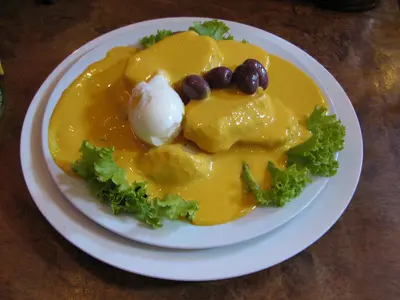
    Shredded chicken in a creamy sauce with yellow Ají Amarillo, served with rice, often garnished with boiled egg and olives. A classic of Creole cuisine.
    Papa a la Huancaína

    Papa a la Huancaína

    Potatoes in Cheese-Chili Sauce

    Boiled potatoes topped with a sauce of fresh cheese and Ají Amarillo, usually with egg and olives. The name refers to Huancayo in the central highlands.
    Pisco Sour

    Pisco Sour

    Cocktail with grape brandy

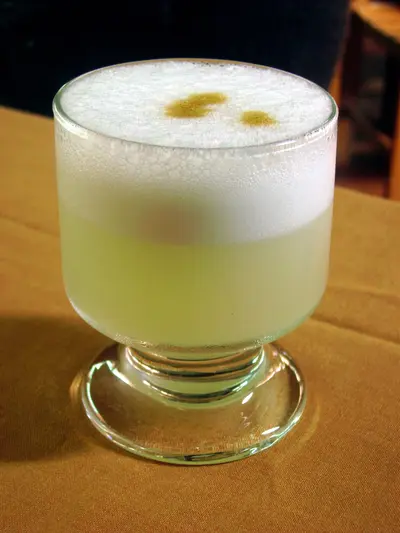
    Pisco is frothed with lime juice, sugar syrup and egg white, and served with a few drops of Angostura. The cocktail has been a National Cultural Heritage since 2007, and its honorary day is the first Saturday in February.
    Chicha Morada

    Chicha Morada

    Beverage from purple corn

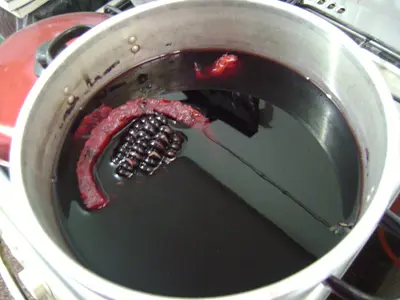
    Purple corn is cooked with pineapple peel, cinnamon, and cloves, cooled, and flavored with lime and sugar. This non-alcoholic drink accompanies many everyday dishes.

    Good to Know

    Essential info for your trip planning.

    Land & People

    With a good 1.28 million square kilometers, Peru is the third-largest country in South America.

    History & Society

    Early CivilizationsLong before the Inca, complex societies emerged along the coast and in the Andes.

    Food & Drink

    A Cuisine of Many InfluencesPeruvian cuisine combines ingredients from the coast, Andes, and Amazon region with…

    Practical Info

    For current and official travel, safety, and health advice, please refer to the Federal Foreign Office (Auswärtiges…

    Getting Around

    Getting ThereThe international hub is Jorge Chávez (LIM) Airport in Lima, whose new terminal has been operational since…

    RV Travel

    Peru can be explored by RV or camper, but the infrastructure is simpler than in Europe.

    Traveling with Kids

    Peru with ChildrenPeru offers families a lot: animals on the coast and in the rainforest, markets, and Inca ruins.

    Best Time to Visit

    When is the best time for your trip?

    May
    June
    July
    August
    September
    10–13°C·4–15 mm(little rain)
    For a classic trip through the Andes with Cusco, Machu Picchu, and Lake Titicaca, the months from May to September are most favorable: There is little rain, days are sunny, but nights in the highlands are cold. April and October are good transition months. During the rainy season from December to March, landslides and road closures can occur, and the Inca Trail is completely closed in February.
    The climate data shows Cusco in the Andean highlands (normal values 1991 to 2020 from the Peruvian meteorological service SENAMHI), because most trips pass through this region. However, Peru has three very distinct climate zones:Coast: In Lima, it almost never rains. From December to March it is sunny and warm; from approximately May to October, the Garúa often lies over the city, a grey coastal fog created by the cold Humboldt Current.Andes: Daytime temperatures are similar throughout the year; at night, temperatures can approach freezing in the dry season.Amazon Basin: Warm and humid all year round, somewhat drier from May to October.

    Seasons

    Jan
    Feb
    Mar
    Apr
    May
    Jun
    Jul
    Aug
    Sep
    Oct
    Nov
    Dec
    Dry season in the Highlands
    Transition
    Highland rainy season
    Best Time to Visit
    ▶Show detailed monthly data
    MonthTemp (°C)Rain (mm)
    January13.9145
    February13.9127
    March13.397
    April12.833
    May11.15
    June10.04
    July10.05
    August11.15
    September12.815
    October13.943
    November14.471
    December13.9114

    Travel advice

    Safety, entry requirements and health: the official, up-to-date advice for Peru is published by the UK government on GOV.UK.

    Go to GOV.UK
    Sources & method

    • Photos: Wikimedia Commons, Unsplash, Pexels. Each photo carries its credit.
    • The content is based on web research from public, traceable sources. How the content is made · The role of AI
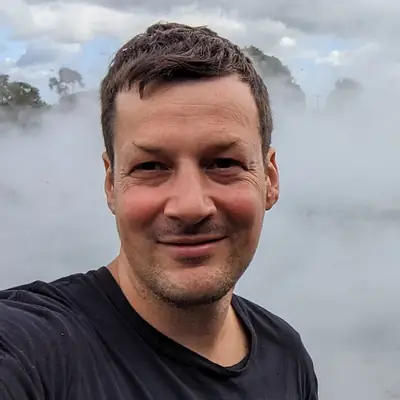
    Felix at Kuirau Park in Rotorua, New Zealand

    Who's behind Fernweh?

    Hi, I'm Felix.

    I love to travel, and I love planning even more. Fernweh.guide is my attempt at building a really good online travel guide.

    About Fernweh

    All places in Peru

    • Amazon Region (Tambopata)
    • Arequipa and Colca
    • Barranco
    • Caral
    • Centro Histórico (Lima)
    • Colca Canyon
    • Cusco
    • Cusco and Sacred Valley
    • Huacachina
    • Huaraz
    • Huaraz and Cordillera Blanca
    • Huascarán National Park
    • Lima
    • Lima and Central Coast
    • Miraflores
    • Paracas
    • Puerto Maldonado
    • Puno
    • Puno and Lake Titicaca
    • Southcoast (Ica)
    • Tambopata National Reserve
    • Titicaca Lake

    More about Peru

    • Best Time to Visit Peru
    • Peru with Kids