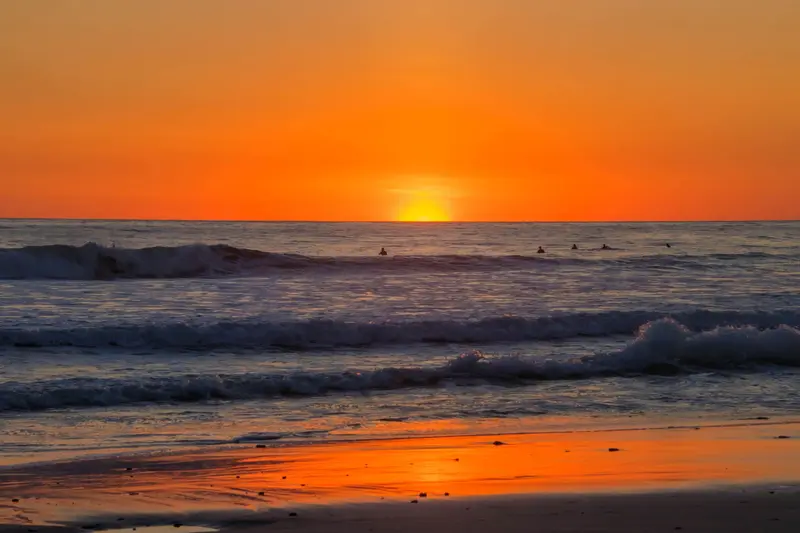
Fernweh: Home
    ExploreTravel GuidesPlan a tripMy tripLast visited
    de|en
    All Places & RegionsAll highlightsAbout FernwehFAQPrivacy PolicyImprint
    ExploreTravel GuidesPlan a tripMy tripLast visited
    • Why go
    • Highlights
    • Explore regions
    • Round trips
    • Local food
    • Good to know
    • Best time to visit
    • Travel advice
    Costa Rica

    Travel Guide Costa Rica

    Rainforests, cloud forests, and active volcanoes between the Pacific and Caribbean: Costa Rica combines nature reserves, wildlife viewing, and surf beaches in a compact area.

    by Felix Gillen

    Contents

    • Why go
    • Highlights
    • Explore regions
    • Round trips
    • Local food
    • Good to know
    • Best time to visit
    • Travel advice

    Why Go To Costa Rica?

    Within just about 51,000 square kilometers, Costa Rica is home to lowland rainforests, cloud forests, dry forests, and volcanic landscapes in close proximity, with over a quarter of the country's area protected. You can hike active volcanoes, observe wildlife in national parks, and reach the beaches of the Pacific or Caribbean in just a few hours. Added to this is a politically stable country that has been without an army since 1948 and offers a well-developed infrastructure for nature travelers.
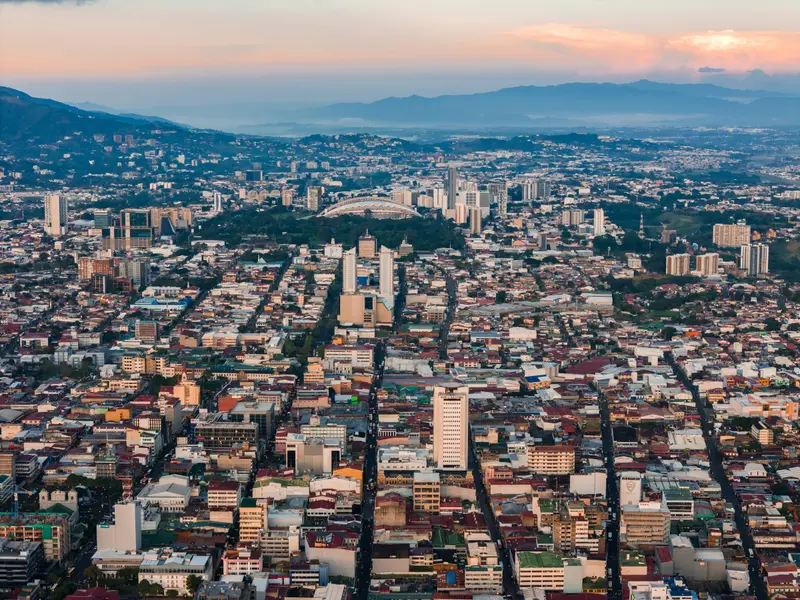
    San José
    Highlight 1 of 8

    San José

    San José is the capital of Costa Rica and the heart of the Central Valley. Almost all travelers arrive here.

    Discover
    Tortuguero
    Francisco Peralta Torrejón / Wikimedia Commons / CC BY-SA 4.0
    Highlight 2 of 8

    Tortuguero

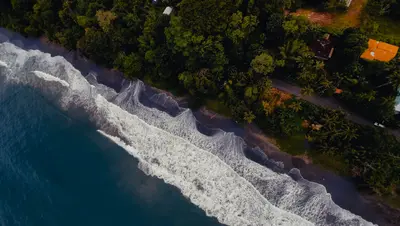
    Tortuguero is a national park and a small village on Costa Rica's northern Caribbean coast, accessible only by boat or small plane.

    Discover
    Arenal Volcano National Park
    Highlight 3 of 8

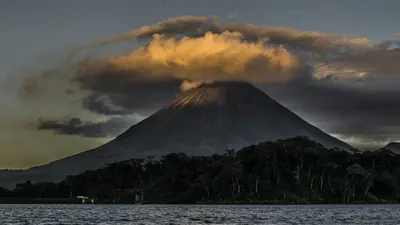
    Arenal Volcano National Park

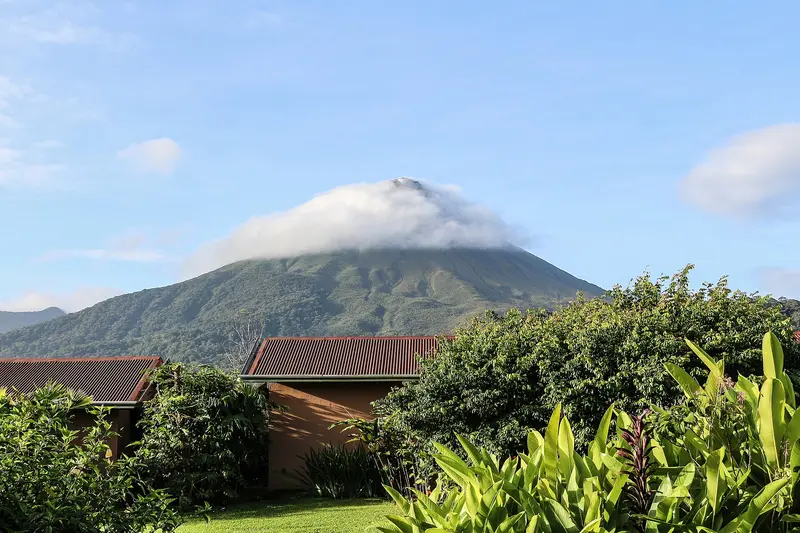
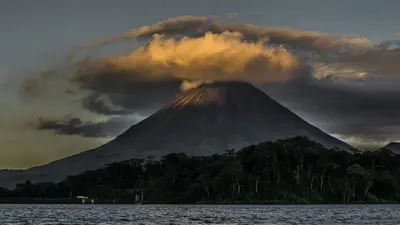
    Arenal Volcano National Park protects the roughly 1,630-meter-high cone of Arenal and its forested flanks in the Arenal and Monteverde region, about 30 minutes drive west of La Fortuna.

    Discover
    Monteverde
    Highlight 4 of 8

    Monteverde

    Monteverde is the cloud forest highlands in the Arenal and Monteverde region, about a four-hour drive from the Valle Central around San José.

    Discover
    Tamarindo
    Highlight 5 of 8

    Tamarindo

    Tamarindo is Guanacaste's most famous beach resort on the Pacific Coast of the Nicoya Peninsula, about an hour's drive from Liberia International Airport.

    Discover
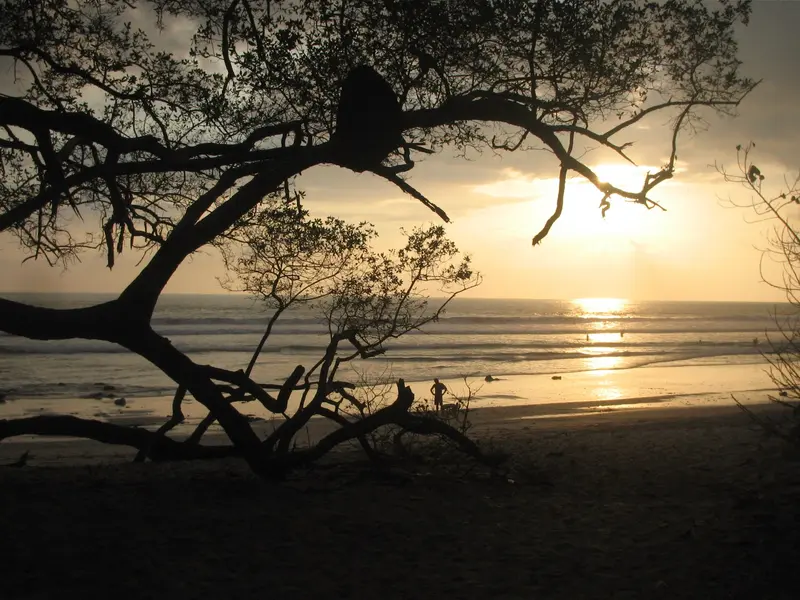
    Santa Teresa
    Vixitaly / Wikimedia Commons / CC BY 3.0
    Highlight 6 of 8

    Santa Teresa

    Santa Teresa is a surf town on the Pacific coast in the south of the Nicoya Peninsula, about five hours from San José by car and ferry.

    Discover
    Manuel Antonio
    Highlight 7 of 8

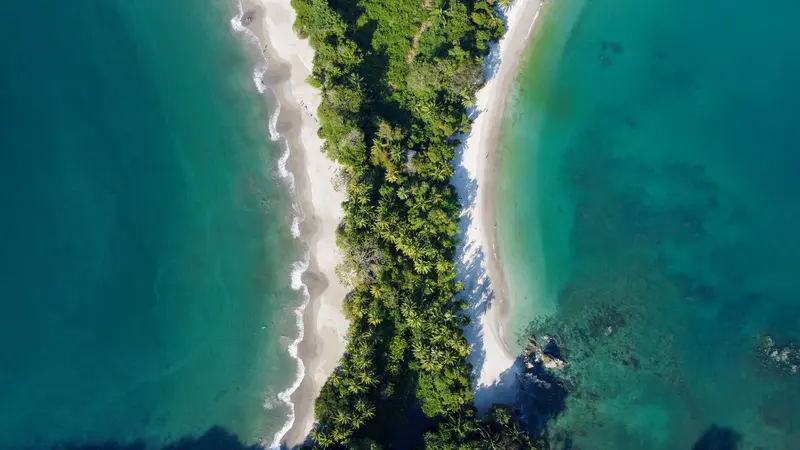
    Manuel Antonio

    Manuel Antonio is the small town on the Central Pacific coast south of Quepos, where the national park of the same name begins, approximately 157 road kilometers from San José.

    Discover
    Corcovado National Park
    Highlight 8 of 8

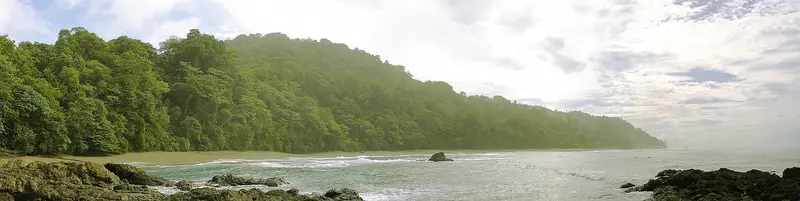
    Corcovado National Park

    Corcovado National Park occupies about a third of Costa Rica's Osa Peninsula in the South Pacific, protecting rainforest, coastline, and lagoons across over 420 square kilometers.

    Discover

    More highlights in Costa Rica

    Unique experiences that make Costa Rica unforgettable.
    Uvita

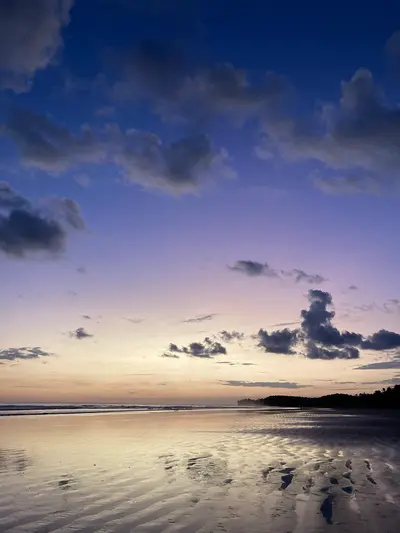
    Uvita

    Uvita is a small town on Costa Rica's southern Pacific coast and the main gateway to the Marino Ballena National Marine Park. You come here for the whale tail beach of Punta Uvita and for whale watching boat tours; from San José, you'll reach it via the Costanera Sur in about three and a half to four hours. The town itself is situated along the coastal road and stretches from the main road into the hilly hinterland. Supermarkets, cafés, restaurants, and tour operators are close to each other, so those staying centrally can reach many places on foot. The beach and national park are just a few minutes away. The sea off Uvita is part…
    Puerto Viejo de Talamanca

    Puerto Viejo de Talamanca

    Puerto Viejo de Talamanca is a surf and beach town on Costa Rica's southern Caribbean coast, close to the Panama border and about four to four and a half hours' drive from San José. You come here for the beaches between Cocles and Manzanillo, for rainforest right on the coast, and for the Afro-Caribbean influenced cuisine. The town belongs to the Talamanca canton in Limón Province. Locals usually just say "Puerto Viejo"; do not confuse it with Puerto Viejo de Sarapiquí in the north of the country. In front of the town center, the Salsa Brava wave breaks over a reef, considered one of the most powerful in the country and reserved…
    Río Celeste

    Río Celeste

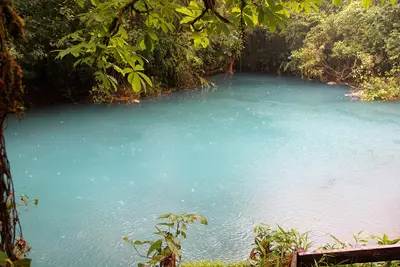
    The Río Celeste is a glowing light blue river in the Tenorio Volcano National Park in Guanacaste, near the town of Bijagua de Upala in the north of the country. You come here for its turquoise waterfall and the spot where two clear rivers mix and the water suddenly turns blue. The color appears when the volcanically influenced Río Buenavista meets the acidic Quebrada Agria: Tiny aluminum silicate particles clump together and scatter sunlight. After heavy rains, the water is murkier and less blue. The Misterios del Tenorio hiking trail starts at El Pilón Station and leads to a viewpoint, Laguna Azul, the Borbollones where gas…
    Poás Volcano National Park

    Poás Volcano National Park

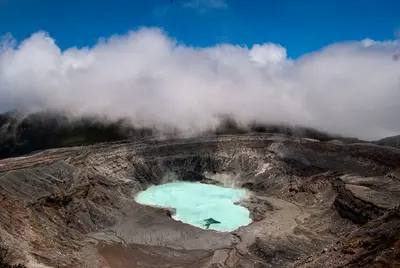
    Poás Volcano National Park is located in the Cordillera Central on the northern edge of the Valle Central, north of Alajuela and San José. You come here to gaze from a viewpoint into an active crater featuring one of the world's most acidic crater lakes. The volcano stands at 2,697 meters. In the northern crater, at approximately 2,300 meters, lies Laguna Caliente, a hot lake whose pH value is at times close to zero and where liquid sulfur accumulates on its bed. A second, cold and clear lake, Laguna Botos, fills an extinct crater within the park's cloud forest. Poás is one of the country's most active volcanoes. Following a major…

    How to plan your trip to Costa Rica

    From the guide to the road: here is what comes next.

    1. 1
      Sunrise over alpine peaks and a sea of clouds
      1234

      Round trip

      12 days · 4 stops

      Saved

      Pick a route

      Pick a ready-made one or save places and plan your own.

      Browse routes
    2. 2

      Trip to Costa Rica

      Live
      • 1San José3 days
      • 2Tortuguero4 days
      • 3Arenal Volcano National Park5 days
      Budget

      Plan your trip

      The planner sorts stops, days and budget. Plan together in real time.

      Go to My Trips
    3. 3
      9:41 No signal
      Costa Rica
      Available offline

      Use it on the road

      Download the guide to your phone and use it on site, even offline.

    Regions to Discover

    Explore the diverse regions of Costa Rica.
    Central Valley

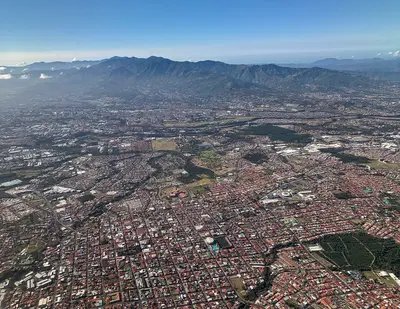
    Central Valley

    The Valle Central is the highlands in the heart of Costa Rica, home to the capital San José and the cities of Alajuela, Heredia, and Cartago. Almost every trip begins here, as the international airport is located in Alajuela, and from here you can quickly reach active volcanoes, museums, and colonial churches. The valley lies at an altitude of about 800 to 1,500 meters. To the north, it is bounded by the Cordillera Central with the volcanoes Poás, Barva, Irazú, and Turrialba, and to the south by the Cordillera de Talamanca. Temperatures are mostly between 18 and 30 degrees, significantly milder than on the coasts. Almost…
    South Pacific & Osa

    South Pacific & Osa

    The South Pacific is Costa Rica's most remote coastal section: Between Uvita and the Osa Peninsula, the rainforest extends right to the beaches, and Corcovado National Park is home to one of the country's most biodiverse protected areas. You come here for wildlife viewing in the primary forest, whale watching off the coast, and an infrastructure that has deliberately remained simple. The region is divided into two parts. To the north lies the Uvita coast with the Marino Ballena National Marine Park, reachable from San José in about four hours via the Costanera Sur coastal road (Route 34). To the south follows the Osa Peninsula,…
    The Caribbean

    The Caribbean

    The Caribbean coast encompasses the Limón province in eastern Costa Rica, from the Tortuguero canals in the north to the border with Panama in the south. This is where you go for rainforest that stretches right to the beach, for nesting sea turtles, and for an Afro-Caribbean culture that distinctly differs from the rest of the country. The city of Limón is located approximately 170 kilometers from San José; the road leads through the Zurquí Tunnel and Braulio Carrillo National Park. The north, around Tortuguero, is only accessible by boat or plane; you reach the Southern Caribbean, with Cahuita and Puerto Viejo, via the coastal…
    Nicoya Peninsula

    Nicoya Peninsula

    The Nicoya Peninsula, in northwestern Costa Rica, juts about 120 kilometers into the Pacific, separating the Gulf of Nicoya from the open ocean. You come for its long, sparsely developed beaches, the surf spots on the west coast, and the small towns where roads often still consist of gravel. Politically, the peninsula is divided: the north belongs to Guanacaste Province, while the south, with Santa Teresa, Mal País, and Montezuma, belongs to Puntarenas Province. Nosara is located on the west coast in the Nicoya Canton, near the turtle beach of Ostional. The peninsula is counted among the so-called Blue Zones, regions where many…
    Guanacaste

    Guanacaste

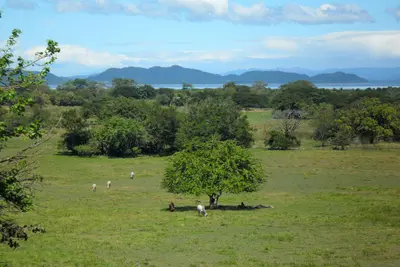
    Guanacaste is Costa Rica's dry northwestern province on the Pacific coast, approximately 215 kilometers northwest of San José. You come here for the beaches of the Pacific coast, for volcanic landscapes like the Rincón de la Vieja, and for the light blue Río Celeste. From November to April, there's hardly any rain here, which makes Guanacaste the country's most reliable beach destination during this time; from May to October, it usually rains daily. The landscape is characterized by pastureland, dry forest, and volcanic ranges; the Area de Conservación Guanacaste in the north is a UNESCO World Heritage site. The capital is Liberia,…
    Arenal and Monteverde

    Arenal and Monteverde

    Arenal and Monteverde form the green highlands in northwestern Costa Rica, about three to four hours' drive northwest of San José. You travel here for the cone-shaped Arenal Volcano with its hot springs and for the cloud forests of Monteverde, two of the country's most visited natural destinations. Arenal was continuously active from 1968 to 2010; today it is dormant, and around the town of La Fortuna, hiking trails over old lava fields, suspension bridges, a waterfall, and numerous hot springs have developed. Southwest of it, beyond Lake Arenal, lies the Monteverde highlands with its privately and communally managed cloud forest…
    Central Pacific

    Central Pacific

    The Central Pacific is the stretch of coast between the Tárcoles River and Quepos, the quickest to reach from San José. You come here for Manuel Antonio National Park with its rainforest right on the beach, the surf beaches around Jacó, and sport fishing off Quepos. Jacó is approximately 100 kilometers from San José, about a two-hour drive via Route 27 and coastal Route 34. You reach Quepos and Manuel Antonio by continuing further south on the same road, a journey of around 157 kilometers from San José. The region is more developed than the Nicoya Peninsula: Paved roads, regular bus services, and a domestic airport near Quepos make…

    Recommended Itineraries

    Discover the best routes through Costa Rica.
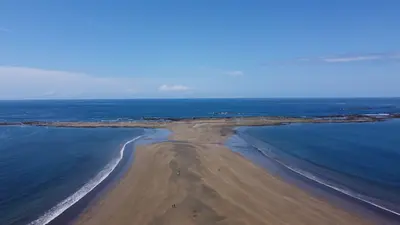
    Pacific Coast from Guanacaste to Osa

    Pacific Coast from Guanacaste to Osa

    The route follows the Pacific coast from the dry beaches of Guanacaste, via the surf towns of the Nicoya Peninsula and Manuel Antonio National Park, to the rainforest of the Osa Peninsula. It is suitable for a 4x4 rental car and ends with a domestic flight back to San José.

    17 Days
    Open jaw
    Stops at a glance
    1. 1.Liberia
    2. 2.Tamarindo
    3. 3.Nosara
    4. 4.Santa Teresa
    5. 5.Manuel Antonio
    6. 6.Uvita
    7. 7.Drake Bay
    View Route Details →
    The Classic Costa Rica in two weeks

    The Classic Costa Rica in two weeks

    The most popular circuit through Costa Rica connects the capital with the canal system of Tortuguero on the Caribbean, Arenal Volcano, the Monteverde cloud forest, and the beach coves of Manuel Antonio on the Pacific coast. It can be explored by rental car, tourist shuttles, or as an organized tour.

    14 Days
    5 stops

    What you eat in Costa Rica

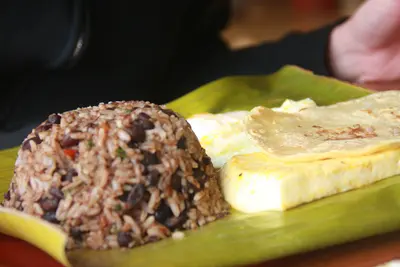
    Gallo Pinto

    Gallo Pinto

    Tasty rice with black beans

    Fried rice with black beans, onion, and bell pepper is the country's classic breakfast. It usually comes with egg, fried plantains, tortillas, and Natilla, a liquid sour cream.
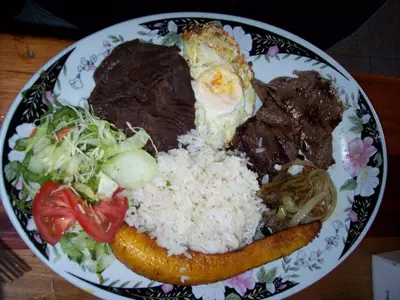
    Casado

    Casado

    Main course for lunch

    The name means “married” and refers to the fixed combination of side dishes: rice, beans, salad, and plantain, plus meat or fish. You can get the Casado in almost every Soda at an affordable price.
    Olla de carne

    Olla de carne

    A Beef and Vegetable Stew

    A hearty beef and root vegetable stew, considered a typical home-style dish. You'll find it mainly in Sodas, often as a daily special.
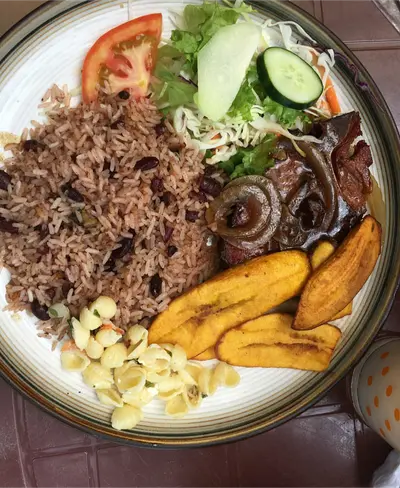
    Rice and Beans

    Rice and Beans

    Caribbean variant with coconut milk

    On the Caribbean coast, rice and beans are cooked with coconut milk; this dish is a unique specialty of the region and not the same as Gallo Pinto. Also typical for the Caribbean is Rondón, a stew with coconut milk.
    Café chorreado

    Café chorreado

    Coffee from the cloth filter

    Costa Rica has been growing coffee since the 19th century, exclusively Arabica. Traditionally, it is brewed in a Chorreador, a cloth filter in a wooden stand, which you see in many households and sodas.
    Freshwater

    Freshwater

    Hot cane sugar drink

    For Agua dulce, Tapa de dulce, unrefined cane sugar, is dissolved in hot water or milk. The drink is particularly popular on cool mornings in the highlands.

    Good to Know

    Essential info for your trip planning.

    Land & People

    Ticos and Pura VidaCosta Ricans call themselves Ticos and Ticas.

    History & Society

    From Cariay to a Spanish ProvinceLong before Europeans arrived, various indigenous societies inhabited the territory of…

    Food & Drink

    Gallo Pinto, Casado, and SodasDaily cuisine, often called comida típica, is based on rice, black beans, plantains, and…

    Practical Info

    Entry RequirementsGerman citizens can enter without a visa for tourist stays of up to 180 days; the permitted duration…

    Getting Around

    Arrival and AirportsCosta Rica has two major international airports:Juan Santamaría (SJO) near Alajuela, about 20…

    RV Travel

    Campers instead of RVsClassic large RVs are rare in Costa Rica.

    Traveling with Kids

    Well Suited for FamiliesCosta Rica is a popular destination for families: The distances are manageable, many national…

    Best Time to Visit

    When is the best time for your trip?

    December
    January
    February
    March
    April
    19–21°C·6–56 mm(little rain)
    From December to April, it is largely dry on the Pacific side and in the central highlands; this is the best time for beaches in Guanacaste, volcano hikes and tours, but also the most expensive and busiest. From May to November, it usually rains in the afternoons, the landscape is greener and prices drop; September and October are the wettest. Those travelling during these months should ideally head to the Caribbean coast, which is often comparatively dry then.
    The monthly values refer to San José in the central highlands (around 1,150 meters), where it is mild year-round. It is significantly warmer on the coasts. The Caribbean coast follows its own rhythm: here, September and October are often the driest months, while it rains most heavily on the Pacific coast then. Green Sea Turtles nest in Tortuguero from approximately July to October.

    Seasons

    Jan
    Feb
    Mar
    Apr
    May
    Jun
    Jul
    Aug
    Sep
    Oct
    Nov
    Dec
    Peak season
    Green Season with afternoon rain
    Best Time to Visit
    ▶Show detailed monthly data
    MonthTemp (°C)Rain (mm)Sun (h)
    January19.067.0
    February19.577.0
    March20.597.0
    April20.5567.0
    May21.02617.0
    June21.02967.0
    July20.52056.0
    August20.52826.0
    September20.53726.0
    October20.53436.0
    November20.01556.0
    December19.5366.0

    Travel advice

    Safety, entry requirements and health: the official, up-to-date advice for Costa Rica is published by the UK government on GOV.UK.

    Go to GOV.UK

    Sources & method

    • Photos: Wikimedia Commons, Unsplash, Pexels. Each photo carries its credit.
    • The content is based on web research from public, traceable sources. How the content is made · The role of AI
    Felix at Kuirau Park in Rotorua, New Zealand

    Who's behind Fernweh?

    Hi, I'm Felix.

    I love to travel, and I love planning even more. Fernweh.guide is my attempt at building a really good online travel guide.

    About Fernweh

    All places in Costa Rica

    • Arenal and Monteverde
    • Arenal Volcano National Park
    • Cahuita
    • Cartago
    • Central Pacific
    • Central Valley
    • Corcovado National Park
    • Drake Bay
    • Guanacaste
    • Irazú Volcano National Park
    • Jacó
    • La Fortuna
    • Liberia
    • Manuel Antonio
    • Monteverde
    • Montezuma
    • Nicoya Peninsula
    • Nosara
    • Poás Volcano National Park
    • Puerto Jiménez
    • Puerto Viejo de Talamanca
    • Quepos
    • Rincón de la Vieja National Park
    • Río Celeste
    • San José
    • Santa Teresa
    • South Pacific & Osa
    • Tamarindo
    • The Caribbean
    • Tortuguero
    • Uvita

    More about Costa Rica

    • Best Time to Visit Costa Rica
    • Costa Rica with Kids