Fernweh: Home
    ExploreTravel GuidesPlan a tripMy tripLast visited
    de|en
    All Places & RegionsAll highlightsAbout FernwehFAQPrivacy PolicyImprint
    ExploreTravel GuidesPlan a tripMy tripLast visited
    • Why go
    • Highlights
    • Explore regions
    • Round trips
    • Local food
    • Good to know
    • Best time to visit
    • Video reports
    • Travel advice
    Poland

    Travel Guide Poland

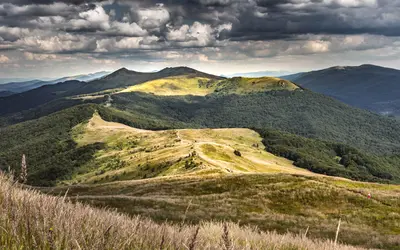
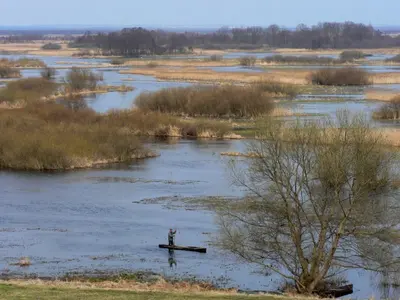
    Poland ranges from the sandy beaches of the Baltic Sea, through the Masurian Lakes and vast river plains, to the peaks of the Tatra Mountains.

    by Felix Gillen

    Contents

    • Why go
    • Highlights
    • Explore regions
    • Round trips
    • Local food
    • Good to know
    • Best time to visit
    • Video reports
    • Travel advice

    Why Go To Poland?

    Poland connects very diverse landscapes over short distances: fine sandy beaches on the Baltic Sea, the Masurian Lake District, the Białowieża Primeval Forest in the east, and the peaks of the High Tatras in the south. In between lie cities like Krakow (Kraków), Gdansk (Gdańsk), Wroclaw (Wrocław), and Warsaw (Warszawa), whose old towns are preserved or were meticulously rebuilt after World War II, along with 18 UNESCO World Heritage Sites, from Marienburg to the Wooden Churches of the Carpathians. Fast trains connect the major cities, and according to Eurostat, prices are a good 70 percent of the EU average.

    Where in Poland?

    Pick a region. The highlights, road trips and places below follow your choice.
    Warsaw (Warszawa)
    Highlight 1 of 8

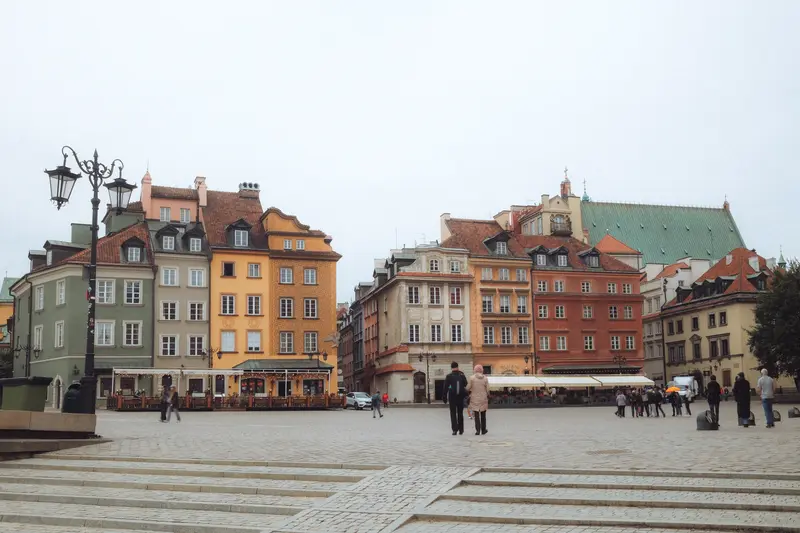
    Warsaw (Warszawa)

    Warsaw (Warszawa) has been the seat of the Polish royal court since 1596 and has been the country's capital again since 1918.

    Discover
    Danzig (Gdańsk)
    Highlight 2 of 8

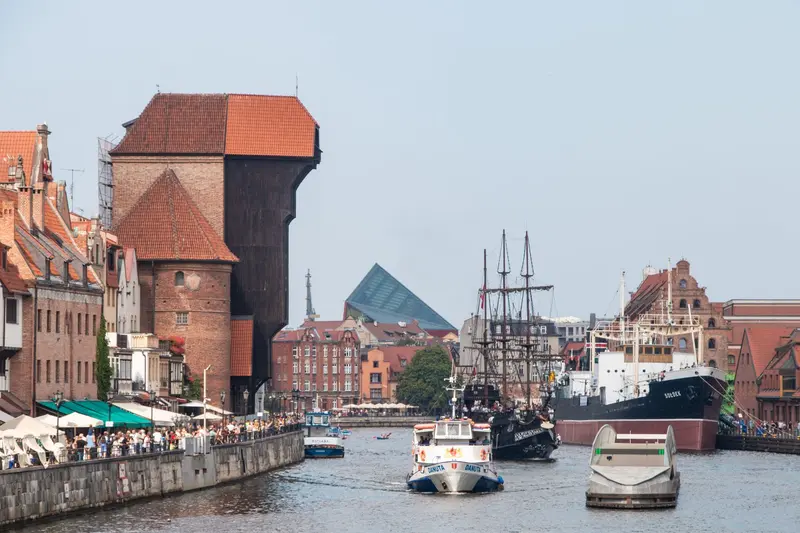
    Danzig (Gdańsk)

    Danzig (Gdańsk) is located on Gdańsk Bay, where the Motława River flows into the Baltic Sea, west of the Vistula estuary.

    Discover
    Marienburg (Malbork)
    Highlight 3 of 8

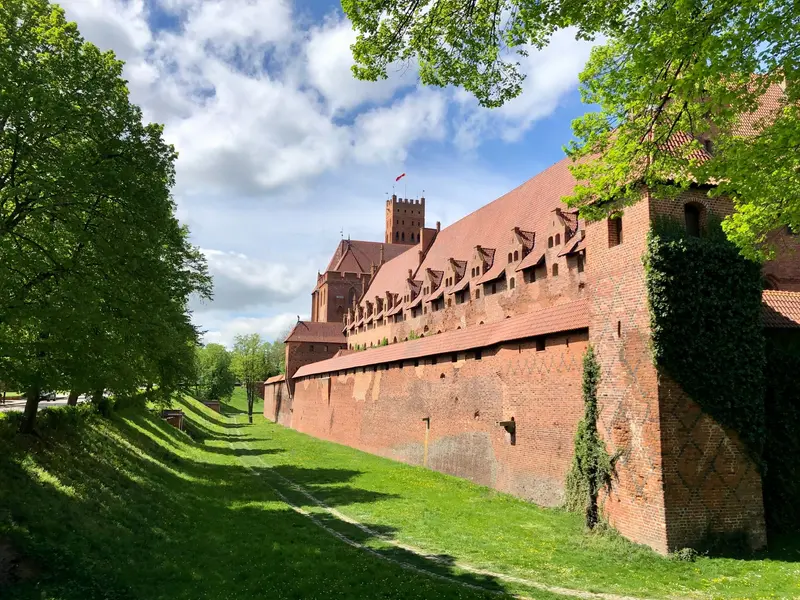
    Marienburg (Malbork)

    Marienburg (Malbork), located on the Nogat, a distributary of the Vistula, is considered Europe's largest brick building: over 30 million bricks were used across approximately 21 hectares.

    Discover
    Breslau (Wrocław)
    Highlight 4 of 8

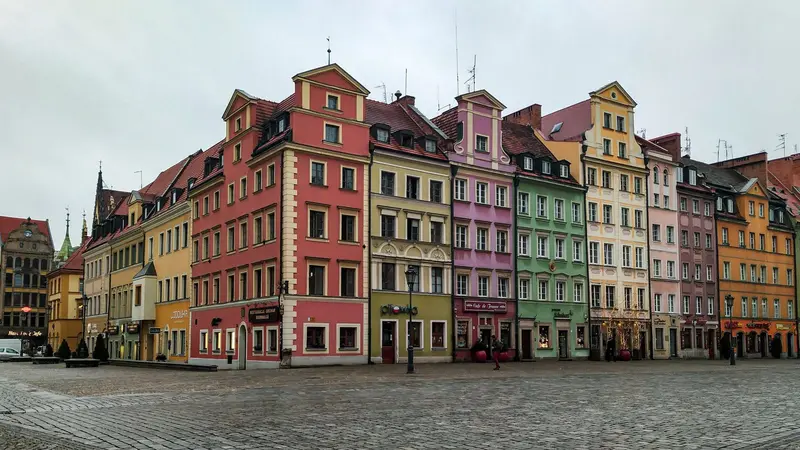
    Breslau (Wrocław)

    Breslau (Wrocław) is, with around 673,000 inhabitants, Poland's third-largest city and the capital of Lower Silesia. The city lies on the upper Oder River and spans about twelve islands, connected by 100 to 300 bridges, depending on how they are counted.

    Discover
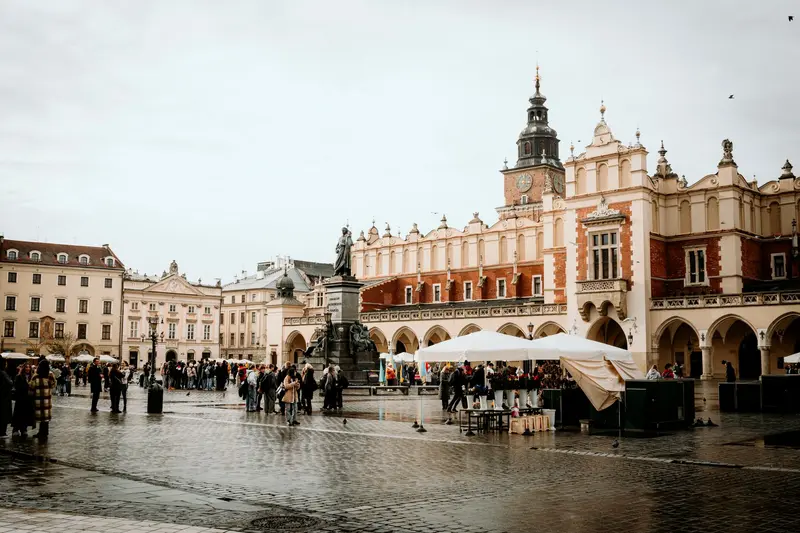
    Krakow (Kraków)
    Highlight 5 of 8

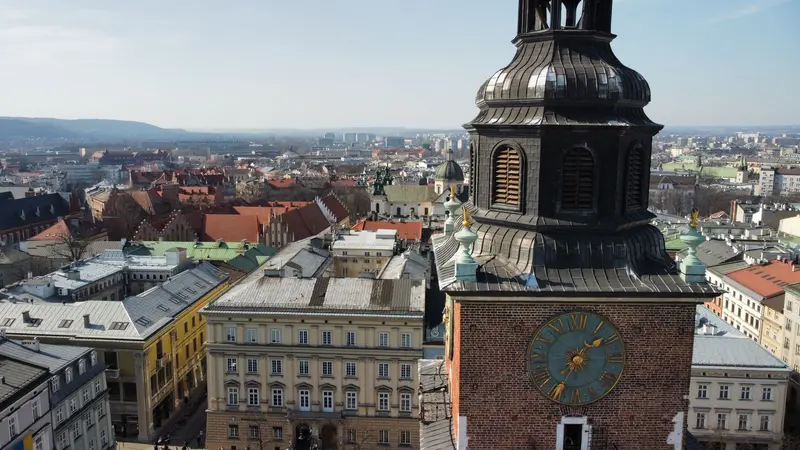
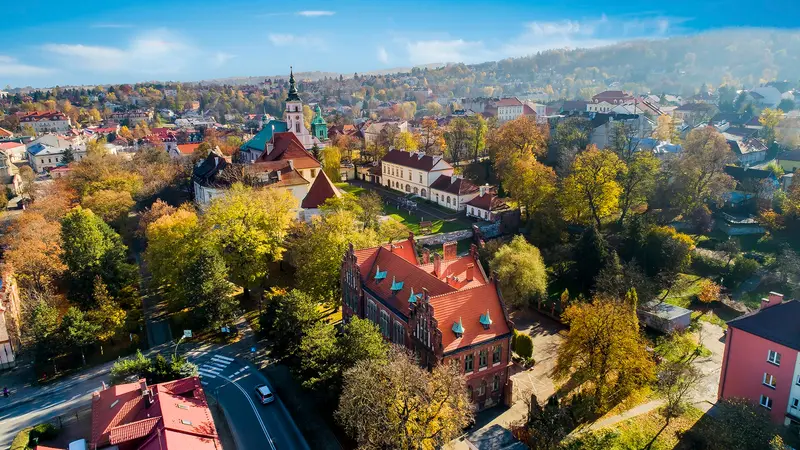
    Krakow (Kraków)

    Krakow (Kraków) lies on the Vistula in southern Poland and, with around 800,000 inhabitants, is the country's second-largest city.

    Discover
    Wieliczka
    Magistratwieliczka / Wikimedia Commons / CC BY-SA 4.0
    Highlight 6 of 8

    Wieliczka

    Wieliczka is located about 13 kilometers southeast of Krakow (Kraków) and has lived from salt since the Middle Ages. The first shafts were dug in the 13th century, and the town was granted city rights in 1290.

    Discover
    Auschwitz-Birkenau Memorial Site
    Jacek7770 / Wikimedia Commons / CC BY-SA 4.0
    Highlight 7 of 8

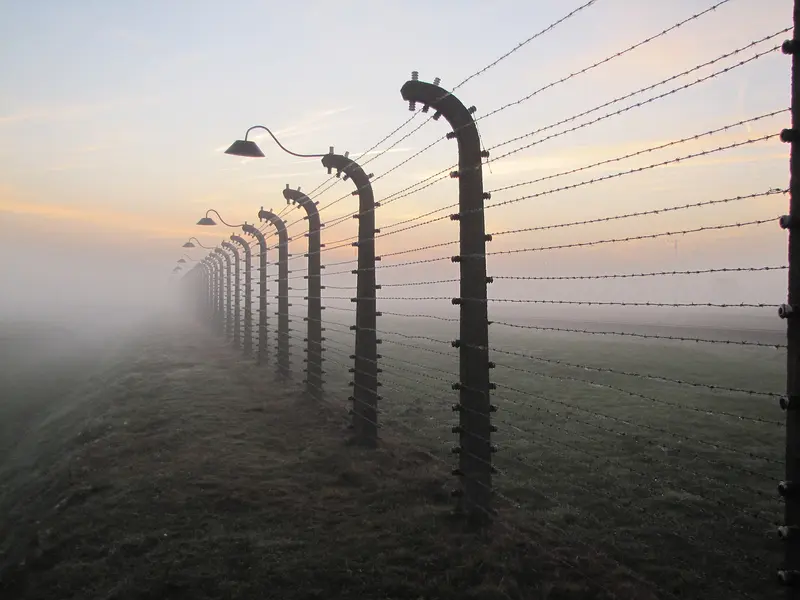
    Auschwitz-Birkenau Memorial Site

    The Auschwitz-Birkenau Memorial and State Museum is located on the outskirts of Oświęcim, west of Krakow (Kraków). German occupiers established the camp in 1940, and Auschwitz II-Birkenau was built from October 1941.

    Discover
    Tatra National Park and Morskie Oko
    Highlight 8 of 8

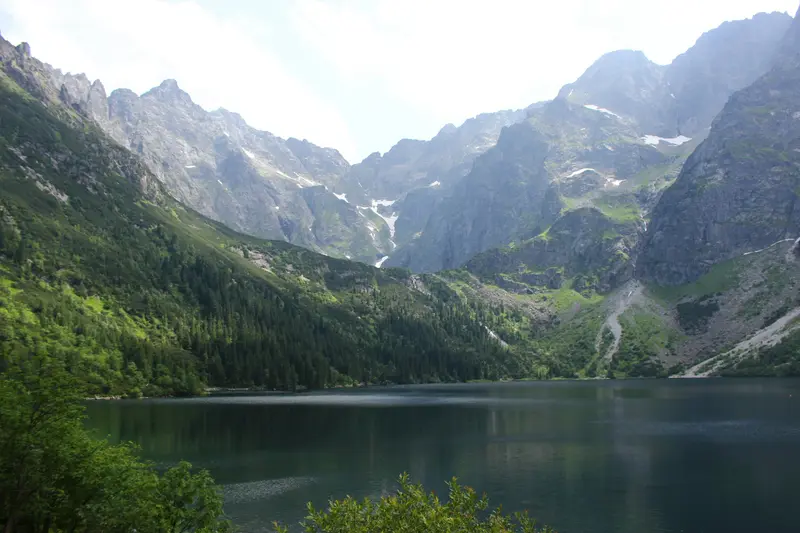
    Tatra National Park and Morskie Oko

    The Tatra National Park (Tatrzański Park Narodowy, TPN) has protected the Polish part of the Tatra Mountains since 1955, covering over 211 square kilometers.

    Discover

    More highlights in Poland

    Unique experiences that make Poland unforgettable.
    Zamość

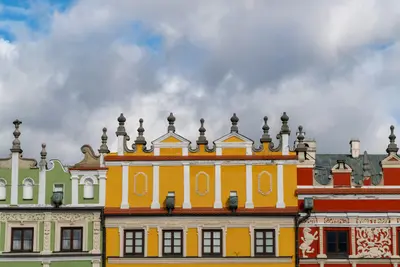
    Zamość

    Zamość is located in southeastern Poland, approximately 240 km from Warsaw and 110 km from Lemberg (Lwiw), and has about 58,000 inhabitants. From 1578, Jan Zamoyski had the city designed by the Venetian architect Bernardo Morando as an ideal Renaissance town, which earned it the nickname "Padua of the North." Since 1992, the Old Town has been a UNESCO World Heritage site. The Old Town has a hexagonal layout: in the west were the Zamoyski family residence and the Academy, and in the east, the burgher town with three squares: the Great Market (Rynek Wielki), the Salt Market, and the Water Market. On the Great Market, with its arcaded…
    Białowieża National Park

    Białowieża National Park

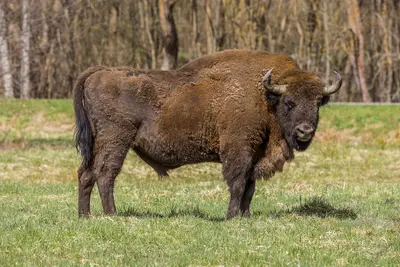
    Białowieża National Park (Białowieski Park Narodowy) protects the Polish core of the Białowieża Forest on the border with Belarus. Established in 1932, it is Poland's second-oldest national park after Pieniny National Park, and today covers approximately 105 square kilometers. The forest is considered Europe's last primeval lowland forest, dominated by pedunculate oak, small-leaved lime, and hornbeam. It has been on the UNESCO World Heritage List since 1979, with the Belarusian part added in 1992. The symbol of the park is the European bison (Wisent). The species was extinct in the wild, but in 1952, the first animals bred in…
    Nikolaiken (Mikołajki)

    Nikolaiken (Mikołajki)

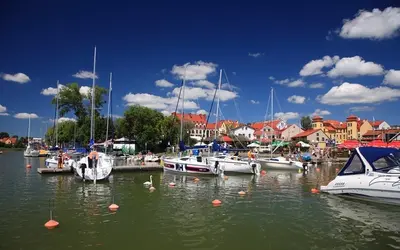
    Nikolaiken (Mikołajki) is a small town with over 3,300 inhabitants in the heart of the Masurian Lake District. The town lies at the narrow passage between Lake Tałty and Lake Mikołajki, which merge here, and only a few kilometres from Lake Śniardwy, Poland's largest lake. Nikolaiken was first mentioned in 1444; it received town privileges in 1726. Today, Mikołajki is one of Masuria's most important sailing centres. Along the shore are a marina, excursion boat piers, and houseboat rentals. The centre is small: restaurants and guesthouses line the market square and church square, and a pedestrian bridge, completed in 2016, connects…
    Thorn (Toruń)

    Thorn (Toruń)

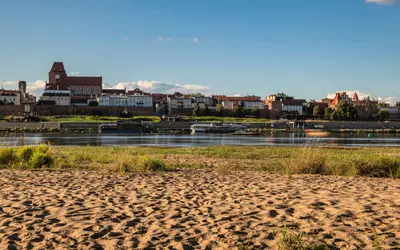
    Thorn (Toruń) is on the Vistula River in north-central Poland, sharing the capital role of the Kuyavian-Pomeranian Voivodeship with Bydgoszcz. The Teutonic Order founded the city in 1231; it received city rights in 1233 and later became an important member of the Hanseatic League. Nicolaus Copernicus was born here in 1473, lending his name to the university founded in 1945. The city has about 192,000 inhabitants. The medieval city, with its Brick Gothic, has been UNESCO World Heritage since 1997. It consists of three parts: the Old Town in the west with the Town Hall, St. John's Cathedral, and St. Mary's Church; the New Town in the…
    Tschenstochau (Częstochowa)

    Tschenstochau (Częstochowa)

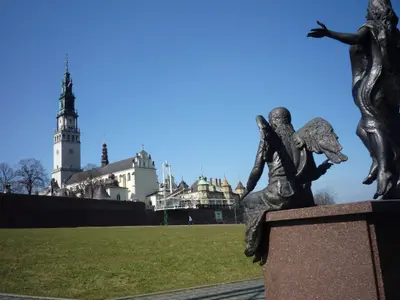
    Tschenstochau (Częstochowa) on the Warta River, with approx. 206,000 residents, is the second-largest city in Silesian Voivodeship. It is known for the Jasna Góra Pauline Monastery, founded in 1382 by Duke Władysław of Opole (Władysław Opolczyk), which attracts three to four million pilgrims and visitors annually with its miraculous Black Madonna icon. The city gained Magdeburg Rights in 1502 and railway connection to Warsaw-Vienna in 1846. The approx. 1.5-kilometer-long and 44-meter-wide Avenue of the Most Holy Virgin Mary (Aleja Najświętszej Maryi Panny) connects the Old Town and city center with the monastery hill. It starts at…

    How to plan your trip to Poland

    From the guide to the road: here is what comes next.

    1. 1
      Sunrise over alpine peaks and a sea of clouds
      1234

      Round trip

      12 days · 4 stops

      Saved

      Pick a route

      Pick a ready-made one or save places and plan your own.

      Browse routes
    2. 2

      Trip to Poland

      Live
      • 1Warsaw (Warszawa)3 days
      • 2Danzig (Gdańsk)4 days
      • 3Marienburg (Malbork)5 days
      Budget

      Plan your trip

      The planner sorts stops, days and budget. Plan together in real time.

      Go to My Trips
    3. 3
      9:41 No signal
      Poland
      Available offline

      Use it on the road

      Download the guide to your phone and use it on site, even offline.

    Regions to Discover

    Explore the diverse regions of Poland.
    Małopolska

    Małopolska

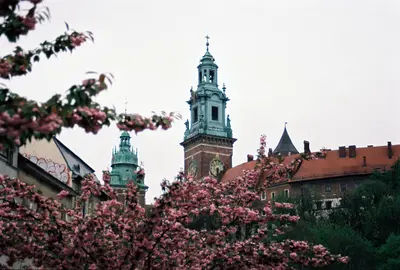
    Lesser Poland (Małopolska) stretches from the Vistula around Krakow (Kraków) to the peaks of the High Tatras on the Slovakian border. Krakow, capital of the Kingdom of Poland until 1596, serves as the administrative and cultural heart of the Voivodeship; its Old Town, the Wieliczka Salt Mine, and the Auschwitz-Birkenau Memorial together form several UNESCO World Heritage Sites located close by. To the south, the land rises through hills to the Carpathians. Around Zakopane and in the Pieniny, the Goral people define the landscape with their wooden architecture, sheep's cheese, and folk music, and in the villages of Southern Lesser…
    Great Poland

    Great Poland

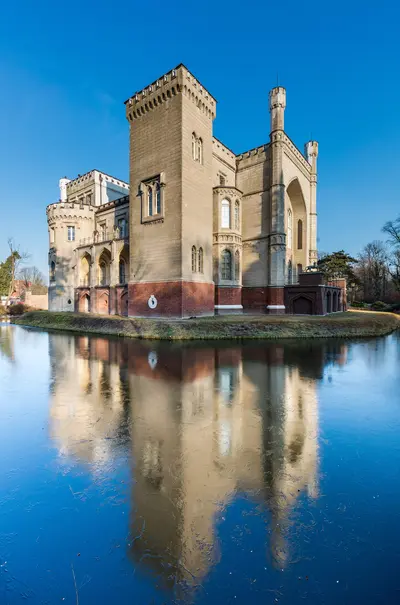
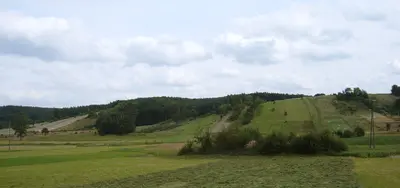
    Greater Poland (Wielkopolska) in the west of the country is considered the cradle of Poland: Posen (Poznań) and Gnesen (Gniezno) were home to the first Piast rulers, and Kalisch (Kalisz) is known as Poland's oldest city. With approximately 29,800 km², the voivodeship is the country's second largest, and about 3.5 million people live here.The landscape is flat and characterized by the Greater Poland Lake District, with almost nine-tenths of the region draining via the Warthe. Amid fields and forests lie churches, castles, and manor houses, many of them just a short drive from Posen.
    Lublin Region

    Lublin Region

    The Lublin Voivodeship is in far eastern Poland, bordering Belarus and Ukraine. To the west, the Vistula, to the east, the Bug, form much of its border. Around two million people live here; Lublin is its only major city. The landscape ranges from the Lublin Upland, across the Roztocze hills, to Polesie in the northeast. In 1569, the Lublin Union was concluded here, uniting Poland and Lithuania. During WWII, German occupiers established extermination camps Majdanek, Belzec, and Sobibor in the region. Today, the Renaissance city Zamość, the Vistula town Kazimierz Dolny, and Roztocze and Polesie National Parks draw visitors.
    Łódź Region

    Łódź Region

    The Łódź Voivodeship (Łódzkie) lies in the heart of Poland and has a population of around 2.34 million. It was established in 1999, mainly from the former voivodeships of Łódź, Sieradz, and Piotrków; its capital and largest city is Łódź. The north belongs to the Central Polish Lowlands, while the hillier south is already part of the Polish Uplands. Around 70 percent of its area is agricultural, and with roughly 22 percent forest cover, it is the country's least forested voivodeship.
    Warmian-Masurian

    Warmian-Masurian

    The Warmian-Masurian Voivodeship (Warmińsko-Mazurskie) in northeastern Poland unites two historic landscapes. Ermland (Warmia) in the west was shaped for centuries by the Warmian Cathedral Chapter, whose castles and cathedrals in Allenstein (Olsztyn) and Frauenburg (Frombork) still stand today. Masuren (Mazury) in the east is known for the Masurian Lake District, featuring Lake Spirdingsee (Śniardwy), the largest lake in Poland. Until 1945, the region predominantly belonged to East Prussia. For travelers, Ermland-Masuren is primarily a destination for water sports and nature: sailing on the large lakes, excursion boats between…
    West Pomerania

    West Pomerania

    The West Pomeranian Voivodeship (Zachodniopomorskie) covers northwest Poland, situated between the Oder on the German border and the Pomeranian Lake District. Spanning nearly 22,900 square kilometers, it is home to around 1.63 million people, with its capital and largest city being Stettin (Szczecin), followed by Köslin (Koszalin) and Stargard. The Voivodeship was established in 1999 as part of Poland's administrative reform. To the north, the Baltic Sea coast, with its cliffs and seaside resorts like Swinemünde and Kolberg, defines the region, while the Szczecin Lagoon shapes its western part. Inland, the Pomeranian Lake District…
    Lower Silesia

    Lower Silesia

    Lower Silesia (Dolny Śląsk) in southwestern Poland borders Saxony and the Czech Republic. Approximately 2.9 million people live on its roughly 19,900 km², with Breslau (Wrocław) as its capital and largest city. To the south, the Sudetes Mountains rise, featuring the Giant Mountains, whose highest peak, Schneekoppe (Śnieżka), reaches 1603 meters. Northward, the land transitions into the flat Silesian Lowland along the Oder River. Throughout history, the region alternated between Bohemia, the Habsburgs, and Prussia, finally becoming part of Poland after 1945. Castles, churches, and historic towns bear witness to this past: the…
    Kuyavian-Pomerania

    Kuyavian-Pomerania

    Kuyavian-Pomeranian (Kujawsko-Pomorskie) is in north-central Poland, straddling the lower Vistula, with nearly 2 million residents. The voivodeship, formed in 1999, unites historic regions: Kuyavia, parts of Pomerelia, Chełmno Land, and Dobrzyń Land. Bydgoszcz is the Voivode's administrative seat; Parliament and Marshal's Office are in Toruń.The landscape includes numerous lakes like Gopło and vast forests, especially the Tuchola Forest (Bory Tucholskie). Culturally, Brick Gothic of Hanseatic towns on the Vistula and archaeological sites like Biskupin shape the region.
    Masovia

    Masovia

    Masovia (Mazowsze), with approximately 35,600 km², is Poland's largest voivodeship by area and home to about 5.5 million inhabitants. Located in the Central Polish Lowlands, the region spans both sides of the middle Vistula, also crossed by the Bug, Narew, Bzura, and Pilica. At its heart is the capital, Warsaw, surrounded by lowlands, forests, and river valleys. On the city's outskirts begins the Kampinos National Park with dunes and swamps, and to its west, in Żelazowa Wola, lies Fryderyk Chopin's birthplace.
    Silesia

    Silesia

    The Silesian Voivodeship (województwo śląskie) in southern Poland was established in 1999 from the former voivodeships of Katowice, Częstochowa, and Bielsko-Biała. It encompasses the eastern part of Upper Silesia, a portion of Cieszyn Silesia, and areas historically belonging to Lesser Poland, including Częstochowa and the Dąbrowa Basin. Approximately 4.3 million people live across its 12,334 square kilometers. Its core is the Upper Silesian Industrial Region around Katowice, Gliwice, and Zabrze, which grew in the 19th century with hard coal mining. Disused mines are now museums and cultural venues. To the north, the…

    The Carpathian Foothills (Podkarpackie) in southeastern Poland border Slovakia to the south and Ukraine to the east. Rzeszów is the capital of the voivodeship, formed in 1999; its largest rivers are the San, Wisłoka, and Wisłok.To the south, the landscape rises to the Bieszczady, where Tarnica, at 1,346 meters, forms the highest point of the voivodeship. Noble residences like Łańcut and Krasiczyn, the fortress city of Przemyśl, and wooden Cerkwie tell of the eventful history of this borderland.

    The Pomeranian Voivodeship (Pomorskie) stretches from Gdańsk Bay to the shifting dunes of Łeba and from the Vistula Delta to the forests of Kashubia. Spanning 18,324 square kilometers, it is home to approximately 2.36 million people, its capital and largest city being Danzig (Gdańsk). The current voivodeship was established with the administrative reform in 1999. Along the coast are the Tri-City of Danzig, Sopot, and Gdingen (Gdynia), the narrow Hel Peninsula, and the seaside resort of Łeba. In the hinterland lie the Kashubian Lakes, where Kashubian is an official language in four municipalities, and in the south, Malbork Castle on…
    Podlachia

    Podlachia

    Podlachia (Podlasie) is located in the far north-east of Poland, bordering Belarus. The regional capital is Białystok. For centuries, the region has been shaped by multiple cultures: Alongside the Polish majority, the Belarusian minority lives here, Orthodox churches stand beside Catholic ones, and until World War II, Jews constituted a large part of the population in many towns. For travellers, Podlachia is primarily a destination for nature experiences. In the south-east lies the Białowieża Forest with its European bison, north-west of Białystok is the vast marsh and river valley of the Biebrza, home to Poland's largest national…

    Recommended Itineraries

    Discover the best routes through Poland.
    Poland's Classics by Train

    Poland's Classics by Train

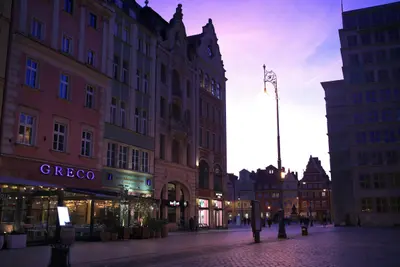
    Just under two weeks by train through Poland's major cities: from the capital Warsaw to Krakow, then on to Wrocław, to the brick city of Toruń, and finally to Gdańsk on the Baltic Sea. From Krakow, you can visit the Wieliczka Salt Mine and the Auschwitz-Birkenau Memorial and Museum as day trips; from Gdańsk, Sopot and Malbork Castle. PKP Intercity long-distance trains connect all stages directly, with the longest journeys lasting around three to three and a half hours. No car is needed for this route.

    12 Days
    Open jaw
    Stops at a glance
    1. 1.Warsaw (Warszawa)
    2. 2.Krakow (Kraków)
    3. 3.Wieliczka
    4. 4.Auschwitz-Birkenau Memorial Site
    5. 5.Breslau (Wrocław)
    6. 6.Thorn (Toruń)
    7. 7.Danzig (Gdańsk)
    8. 8.Sopot
    9. 9.Marienburg (Malbork)
    View Route Details →
    Baltic Coast and Masuria

    Baltic Coast and Masuria

    This route follows the Polish Baltic coast from Szczecin via the seaside resorts of Świnoujście and Kołobrzeg to the moving dunes near Łeba and on to Gdańsk. From there, it continues via Malbork Castle into Warmia to Olsztyn and into the Masurian Lake District to Mikołajki and Giżycko. This is a car route: The stages are mostly 60 to 140 kilometres long, as the train only serves some of the places in Masuria. Beaches, dunes, Hanseatic towns, and lakes alternate.
    11 Days
    Open jaw
    9 stops
    South: Krakow, Tatra and Carpathians

    South: Krakow, Tatra and Carpathians

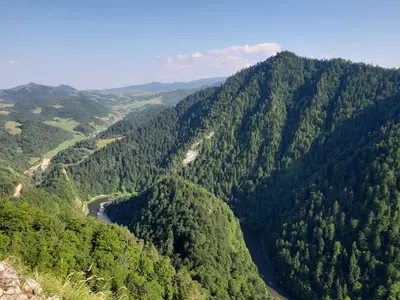
    Ten days through southern and southeastern Poland: from Krakow to Zakopane in the Tatra Mountains, to the Dunajec Gorge in the Pieniny Mountains, and on to the Bieszczady Mountains, a part of the Eastern Carpathians in the far southeast, bordering Slovakia and Ukraine. On the way back north, the route includes Łańcut Castle, the Renaissance town of Zamość, the artists' town of Kazimierz Dolny, and Lublin. This is a car route, as the Pieniny and Bieszczady Mountains are off the main railway lines. The drive from the Pieniny to the Bieszczady Mountains is the longest leg, at approximately 250 kilometers.

    10 Days
    Open jaw
    9 stops

    What you eat in Poland

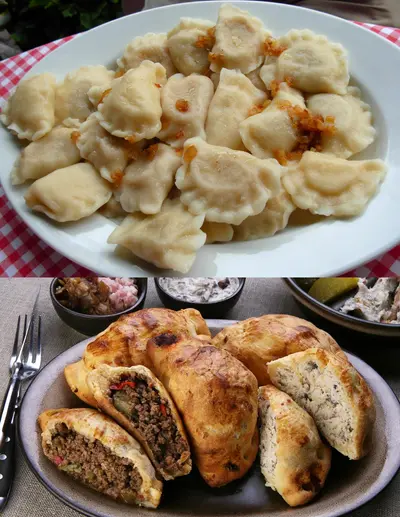
    Pierogi

    Pierogi

    Filled Dough Pockets

    Semi-circular dumplings, boiled or fried, filled with cabbage and mushrooms, meat, or sweet with quark and blueberries. The most famous are Pierogi ruskie with potatoes, onions, and white cheese, from former Eastern Poland.
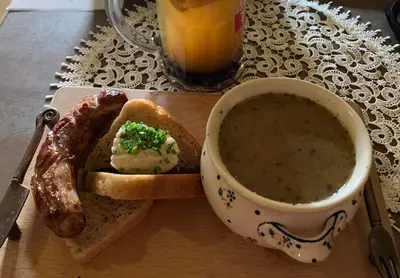
    Żurek

    Żurek

    Sour Flour Soup

    A tangy, spicy soup based on rye flour sourdough, typically seasoned with marjoram and often garlic. Served with boiled eggs, potatoes, and sausage, such as white sausage.
    Bigos

    Bigos

    Cabbage stew

    Stew of sauerkraut and white cabbage with several types of meat, sausage, forest mushrooms, and spices. Bigos is considered a Polish national dish.
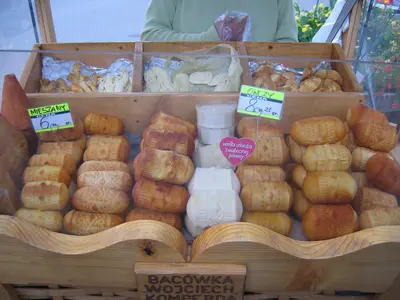
    Oscypek

    Oscypek

    Smoke-cured sheep's cheese

    Hand-shaped, salted, and coniferous wood-smoked cheese from the Tatra, made from at least 60 percent sheep's milk. Since 2008, Oscypek has been registered in the EU as a Protected Designation of Origin.
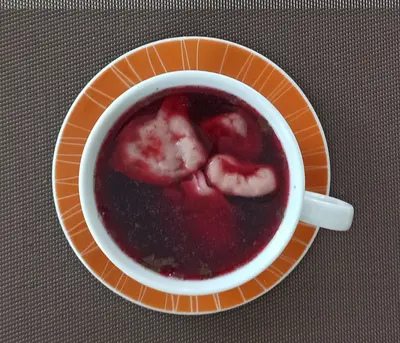
    Barszcz

    Barszcz

    Rote-Bete-Suppe

    Clear, deep-red beetroot soup. In its meatless version with mushroom broth, Barszcz is traditionally served on Christmas Eve (Wigilia) with Uszka, small filled dumplings.
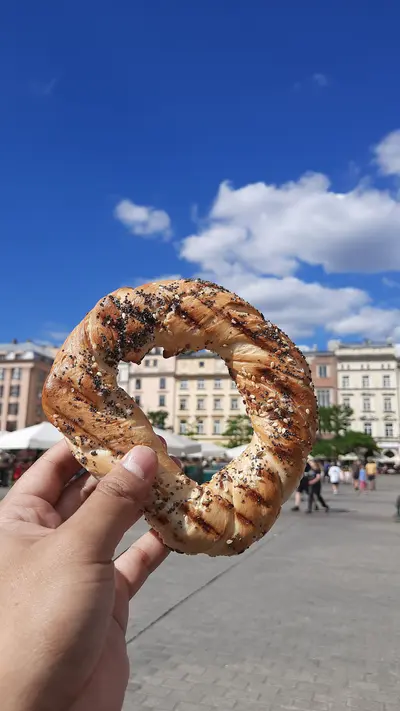
    Obwarzanek krakowski

    Obwarzanek krakowski

    Krakauer Hefeteigring

    Ringförmiges, gedrehtes Gebäck aus Hefeteig, das vor dem Backen kurz gekocht wird. Der Obwarzanek aus Krakau ist seit 2010 als geschützte geografische Angabe der EU registriert.

    Good to Know

    Essential info for your trip planning.

    Land & People

    From the Baltic Sea Coast to the Tatras With approximately 312,700 square kilometers, Poland is one of the largest…

    History & Society

    From the Piast Realm to the Noble Republic The baptism of Duke Mieszko I in 966 is considered the founding date of the…

    Food & Drink

    Soups, Dumplings, and Cabbage Polish cuisine is hearty and seasonal.

    Practical Info

    Current and authoritative travel, safety and health advice is available from the UK Foreign, Commonwealth &…

    Getting Around

    By Train Long-distance trains are operated by PKP Intercity. The fastest category is Express InterCity Premium (EIP),…

    RV Travel

    Campsites vs. Free Camping Poland offers convenient RV travel, with a network of motorways and expressways connecting…

    Traveling with Kids

    Beaches, Lakes and Forests Poland is an easy country to travel with children.

    Best Time to Visit

    When is the best time for your trip?

    May
    June
    July
    August
    September
    14–20°C·50–82 mm(moderate rain)
    May to September is the best travel time for most regions. May, June, and September are ideal for city trips to Krakow, Gdansk, or Warsaw and for hiking, with long, sunny days and mostly pleasant temperatures. For a beach holiday at the Baltic Sea or the Masurian Lakes, July and August are the warmest, with the Baltic Sea then averaging around 19 to 20 degrees. From November to February, it is cold, with only one to two hours of sunshine per day.
    Monthly values are from the Warsaw-Chopin station (climate normal period 1991–2020, Institute of Meteorology and Water Management IMGW) and represent the continental inland. Water temperatures are average values for the Baltic Sea near Danzig (Gdańsk) from the last ten years. Baltic Coast The climate is more balanced on the coast: In Kolberg (Kołobrzeg), the January average is 0.7 degrees above freezing, thus milder than in Warsaw (−1.5 degrees); July, at just under 18 degrees, is slightly cooler. The sea warms up slowly, only reaching almost 19 to 20 degrees in July and August. Masuria In the northeast, around Allenstein (Olsztyn), it is slightly cooler than in Warsaw, with an annual average of 8 degrees; July is around 18 degrees, January −2 degrees. Tatra The mountains have their own distinctly cooler and wetter climate. Zakopane, at 855 meters, has an annual average of 6.2 degrees and about 1,145 millimeters of precipitation; in July, over 190 millimeters fall there on average. On Kasprowy Wierch (1,987 meters), the January average is −7.4 degrees.

    Seasons

    Jan
    Feb
    Mar
    Apr
    May
    Jun
    Jul
    Aug
    Sep
    Oct
    Nov
    Dec
    Peak Season: Summer, Baltic Sea and lake swimming
    Off-season: Spring and Autumn, good for cities and hiking
    Winter: cold and short days
    Best Time to Visit
    ▶Show detailed monthly data
    MonthTemp (°C)Rain (mm)Sun (h)
    January-1.5311.4
    February-0.4302.4
    March3.2294.5
    April9.2357.0
    May14.3568.8
    June17.7649.6
    July19.7829.5
    August19.1619.0
    September14.0506.4
    October8.7404.0
    November3.8361.7
    December-0.1361.1

    Video reports from Poland

    Get inspired by authentic travel tales.

    Rick Steves' Europe: Poland

    An hour-long best-of-Poland special from the public television series Rick Steves' Europe. It starts in Kraków and the Auschwitz-Birkenau Memorial, continues to Warsaw, Toruń and Malbork Castle and…

    DW Documentary rides tram line No. 1 through Wrocław with driver Tatjana…

    Warsaw-born travel vlogger Eva zu Beck guides DW Travel through her home city,…

    Travel advice

    Safety, entry requirements and health: the official, up-to-date advice for Poland is published by the UK government on GOV.UK.

    Go to GOV.UK
    Sources & method

    • Photos: Wikimedia Commons, Unsplash, Pexels. Each photo carries its credit.
    • Video reportages: Rick Steves' Europe: Poland, By tram through the Polish city of Wrocław, The Warsaw You've Never Seen Before: Eva zu Beck's Secret Sights
    • The content is based on web research from public, traceable sources. How the content is made · The role of AI
    Felix at Kuirau Park in Rotorua, New Zealand

    Who's behind Fernweh?

    Hi, I'm Felix.

    I love to travel, and I love planning even more. Fernweh.guide is my attempt at building a really good online travel guide.

    About Fernweh

    All places in Poland

    • Allenstein (Olsztyn)
    • Auschwitz-Birkenau Memorial Site
    • Białowieża National Park
    • Białystok
    • Bieszczady
    • Breslau (Wrocław)
    • Danzig (Gdańsk)
    • Fürstenstein Castle (Zamek Książ)
    • Great Poland
    • Hel Peninsula
    • Kattowitz (Katowice)
    • Kazimierz Dolny
    • Kolberg (Kołobrzeg)
    • Krakow (Kraków)
    • Krummhübel (Karpacz) and Giant Mountains
    • Kuyavian-Pomerania
    • Łańcut Castle
    • Łeba and Słowiński National Park
    • Łódź
    • Łódź Region
    • Lötzen (Giżycko)
    • Lower Silesia
    • Lublin
    • Lublin Region
    • Małopolska
    • Marienburg (Malbork)
    • Masovia
    • Nikolaiken (Mikołajki)
    • Pieniny and the Dunajec Gorge
    • Podlachia
    • Posen (Poznań)
    • Silesia
    • Sopot
    • Stettin (Szczecin)
    • Swinemünde (Świnoujście)
    • Tatra National Park and Morskie Oko
    • Thorn (Toruń)
    • Tschenstochau (Częstochowa)
    • Warmian-Masurian
    • Warsaw (Warszawa)
    • West Pomerania
    • Wieliczka
    • Zakopane
    • Zamość

    More about Poland

    • Best Time to Visit Poland
    • Poland with Kids
    • Poland by RV