Fernweh: Home
    ExploreTravel GuidesPlan a tripMy tripLast visited
    de|en
    All Places & RegionsAll highlightsAbout FernwehFAQPrivacy PolicyImprint
    ExploreTravel GuidesPlan a tripMy tripLast visited
    • Why go
    • Highlights
    • Explore regions
    • Round trips
    • Local food
    • Good to know
    • Best time to visit
    • Travel advice
    Mexico

    Travel Guide Mexico

    Mexico boasts Mayan and Aztec sites, highland colonial cities, one of the world's most diverse cuisines, and Pacific, Gulf, and Caribbean coasts.

    by Felix Gillen

    Contents

    • Why go
    • Highlights
    • Explore regions
    • Round trips
    • Local food
    • Good to know
    • Best time to visit
    • Travel advice

    Why Go To Mexico?

    Mexico stretches from the deserts of Baja California across volcanic highlands to the rainforests of Chiapas and the Caribbean beaches of Yucatán. You'll visit pyramid cities like Teotihuacán, Palenque, and Chichén Itzá, wander through colonial centers such as Oaxaca, Guanajuato, and Puebla, and discover a cuisine recognized as a UNESCO Intangible Cultural Heritage. Excellent bus connections and domestic flights make it easy to combine culture, nature, and beaches on one trip.

    Where in Mexico?

    Pick a region. The highlights, road trips and places below follow your choice.
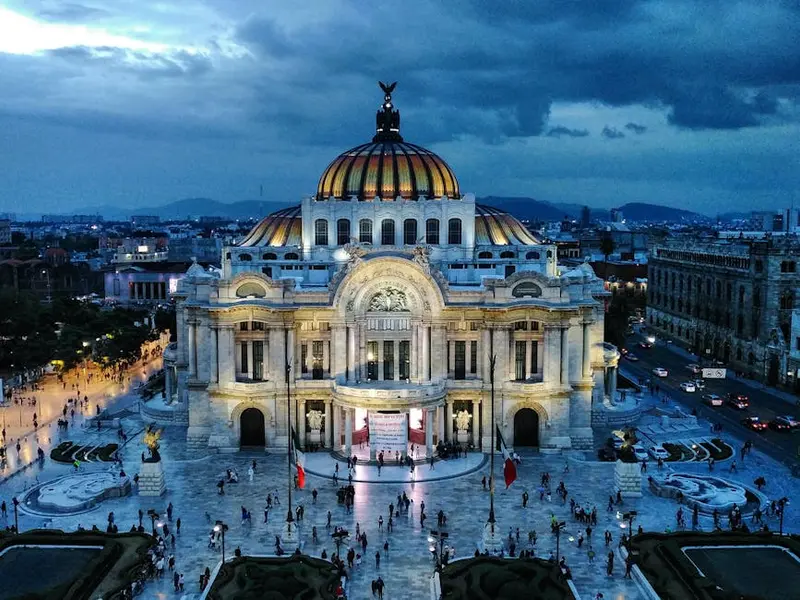
    Mexico City
    Highlight 1 of 8

    Mexico City

    Mexico City, the country's capital, is located at approximately 2,240 meters in a high valley surrounded by volcanoes, and its metropolitan area has nearly 22 million inhabitants.

    Discover
    Teotihuacán
    MIKHEIL / Wikimedia Commons / CC BY-SA 4.0
    Highlight 2 of 8

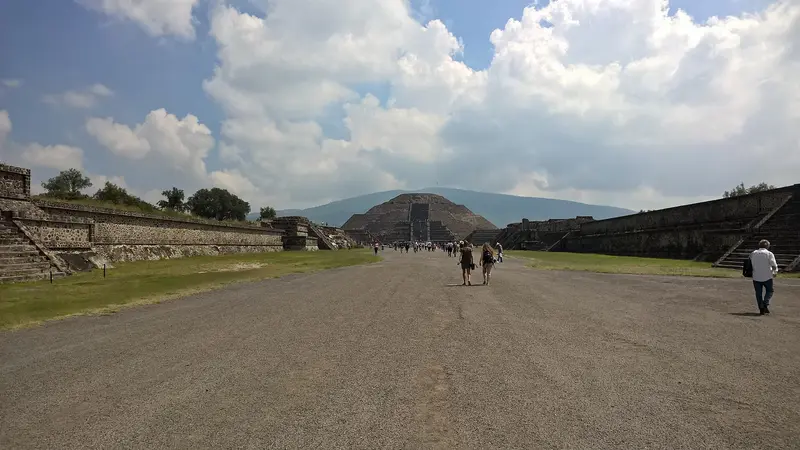
    Teotihuacán

    Teotihuacán, around 50 kilometers northeast of Mexico City, was one of the largest cities in Mesoamerica between the 1st and 7th centuries and has been a UNESCO World Heritage site since 1987.

    Discover
    Oaxaca de Juárez
    Nanahuatl / Wikimedia Commons / CC BY-SA 4.0
    Highlight 3 of 8

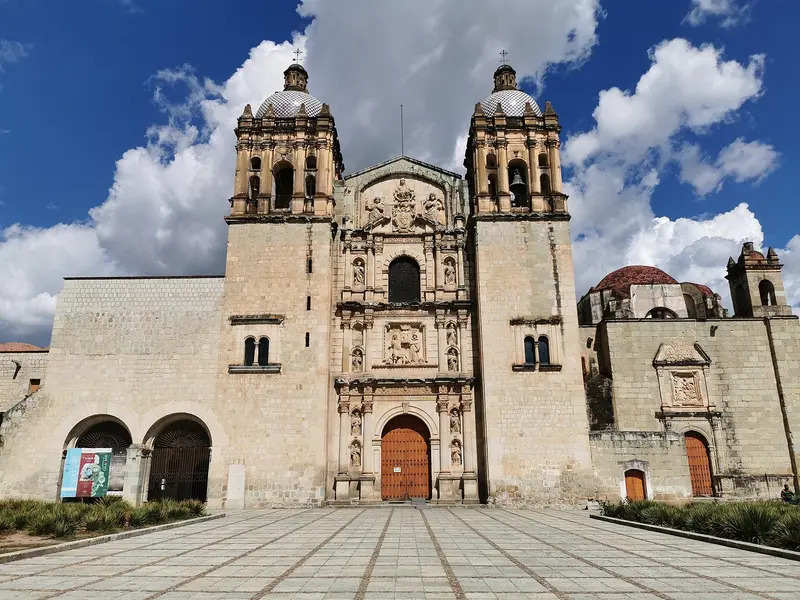
    Oaxaca de Juárez

    Oaxaca de Juárez is the capital of the eponymous state in southern Mexico, located at an altitude of around 1,550 meters in the Oaxaca Valley at the foot of the Sierra Madre del Sur.

    Discover
    San Cristóbal de las Casas
    Highlight 4 of 8

    San Cristóbal de las Casas

    San Cristóbal de las Casas is a colonial city founded in 1528, situated at around 2,200 meters in the Chiapas Highlands, about an hour's drive from the capital Tuxtla Gutiérrez.

    Discover
    Palenque
    Highlight 5 of 8

    Palenque

    Palenque is a Maya ruined city on the edge of the rainforest in northern Chiapas, which flourished as a powerful regional capital between 500 and 700.

    Discover
    Mérida
    Highlight 6 of 8

    Mérida

    Mérida, capital of the state of Yucatán in the northwest of the peninsula, was founded in 1542 on the ruins of the Maya city T'hó.

    Discover
    Chichén Itzá
    Daniel Schwen / Wikimedia Commons / CC BY-SA 4.0
    Highlight 7 of 8

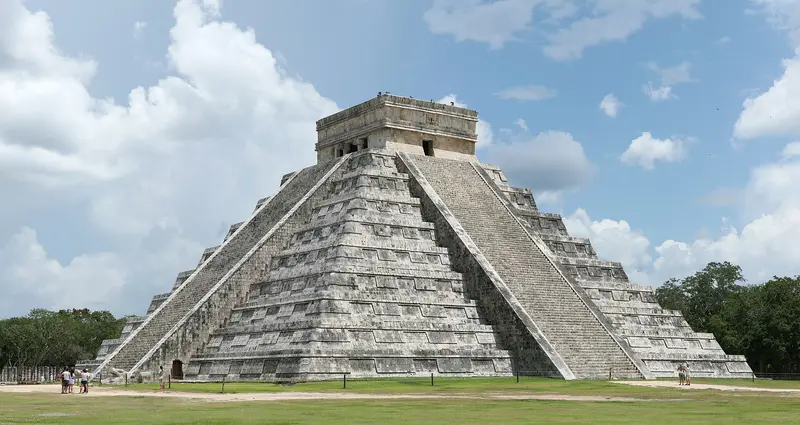
    Chichén Itzá

    Chichén Itzá, in eastern Yucatán, 120 km from Mérida and over 40 km from Valladolid, was one of the Maya's most powerful centers from the 9th-12th centuries.

    Discover
    Tulum
    Highlight 8 of 8

    Tulum

    Tulum is located on the Caribbean coast of the Yucatán Peninsula, south of Cancún on the Riviera Maya. It is known for its Maya ruins on a cliff directly above the sea, for cenotes in the hinterland, and a long beach lined with boutique hotels and beach clubs.

    Discover

    More highlights in Mexico

    Unique experiences that make Mexico unforgettable.
    Bacalar

    Bacalar

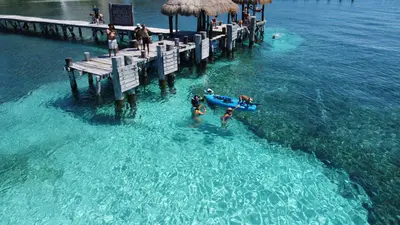
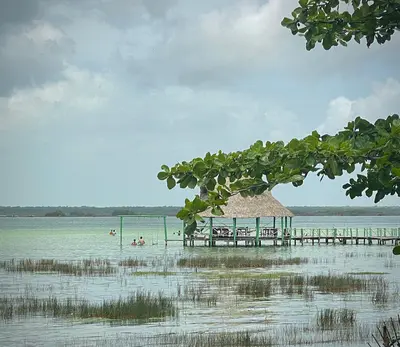
    Bacalar is a small town in southern Quintana Roo, about 40 kilometers north of Chetumal, on the shore of the lagoon of the same name. You come for the Lagoon of Seven Colors, whose water changes from turquoise to deep blue depending on the depth, and for the living stromatolites in its canals. Overlooking the shore is the 18th-century Spanish Fort San Felipe. Since 2006, the town bears the title Pueblo Mágico.
    Guanajuato

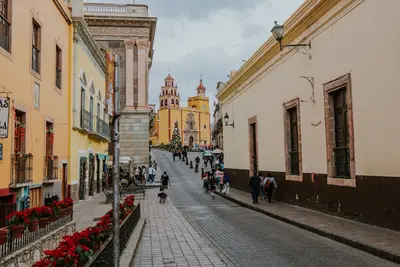
    Guanajuato

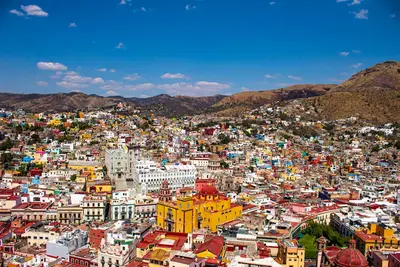
    Guanajuato stretches at over 2,000 m altitude through a narrow gorge in the central highlands, approximately 340 road kilometers northwest of Mexico City. You come for the colorful Old Town from the silver mining era, a UNESCO World Heritage site since 1988, with steep stair-alleys, Baroque churches, and squares bustling with students. In the 18th century, the La Valenciana mine at times supplied around two-thirds of the world's silver production, making the city rich. Colorful houses cling to the slopes, and most traffic runs through tunnels beneath the Old Town.
    Puerto Vallarta

    Puerto Vallarta

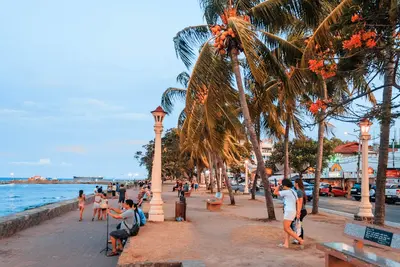
    Puerto Vallarta is a port and resort city of around 220,000 residents on Jalisco's Pacific coast, on Bahía de Banderas at the foot of the Sierra Madre Occidental. You come for the beaches, the Malecón boardwalk with its sculptures, and the Old Town, its whitewashed houses ascending the hillside around the Church of Nuestra Señora de Guadalupe. South of the Río Cuale is the Zona Romántica, home to Playa Los Muertos, the city's largest public beach.
    Baja California Sur

    Baja California Sur

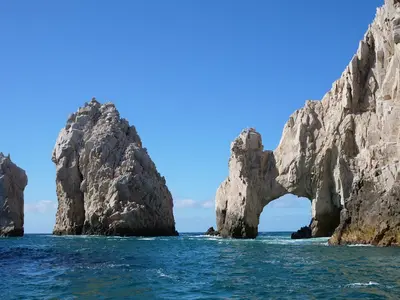
    Baja California Sur encompasses the southern half of the Baja California peninsula, a desert land between the Pacific and the Gulf of California. You go for the resorts of Los Cabos on the southern tip, for boat trips from La Paz to Espíritu Santo Island with the sea lion colony of Los Islotes, and for the artist town Todos Santos near the Pacific coast. Further north lies the mission town Loreto on the Gulf. The islands and protected areas in the Gulf of California have been a UNESCO World Heritage site since 2005.

    How to plan your trip to Mexico

    From the guide to the road: here is what comes next.

    1. 1
      Sunrise over alpine peaks and a sea of clouds
      1234

      Round trip

      12 days · 4 stops

      Saved

      Pick a route

      Pick a ready-made one or save places and plan your own.

      Browse routes
    2. 2

      Trip to Mexico

      Live
      • 1Mexico City3 days
      • 2Teotihuacán4 days
      • 3Oaxaca de Juárez5 days
      Budget

      Plan your trip

      The planner sorts stops, days and budget. Plan together in real time.

      Go to My Trips
    3. 3
      9:41 No signal
      Mexico
      Available offline

      Use it on the road

      Download the guide to your phone and use it on site, even offline.

    Regions to Discover

    Explore the diverse regions of Mexico.
    Baja California Sur

    Baja California Sur

    Baja California Sur encompasses the southern half of the Baja California peninsula, a desert land between the Pacific and the Gulf of California. You go for the resorts of Los Cabos on the southern tip, for boat trips from La Paz to Espíritu Santo Island with the sea lion colony of Los Islotes, and for the artist town Todos Santos near the Pacific coast. Further north lies the mission town Loreto on the Gulf. The islands and protected areas in the Gulf of California have been a UNESCO World Heritage site since 2005.
    Barrancas del Cobre (Copper Canyon)

    Barrancas del Cobre (Copper Canyon)

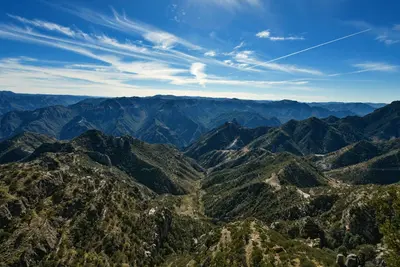
    The Barrancas del Cobre are a system of deep canyons in the Sierra Tarahumara in the southwest of the state of Chihuahua; the deepest, the Barranca de Urique, drops more than 1,800 m. You travel there for the Chepe train ride through the Sierra, the views from the rim at Divisadero, and hikes to waterfalls, rock valleys, and down into the warm valley of Batopilas. The region is home to the Rarámuri, and gateway towns are Creel and Divisadero along the Chihuahua al Pacífico railway line.
    Chiapas

    Chiapas

    Chiapas is Mexico's southernmost state, bordering Guatemala to the east. In the highlands lies the colonial city of San Cristóbal de las Casas at around 2,200 meters, while in the humid northern lowlands is the Mayan site of Palenque, a UNESCO World Heritage site since 1987. The capital is Tuxtla Gutiérrez, from where boat trips through the Cañón del Sumidero are accessible.
    Jalisco

    Jalisco

    Jalisco is located in western Mexico and stretches from the highlands around Guadalajara to 342 km of Pacific coast near Puerto Vallarta. The state is home to Tequila and Mariachi: The agave landscape around the city of Tequila has been on UNESCO's World Heritage list since 2006. Additionally, there are Lago de Chapala, the country's largest freshwater lake, and the pottery and glass-blowing towns of Tlaquepaque and Tonalá.
    Michoacán

    Michoacán

    Michoacán lies in the west of the central Mexican highlands and is the heartland of the Purépecha. Its capital, Morelia, possesses one of the most intact colonial centers in the country, which has been a UNESCO World Heritage site since 1991.Around Lake Pátzcuaro, coppersmiths, lacquer art, and wood carving characterize the villages. To the east, from November to March, millions of Monarch butterflies overwinter in the mountain forests of the Mariposa Monarca Biosphere Reserve.
    Oaxaca

    Oaxaca

    The state of Oaxaca in southern Mexico stretches from the highlands of the Sierra Madre del Sur to the Pacific coast. With 16 officially recognized indigenous peoples, including Zapotec and Mixtec, it is culturally one of the most diverse regions of the country.At its heart lies the capital, Oaxaca de Juárez, with Monte Albán and the artisan villages of the Oaxaca Valley. Over the mountains, for instance through San José del Pacífico, roads lead to the coast, home to Puerto Escondido, Mazunte, and Zipolite.
    Riviera Nayarit

    Riviera Nayarit

    Riviera Nayarit is the roughly 300 km long coastline of the state of Nayarit, stretching between the mouth of the Río Ameca near Nuevo Vallarta and the old port of San Blas. In the south, on Bahía de Banderas, are towns such as Bucerías and Punta de Mita; further north lie Sayulita, San Pancho, and Lo de Marcos, with surf beaches and small fishing villages. From December to March, humpback whales come into the bay.
    Veracruz

    Veracruz

    Veracruz State stretches as a long strip along the Gulf Coast, rising west to Pico de Orizaba, at 5,636m, Mexico's highest peak. Between them lie coffee regions, cloud forests, and river valleys.Veracruz, a port city, offers colonial history and Son Jarocho music; capital Xalapa, a significant Anthropology Museum. To the north lies El Tajín, a major pre-Columbian Gulf Coast site known for the Pyramid of the Niches.
    Yucatán Peninsula

    Yucatán Peninsula

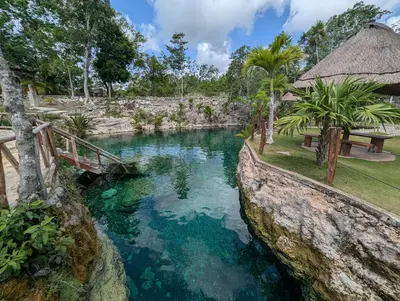
    The Yucatán Peninsula in southeastern Mexico comprises the states of Yucatán, Quintana Roo, and Campeche. It is flat, covered by scrubland, and has few rivers; water flows underground through limestone and emerges in thousands of cenotes. Here lie the great Maya sites, the colonial cities of Mérida and Campeche, and the Caribbean coast from Cancún to Tulum.
    Central Mexican Highlands

    Central Mexican Highlands

    The Central Mexican Highlands stretch from the Valley of Mexico to the Bajío and are mostly 1,800 to 2,400 m high. Here are Mexico City, colonial cities Puebla, Querétaro, Guanajuato, and San Miguel de Allende, and pyramid cities Teotihuacán and Cholula.The region is ideal for a bus tour: most destinations are two to four hours' drive from each other.

    Recommended Itineraries

    Discover the best routes through Mexico.
    Yucatán Classic Round Trip

    Yucatán Classic Round Trip

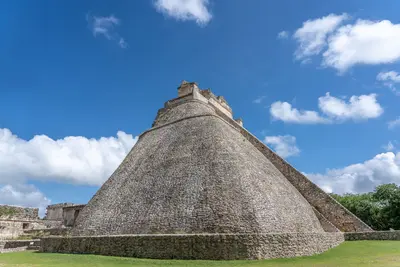
    From Cancún, you travel by bus and ferry from Chiquilá to Isla Holbox, then to the Caribbean coast to Tulum and inland to Valladolid. From there, it's a good 40 kilometers to Chichén Itzá: If you stay a night in Pisté, you'll be at the pyramid for its 8 AM opening. After that, the route continues to Mérida and the Puuc site of Uxmal. The longest leg, from Holbox to Tulum, takes about three hours by ferry and around 170 kilometers of road; you can also reach Chichén Itzá and Mérida with the Tren Maya. For Uxmal and the Ruta Puuc, a rental car is worthwhile; you fly back from Mérida.

    20 Days
    Open jaw
    Stops at a glance
    1. 1.Cancún
    2. 2.Isla Holbox
    3. 3.Tulum
    4. 4.Valladolid
    5. 5.Chichén Itzá
    6. 6.Mérida
    7. 7.Uxmal
    View Route Details →
    Yucatán relaxed & family-friendly

    Yucatán relaxed & family-friendly

    From Cancún, a 20-minute ferry crosses to Isla Mujeres. Then it's along the Riviera Maya to Akumal, and finally inland to Valladolid. The longest leg, from Akumal to Valladolid, takes almost two hours.
    17 Days
    4 stops
    Oaxaca Culture & Pacific

    Oaxaca Culture & Pacific

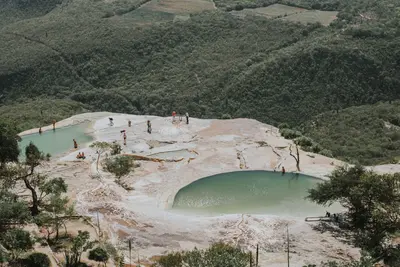
    After four days in Oaxaca de Juárez with markets, Monte Albán, and a trip to Hierve el Agua, we head to the Pacific coast: Mazunte, then Puerto Escondido. Since 2024, a new highway reaches Puerto Escondido in about three hours; Mazunte is roughly an hour east from there. The old mountain road via the Sierra Sur takes around six hours. A domestic flight to Huatulco or Puerto Escondido is faster.
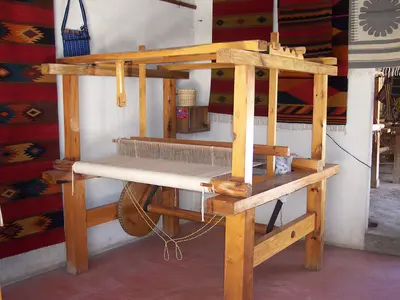
    14 Days
    Open jaw
    3 stops
    Oaxaca vibrant & tranquil

    Oaxaca vibrant & tranquil

    After Oaxaca de Juárez, you'll head for two nights to the weaving village of Teotitlán del Valle, then it's on to the mountain village of San José del Pacífico at around 2,350 meters and down to the Pacific coast at Puerto Escondido. Teotitlán is about 30 kilometers east of Oaxaca; the road over the Sierra Sur is winding, allow a full travel day for it.
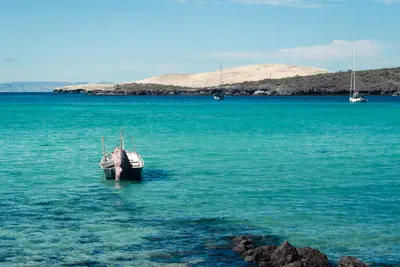
    14 Days
    Open jaw
    4 stops
    Baja California easygoing

    Baja California easygoing

    The route connects the artist town of Todos Santos on the Pacific coast with La Paz on the Gulf of California. The 80 kilometers between them are about an hour's drive by rental car; from La Paz, boat tours depart to Isla Espíritu Santo.
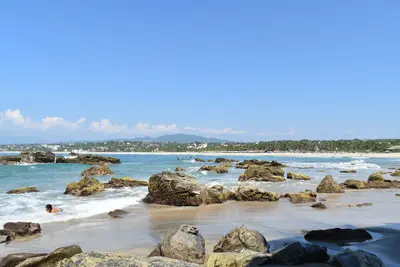
    9 Days
    2 stops
    Mexico Delight & Sea

    Mexico Delight & Sea

    After four days in Mexico City – markets, museums, cuisine, plus a trip to the Teotihuacán pyramids – you fly in approx. 1h 15m to Puerto Escondido, Oaxaca's Pacific coast. Eight nights there are for beaches, surfing, and seafood restaurants.

    13 Days
    Open jaw
    2 stops

    What you eat in Mexico

    Mole negro

    Mole negro

    Black Chili Sauce from Oaxaca

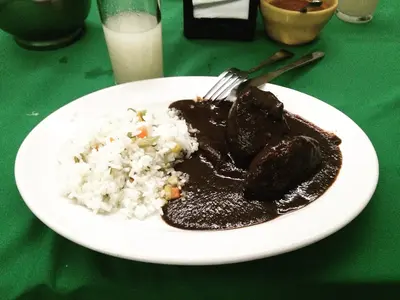
    The almost black, thick Mole negro is one of the seven classic moles from Oaxaca. Roasted Chilhuacle, Pasilla, and Mulato chiles are processed with nuts, seeds, spices, and dark chocolate, then simmered for several hours. In Oaxaca, it often tops turkey and is also found in Enmoladas and Tamales.
    Tacos al pastor

    Tacos al pastor

    Pork from the rotisserie

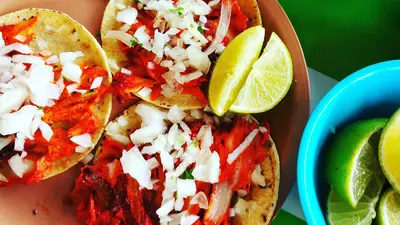
    Pork marinated in achiote and chili cooks on a vertical spit, the trompo. Its model was the Tacos árabes with lamb, sold by Lebanese immigrants in Puebla at the beginning of the 20th century; the current form with pork and corn tortillas originated in Mexico City and was well-established around 1960. The taco is topped with pineapple, onions, cilantro, and salsa.
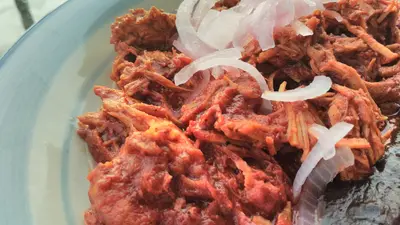
    Cochinita pibil

    Cochinita pibil

    Slow-braised pork from Yucatán

    Yucatán's achiote-marinated pork stew, wrapped in banana leaves, traditionally cooked for three hours in a Pib—an earth pit with glowing stones. Served with red onions pickled in bitter orange juice and Habanero. On the Yucatán Peninsula, Cochinita pibil is traditionally eaten on Sunday mornings and holidays.
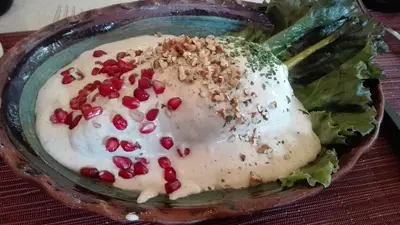
    Chiles en nogada

    Chiles en nogada

    Stuffed Poblano Peppers in Walnut Sauce

    Large Poblano chiles are stuffed with a picadillo of ground pork, apple, pear, and peach, covered with a cold cream of fresh walnuts, and sprinkled with pomegranate seeds and parsley. The dish originates from Puebla. The season is from July to September, when pomegranates and fresh walnuts are available.
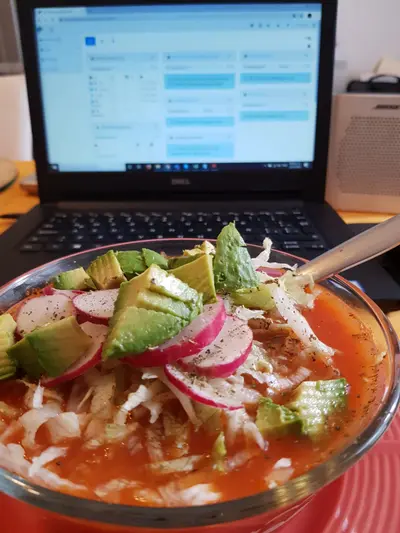
    Pozole

    Pozole

    Corn soup with Hominy

    The hearty broth of large, nixtamalized Cacahuazintle corn simmers with meat, usually pork, until the kernels burst. Red Pozole is typical for Jalisco, green for Guerrero, white is only seasoned with salsa at the table. Served with lettuce or cabbage, radishes, onions, oregano, lime, chili, and Tostadas; Pozole is a staple at Independence Day celebrations in many places.
    Tlayuda

    Tlayuda

    Large, crispy tortilla from Oaxaca

    The Tlayuda from Oaxaca is a corn tortilla, often more than 30 cm in diameter, crisply toasted on a comal. It is spread with asiento (pork lard), black beans, and quesillo, Oaxaca's string cheese, then topped with tasajo, cecina, or chorizo and crisp-grilled over embers. It is served with lettuce or cabbage and a salsa from the molcajete.

    Good to Know

    Essential info for your trip planning.

    Land & People

    Mexico has approximately 130 million inhabitants, most of whom live in the central highlands around Mexico City.

    History & Society

    Ancient Civilizations of MesoamericaLong before the arrival of Europeans, complex societies emerged in what is now…

    Food & Drink

    Traditional Mexican cuisine has been on UNESCO's list of Intangible Cultural Heritage since 2010.

    Practical Info

    Entry and FeesCitizens of the UK, Germany, Austria and Switzerland can enter visa-free for tourist stays of up to 180…

    Getting Around

    Long-Distance Buses and Domestic FlightsFor long distances within Mexico, domestic flights are often the best option,…

    RV Travel

    Touring Mexico by MotorhomeMexico works for motorhome travel if you are flexible and well prepared.

    Traveling with Kids

    Children are welcome everywhere in Mexico and are a natural part of public life.

    Best Time to Visit

    When is the best time for your trip?

    November
    February
    March
    April
    22–26°C·20–40 mm(little rain)
    Diese Monate bieten in weiten Teilen Mexikos ideales Reisewetter mit viel Sonnenschein und angenehmen Temperaturen. Die Regenzeit ist entweder vorbei (November) oder noch nicht in vollem Gange (März/April), und die Luftfeuchtigkeit ist niedriger. Während Februar und März zur Hauptsaison gehören können, bieten November und April oft eine gute Balance aus gutem Wetter und moderaterem Touristenaufkommen.
    Mexiko ist ein Land von immenser Größe und topografischer Vielfalt, was zu einer breiten Palette von Klimazonen führt. Die oben genannten monatlichen Durchschnittswerte stellen eine Generalisierung dar, die sich an beliebten Touristengebieten und dem typischen Muster der Trocken- und Regenzeit orientiert, können aber je nach Region stark variieren. Zentrales Hochland (z.B. Mexiko-Stadt, Guadalajara, San Miguel de Allende): Hier herrscht ein gemäßigtes Hochlandklima, oft als "ewiger Frühling" bezeichnet. Die Temperaturen sind das ganze Jahr über mild (Durchschnittlich 18-24°C tagsüber), die Nächte können besonders im Winter kühler sein. Es gibt eine klare Trockenzeit (November bis April) und eine Regenzeit (Mai bis Oktober). Während der Regenzeit fallen die Niederschläge meist in Form kurzer, heftiger Nachmittagsschauer, die die Luft erfrischen. Tropische Küstenregionen (z.B. Yucatán-Halbinsel mit Cancun, Riviera Maya; Pazifikküste mit Puerto Vallarta): An den Küsten ist das Klima tropisch heiß und feucht. Die Trockenzeit (November bis April) bietet viel Sonnenschein, geringere Luftfeuchtigkeit und angenehme Brisen. Die Regenzeit (Mai bis Oktober) ist heißer und feuchter, mit häufigeren, aber oft kurzen und intensiven Regenfällen. Die Wassertemperaturen bleiben ganzjährig angenehm warm. Nördliche Wüstenregionen (z.B. Baja California, Sonora, Chihuahua): Diese Gebiete sind arid bis semi-arid mit extrem heißen Sommern (oft über 40°C) und milden bis kühlen Wintern, wobei die Nächte stark abkühlen können. Niederschläge sind das ganze Jahr über gering. Wichtige Wetterphänomene: Regenzeit (Mai - Oktober): Obwohl es "Regenzeit" heißt, bedeutet dies selten tagelangen Dauerregen. Typisch sind kräftige, aber kurze Schauer am Nachmittag oder Abend, die die Luft abkühlen und meist nur wenige Stunden dauern. Die Luftfeuchtigkeit ist in dieser Zeit hoch. Hurrikan-Saison (Juni - November): Die offizielle Hurrikan-Saison betrifft primär die karibische Küste (Yucatán-Halbinsel) und die Pazifikküste. Die höchste Wahrscheinlichkeit für Stürme und tropische Depressionen liegt zwischen August und Oktober. Reisende sollten in dieser Zeit Wetterwarnungen aufmerksam verfolgen, da sie Reisepläne beeinflussen können. Die Wahl der besten Reisezeit hängt stark von der besuchten Region und den persönlichen Vorlieben ab. Für Badeurlaub sind die trockenen Monate ideal, während für kulturelle Erkundungen im Hochland auch die Regenzeit angenehm sein kann, da die Natur grüner ist und die Schauer oft vorhersehbar sind.

    Seasons

    Jan
    Feb
    Mar
    Apr
    May
    Jun
    Jul
    Aug
    Sep
    Oct
    Nov
    Dec
    Hauptsaison
    Übergangszeit
    Nebensaison
    Best Time to Visit
    ▶Show detailed monthly data
    MonthTemp (°C)Rain (mm)Sun (h)
    January21.0307.0
    February22.0258.0
    March24.0208.0
    April26.0309.0
    May28.0708.0
    June28.01207.0
    July28.01406.0
    August28.01306.0
    September27.01506.0
    October26.0907.0
    November24.0407.0
    December22.0357.0

    Travel advice

    Safety, entry requirements and health: the official, up-to-date advice for Mexico is published by the UK government on GOV.UK.

    Go to GOV.UK

    Sources & method

    • Photos: Wikimedia Commons, Unsplash, Pexels. Each photo carries its credit.
    • The content is based on web research from public, traceable sources. How the content is made · The role of AI
    Felix at Kuirau Park in Rotorua, New Zealand

    Who's behind Fernweh?

    Hi, I'm Felix.

    I love to travel, and I love planning even more. Fernweh.guide is my attempt at building a really good online travel guide.

    About Fernweh

    All places in Mexico

    • Akumal
    • Bacalar
    • Baja California Sur
    • Barrancas del Cobre (Copper Canyon)
    • Barrio de la Presa
    • Barrio de Pastita
    • Barrio del Artista
    • Batopilas
    • Cabo San Lucas
    • Cancún
    • Central Mexican Highlands
    • Centro Histórico
    • Chiapas
    • Chichén Itzá
    • Cholula
    • Comitán de Domínguez
    • Condesa
    • Coyoacán
    • Cozumel
    • Creel
    • Divisadero / Posada Barrancas
    • Guadalajara
    • Guanajuato
    • Hierve el Agua
    • Isla Holbox
    • Isla Mujeres
    • Jalatlaco
    • Jalisco
    • La Paz
    • Lo de Marcos
    • Loreto
    • Los Sapos
    • Mazunte
    • Mérida
    • Mexico City
    • Michoacán
    • Morelia
    • Oaxaca
    • Oaxaca de Juárez
    • Palenque
    • Playa del Carmen
    • Polanco
    • Puebla
    • Puerto Escondido
    • Puerto Morelos
    • Puerto Vallarta
    • Punta de Mita
    • Riviera Nayarit
    • Roma Norte
    • San Cristóbal de las Casas
    • San Francisco de Campeche
    • San José del Cabo
    • San José del Pacífico
    • San Miguel de Allende
    • San Pancho (San Francisco)
    • Santiago de Querétaro
    • Sayulita
    • Teotihuacán
    • Teotitlán del Valle
    • Tequila (Stadt)
    • Tlaquepaque
    • Todos Santos
    • Tulum
    • Tuxtla Gutiérrez
    • Uxmal
    • Valladolid
    • Veracruz
    • Veracruz (City)
    • Xochimilco
    • Yucatán Peninsula

    More about Mexico

    • Best Time to Visit Mexico
    • Mexico with Kids