Fernweh: Home
    ExploreTravel GuidesPlan a tripMy tripLast visited
    de|en
    All Places & RegionsAll highlightsAbout FernwehFAQPrivacy PolicyImprint
    ExploreTravel GuidesPlan a tripMy tripLast visited
    • Why go
    • Highlights
    • Explore regions
    • Round trips
    • Local food
    • Good to know
    • Best time to visit
    • Travel advice
    Australia

    Travel Guide Australia

    Australia presents itself as a vast continent offering an impressive diversity of landscapes, cultures, and habitats.

    by Felix Gillen

    Contents

    • Why go
    • Highlights
    • Explore regions
    • Round trips
    • Local food
    • Good to know
    • Best time to visit
    • Travel advice

    Why Go To Australia?

    Australia is large enough to accommodate multiple trips in one country: tropical rainforest and coral reef in the north, red desert in the centre, coastal cities and cool wine regions in the south. Plus, unique wildlife found nowhere else, and, with the cultures of the Aboriginal and Torres Strait Islander peoples, the world's oldest continuously lived tradition. Those who plan for distances and travel times will be rewarded with landscapes usually only seen in documentaries.

    Where in Australia?

    Pick a region. The highlights, road trips and places below follow your choice.
    Darwin
    Highlight 1 of 8

    Darwin

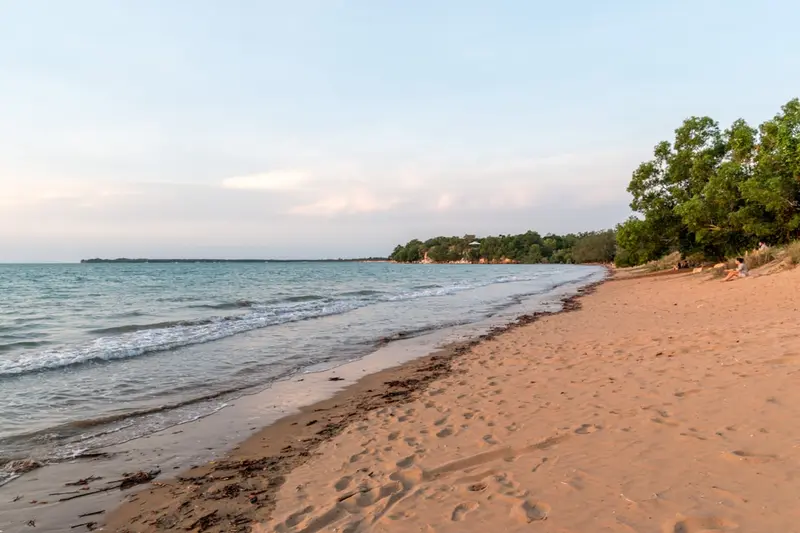
    Darwin is the tropical capital of the Northern Territory and the gateway to Kakadu and Litchfield. A relaxed coastal town with night markets, sunsets, and rich war history.

    Discover
    Sydney
    Highlight 2 of 8

    Sydney

    Sydney is Australia's largest city, set on one of the world's most beautiful natural harbours. The Opera House and Harbour Bridge, ferries across the water, beaches like Bondi and Manly, and national parks right on the city limits.

    Discover
    Alice Springs
    Highlight 3 of 8

    Alice Springs

    Alice Springs, Arrernte Mparntwe, is located almost exactly in the center of Australia, nestled between the MacDonnell Ranges.

    Discover
    Atherton Tablelands
    Highlight 4 of 8

    Atherton Tablelands

    Volcanic high plateau behind Cairns, at 700 to over 1,000 meters. Here it's cooler than on the coast: pastures, coffee plantations, crater lakes, and waterfalls abound.

    Discover
    Blue Mountains
    Highlight 5 of 8

    Blue Mountains

    Sandstone plateau with deep, forested valleys, just under two hours west of Sydney. The eucalyptus forests make the distance shimmer bluish.

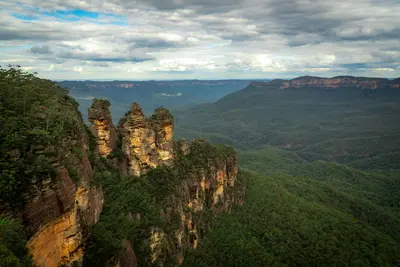
    The towns line up along the ridge: Wentworth Falls, Leura, Katoomba, and Blackheath are the main ones. Katoomba, with Echo Point and the Three Sisters, is the hub; Leura the prettiest village; Blackheath the quietest starting point for longer hikes.

    Discover
    Byron Bay Town
    Highlight 6 of 8

    Byron Bay Town

    Byron Bay is the best-known coastal town in the Northern Rivers, approximately 170 km south of Brisbane. Long sandy beaches, the lighthouse at Cape Byron, and a relaxed surf and wellness culture attract visitors year-round.

    Discover
    Uluru-Kata Tjuta National Park
    Highlight 7 of 8

    Uluru-Kata Tjuta National Park

    The Uluru-Kata Tjuta National Park in the southwest of the Northern Territory protects Australia's two most famous rock formations: the monolith Uluru and the 36 domes of Kata Tjuta.

    Discover
    Whitsunday Islands
    Highlight 8 of 8

    Whitsunday Islands

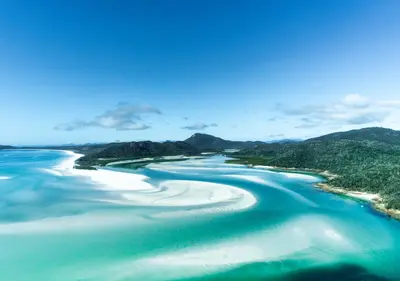
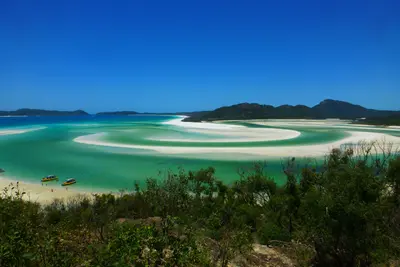
    74 islands in the heart of the Great Barrier Reef, most uninhabited and national park. Explore them by sailboat, ferry, or day trip from Airlie Beach.

    Airlie Beach is the mainland base; from there, ferries and sailing tours depart for the islands. Hamilton Island has its own airport and the widest range of resorts.

    Discover

    How to plan your trip to Australia

    From the guide to the road: here is what comes next.

    1. 1
      Sunrise over alpine peaks and a sea of clouds
      1234

      Round trip

      12 days · 4 stops

      Saved

      Pick a route

      Pick a ready-made one or save places and plan your own.

      Browse routes
    2. 2

      Trip to Australia

      Live
      • 1Darwin3 days
      • 2Sydney4 days
      • 3Alice Springs5 days
      Budget

      Plan your trip

      The planner sorts stops, days and budget. Plan together in real time.

      Go to My Trips
    3. 3
      9:41 No signal
      Australia
      Available offline

      Use it on the road

      Download the guide to your phone and use it on site, even offline.

    Regions to Discover

    Explore the diverse regions of Australia.
    Shark Bay

    Shark Bay on the West Coast has been a UNESCO World Heritage site since 1991: a vast, shallow bay with seagrass meadows, dugongs, the dolphins of Monkey Mia, stromatolites, and a shell beach. A good eight hours' drive north of Perth.
    Port Stephens

    Port Stephens

    Port Stephens, a good two hours north of Sydney, is a large, sheltered bay with dolphins, white beaches and the sand dunes of Stockton Bight. The towns around Nelson Bay are a popular holiday destination for Sydneysiders.
    West MacDonnell Ranges

    West MacDonnell Ranges

    The West MacDonnell Ranges, known as Tjoritja in Arrernte, stretch approximately 160 km west of Alice Springs. Between the parallel mountain ranges are gorges with permanent waterholes, including Simpsons Gap, Standley Chasm, Ellery Creek Big Hole, and Ormiston Gorge.The Namatjira Drive provides access to most destinations via a sealed road, while the Larapinta Trail leads on foot over the ridgeline.
    Barossa Valley

    Barossa Valley

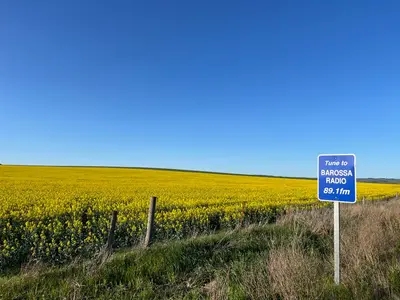
    A one-hour drive north of Adelaide lies Australia's best-known wine region. Robust Shiraz from old vines, Lutheran churches, and butcheries with Mettwurst recall the Silesian settlers of the 19th century. Plan at least two days.
    Blue Mountains

    Blue Mountains

    Sandstone plateau with deep, forested valleys, just under two hours west of Sydney. The eucalyptus forests make the distance shimmer bluish. Lookouts, waterfalls, and hiking trails are close to the railway line and the Great Western Highway.
    Fraser Island (K'gari)

    Fraser Island (K'gari)

    The world's largest sand island, about 120 kilometers long, with rainforest on sand, over a hundred freshwater lakes, and a beach serving as a road. It is now officially called K'gari and is a UNESCO World Heritage site. Explore it only by 4WD.
    Gold Coast

    Gold Coast

    An hour south of Brisbane, surf beaches, high-rises and theme parks stretch 50 kilometers. A few kilometers inland, rainforests and waterfalls begin. Loud in Surfers Paradise, more relaxed in Burleigh Heads and Coolangatta.
    Great Ocean Road

    Great Ocean Road

    The roughly 240-kilometer coastal road southwest of Melbourne runs from Torquay, via Lorne and Apollo Bay, to the limestone cliffs of the Twelve Apostles. Along the way, surf beaches, rainforest in the Otway Ranges, and steep cliffs alternate.
    Hunter Valley

    Hunter Valley

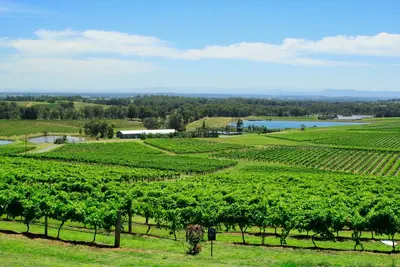
    The Hunter Valley, a good two hours north of Sydney, is Australia's oldest wine region. Around Pokolbin are over a hundred cellar doors, plus restaurants, cheese factories and hot-air balloon rides at dawn.
    Kakadu National Park

    Kakadu National Park

    Kakadu National Park in the north of the Northern Territory is Australia's largest national park, spanning nearly 20,000 km². It stretches from tidal rivers on the coast across vast wetlands to the Arnhem Plateau escarpment with its waterfalls.The park is listed as a natural and cultural heritage site on the UNESCO World Heritage List. The Bininj/Mungguy have lived here for at least 65,000 years, and their rock art at Ubirr and Burrunggui is among the most significant in the world.
    Kangaroo Island

    Kangaroo Island

    Kangaroo Island is located about 15 km off the coast of South Australia and is Australia's third-largest island after Tasmania and Melville Island. Approximately one-third of its area is a protected nature reserve, home to sea lions, echidnas, koalas, and its own subspecies of kangaroo.The island is known for regional products like honey, oysters, wine, and gin. The ferry from Cape Jervis to Penneshaw takes about 45 minutes.
    Kimberley

    Kimberley

    At roughly 420,000 km², the Kimberley in northern Western Australia is larger than Germany, yet home to only about 40,000 inhabitants. Gorges, waterfalls, the Bungle Bungles' beehive domes, and a rugged coast with extreme tides define the region.Most travellers start in Broome in the west or Kununurra in the east. Between these, the Gibb River Road leads through the outback.
    Margaret River Region

    Margaret River Region

    The Margaret River Region is located on the southwestern tip of Australia between Cape Naturaliste and Cape Leeuwin, approximately three hours' drive south of Perth. Along about 100 km of coastline, surf beaches, limestone caves, and karri forests alternate.The region is one of the country's most renowned wine regions, especially for Cabernet Sauvignon and Chardonnay. Many wineries have restaurants and tasting rooms.
    Melbourne

    Melbourne

    Melbourne, Victoria's capital, is Australia's second-largest city with around 5 million residents. Situated on Port Phillip Bay and the Yarra River, it's considered the country's cultural heart, boasting Victorian architecture, laneways filled with cafes and street art, and major sporting events.The city centre is compact and easily explored by tram. Neighborhoods like Fitzroy, Southbank, and St Kilda each boast their own character.
    Northern Rivers / Byron Bay Region

    Northern Rivers / Byron Bay Region

    The Northern Rivers in northeastern New South Wales stretch from the coast around Byron Bay into the green hinterland with rainforests, waterfalls, and small towns like Mullumbimby and Nimbin. Cape Byron is the easternmost point of the Australian mainland.Surf culture, organic farms, markets, and a strong alternative scene characterize the region. Brisbane and the Gold Coast are about a two-hour drive north.
    Red Centre

    Red Centre

    The Red Centre, a desert region in the south of the Northern Territory, encompasses Alice Springs, Uluru, Kata Tjuta, and Kings Canyon. Red sand plains, rocky gorges, and waterholes in the MacDonnell Ranges define its landscape.For tens of thousands of years, the region has been home to the Arrernte, Anangu, and Luritja. Their culture is evident daily, in art centres, guided walks, and the rules at sacred sites.
    Tasmanian Wilderness

    Tasmanian Wilderness

    The Tasmanian Wilderness World Heritage Area covers approximately one fifth of Tasmania and is one of the largest protected wilderness areas in the temperate latitudes. It comprises several national parks, including Cradle Mountain-Lake St Clair, Franklin-Gordon Wild Rivers, Southwest, and Walls of Jerusalem.Rainforests with Myrtle Beech and Huon Pines, glacial lakes, high-altitude moors, and wild rivers define the landscape. Vast areas are only accessible on foot, by boat, or from the air.
    Tropical North Queensland

    Tropical North Queensland

    Tropical North Queensland is the state's northeast, centered around Cairns. Here, two UNESCO World Heritage Sites converge: the Great Barrier Reef offshore and the Wet Tropics rainforests, including Daintree, on land.Cairns and Port Douglas are the main gateways. In the hinterland lie the cooler Atherton Tablelands, featuring lakes and waterfalls.
    Whitsunday Islands

    Whitsunday Islands

    74 islands in the heart of the Great Barrier Reef, most uninhabited and national park. Explore them by sailboat, ferry, or day trip from Airlie Beach. Whitehaven Beach is famous for its almost pure white quartz sand.

    Recommended Itineraries

    Discover the best routes through Australia.
    East Coast Classic Roadtrip

    East Coast Classic Roadtrip

    The route connects Sydney and the Blue Mountains with the coast around Byron Bay, with Brisbane, and finally with Cairns on the Great Barrier Reef. From the Blue Mountains to Byron Bay is about 850 kilometers, for which you should plan two driving days; between Brisbane and Cairns are approximately 1,700 kilometers, most people fly this route.

    16 Days
    Stops at a glance
    1. 1.Sydney
    2. 2.Blue Mountains
    3. 3.Northern Rivers / Byron Bay Region
    4. 4.Brisbane
    5. 5.Cairns
    View Route Details →
    Relaxed Australia East Coast

    Relaxed Australia East Coast

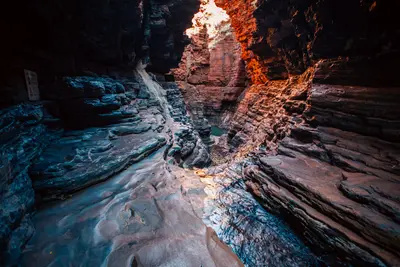
    The route takes a good three weeks for the East Coast: Byron Bay, Noosa, the sand island K'gari, the Whitsundays from Airlie Beach, and tranquil Mission Beach between rainforest and reef. At each location, you stay three to four nights. Long travel days are between Sydney and Byron Bay (approx. 770 kilometers) and between K'gari and Airlie Beach (approx. 1,000 kilometers); you break them up with a stopover or shorten them with a domestic flight.
    23 Days
    6 stops
    West Coast Australia Road Trip

    West Coast Australia Road Trip

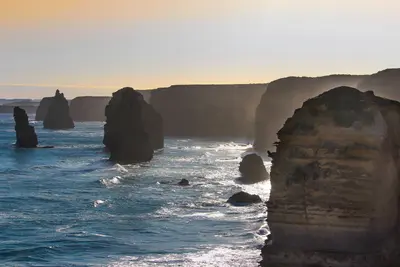
    From Perth, head up the coast to the gorges of Kalbarri National Park, to Shark Bay with the dolphins of Monkey Mia, and to the Ningaloo Reef near Coral Bay and Exmouth. Finally, the route leads inland to Karijini National Park. The distances are long and petrol stations are rare.
    20 Days
    6 stops
    Australia: No Camper, Comfortable

    Australia: No Camper, Comfortable

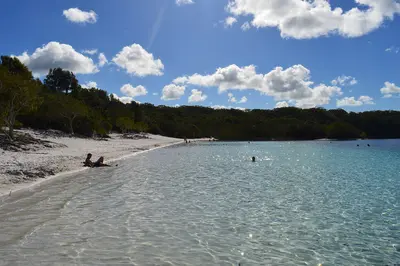
    The route relies on fixed bases and domestic flights: Sydney, Melbourne with a detour to the Great Ocean Road, then Cairns and Port Douglas between rainforest and the Great Barrier Reef.
    19 Days
    5 stops
    Australia Families & Beach

    Australia Families & Beach

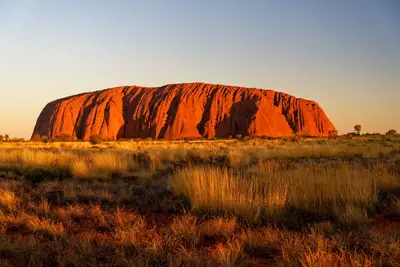
    The route follows the coast north from Sydney: dolphins and dunes in Port Stephens, the beaches around Byron Bay, Noosa, and finally the sand island K'gari. The longest leg from Port Stephens to Byron Bay you'd best split with a stopover if you're with children.
    20 Days
    5 stops
    Northern Territory & Outback

    Northern Territory & Outback

    The route runs from Alice Springs through the gorges of the West MacDonnell Ranges to Kings Canyon, Uluru, and Kata Tjuta. You then fly to Darwin in the tropical North, from where Kakadu and Litchfield National Parks are nearby.

    14 Days
    5 stops

    What you eat in Australia

    Meat Pie

    Meat Pie

    Easy-to-handle meat pie

    Puff pastry, filled with minced meat or stewed beef in a thick sauce: the unofficial national dish. You find it in bakeries, at petrol stations, and at every Footy game, eaten by hand with a dollop of tomato sauce. The recipe originates from Great Britain, but the daily ritual surrounding it is Australian.
    Barramundi

    Barramundi

    The Fish of the North

    The name comes from an Aboriginal language from Queensland, meaning approximately 'fish with large scales'. Individuals can grow over a meter long. It lives in the tropical rivers and coastal waters of the North and is featured on nearly every menu there, often grilled or as fish and chips. Its meat is white, firm, and mild.
    Lamington

    Lamington

    Sponge cubes with coconut

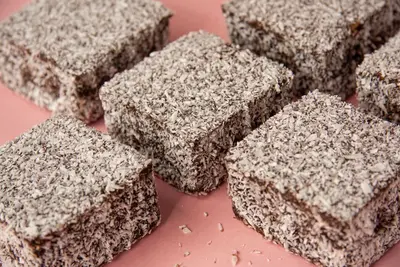
    Cubes of sponge cake, dipped in chocolate glaze and rolled in desiccated coconut. Their place of origin is Queensland, and they are named after Lord Lamington, the governor of the colony around 1900. In cafes in Melbourne and Sydney, you often find them filled, for example, with raspberry jam, cream, or salted caramel.
    Pavlova

    Pavlova

    Meringue with Fruit

    Crisp meringue outside, soft inside, topped with whipped cream and fresh fruits, typically passion fruit and strawberries. Named after Russian ballerina Anna Pavlova. Australia and New Zealand still dispute its origin. Served mainly at Christmas, which in Australia falls in midsummer.
    Vegemite

    Vegemite

    Yeast extract spread

    Dark brown spread made from yeast extract, salty and tangy, produced in Melbourne since the 1920s. For many Australians, it's a breakfast staple. The key is the dosage: wafer-thin on buttered toast, not thick like jam.
    Bush Tucker

    Bush Tucker

    Ingredients from the bush

    Collective term for the foods Aboriginal cultures have lived on for millennia: lemon myrtle, finger lime, mountain pepper, Wattleseed, bush tomato, Macadamia, plus kangaroo and emu. In recent years, chefs have brought these ingredients into modern Australian cuisine. They are most accessible on guided tours with Indigenous guides and in restaurants that specifically use them.

    Good to Know

    Essential info for your trip planning.

    Land & People

    A Continent with an Empty Centre At roughly 7.7 million square kilometres, Australia is the sixth largest country on…

    History & Society

    The Origins: Aboriginal AustraliaBefore the first Europeans set foot on Australian soil, the continent had been…

    Food & Drink

    Australian cuisine is a reflection of the country's multicultural society and its unique natural environment.

    Practical Info

    Entry Requirements & Visas As a German or European citizen, you will need a valid visa to enter Australia.

    Getting Around

    Australia is a continent of vast distances, making mobility and orientation central themes of your travel planning.

    RV Travel

    Australia: An RV ParadiseAustralia is one of the world's best destinations for RV travel.

    Traveling with Kids

    Australia is an excellent destination for families. The country is in many aspects geared towards children, offering a…

    Best Time to Visit

    When is the best time for your trip?

    April
    May
    September
    October
    18–22°C·40–60 mm(moderate rain)
    Diese Monate bieten ein ausgezeichnetes Gleichgewicht aus angenehmen Temperaturen und moderatem Niederschlag in den meisten touristisch relevanten Regionen. Der Herbst (April, Mai) und Frühling (September, Oktober) ermöglichen sowohl die Erkundung der südlichen Metropolen als auch einen Besuch des tropischen Nordens am Rande der Trocken- oder Regenzeit, ohne die extremen Wetterbedingungen der Hochsommer- oder Regenzeit.
    Australien ist ein Kontinent von immenser Größe mit extrem vielfältigen Klimazonen. Die obenstehenden monatlichen Klimadaten sind eine stark vereinfachte Verallgemeinerung, die versucht, die Bedingungen in den am häufigsten von Reisenden besuchten Regionen (hauptsächlich die südöstlichen und östlichen Küstengebiete) widerzuspiegeln, berücksichtigt aber auch die jahreszeitlichen Verschiebungen des gesamten Kontinents. Es ist unerlässlich, das Klima spezifischer Regionen zu prüfen, die Sie besuchen möchten:Der Tropische Norden (z.B. Cairns, Darwin, Kimberley): Hier herrscht ein Monsunklima mit zwei Hauptjahreszeiten:Trockenzeit (Mai bis Oktober): Warm, sonnig und trocken. Dies ist die beste Reisezeit für diese Region, da die Temperaturen angenehm sind und das Risiko von Wirbelstürmen gering ist.Regenzeit (November bis April): Heiß, sehr feucht mit heftigen tropischen Regenfällen und Gewittern. Überschwemmungen sind möglich und es besteht das Risiko von tropischen Wirbelstürmen (Zyklone), insbesondere von Dezember bis März. Viele Straßen und Nationalparks können geschlossen sein.Das Aride Zentrum (Outback, z.B. Alice Springs, Uluru): Ganzjährig trocken. Die Sommer (Dezember bis Februar) sind extrem heiß mit Tagestemperaturen weit über 40°C, die Winter (Juni bis August) sind mild bis kühl am Tag, aber nachts sehr kalt mit Frostgefahr. Die Übergangszeiten Frühling und Herbst sind ideal.Der Gemäßigte Süden (z.B. Sydney, Melbourne, Adelaide, Perth, Tasmanien): Hier gibt es vier ausgeprägte Jahreszeiten, ähnlich denen der Nordhalbkugel, aber mit entgegengesetztem Verlauf:Sommer (Dezember bis Februar): Heiß und sonnig, ideal für Strandbesuche.Herbst (März bis Mai): Mild und angenehm, oft die schönste Reisezeit.Winter (Juni bis August): Kühl und regnerisch, besonders im Süden und auf Tasmanien, ideal für Skifahren in den Alpenregionen.Frühling (September bis November): Mild, mit blühender Natur.Die Subtropische Ostküste (z.B. Brisbane, Gold Coast): Warme, feuchte Sommer und milde, sonnige Winter.Weitere wichtige Hinweise:Buschfeuer: Während der trockenen Sommermonate, insbesondere im Süden und Osten, besteht eine erhöhte Gefahr von Buschfeuern.UV-Strahlung: Australien hat eine der höchsten UV-Index-Werte weltweit. Ganzjähriger, konsequenter Sonnenschutz ist unerlässlich.Regionale Variationen: Die Wassertemperaturen variieren stark von den kalten südlichen Meeren bis zu den tropischen, badewannenwarmen Gewässern im Norden.Für eine spezifische Reiseplanung wird dringend empfohlen, detaillierte Klimainformationen für die jeweiligen Zielorte und den Reisezeitraum zu konsultieren.

    Seasons

    Jan
    Feb
    Mar
    Apr
    May
    Jun
    Jul
    Aug
    Sep
    Oct
    Nov
    Dec
    Regenzeit (Tropischer Norden)
    Nebensaison (Süd & Ostküste - Winter)
    Übergangszeit (Herbst)
    Übergangszeit (Frühling)
    Best Time to Visit
    ▶Show detailed monthly data
    MonthTemp (°C)Rain (mm)Sun (h)
    January26.0957.5
    February26.01007.0
    March24.0807.0
    April21.0607.5
    May18.0557.0
    June16.0606.5
    July15.0506.5
    August16.0457.0
    September19.0408.0
    October22.0508.5
    November24.0658.0
    December25.0807.5

    Travel advice

    Safety, entry requirements and health: the official, up-to-date advice for Australia is published by the UK government on GOV.UK.

    Go to GOV.UK

    Sources & method

    • Photos: Wikimedia Commons, Unsplash, Pexels. Each photo carries its credit.
    • The content is based on web research from public, traceable sources. How the content is made · The role of AI
    Felix at Kuirau Park in Rotorua, New Zealand

    Who's behind Fernweh?

    Hi, I'm Felix.

    I love to travel, and I love planning even more. Fernweh.guide is my attempt at building a really good online travel guide.

    About Fernweh

    All places in Australia

    • Airlie Beach
    • Alice Springs
    • Angaston
    • Atherton Tablelands
    • Augusta
    • Barossa Valley
    • Blackheath
    • Blue Mountains
    • Brisbane
    • Broadbeach
    • Broke Fordwich
    • Broome
    • Brunswick Heads
    • Burleigh Heads
    • Byron Bay Town
    • Cairns
    • Central Lakes Region
    • Cessnock
    • Coolangatta
    • Coral Bay
    • Cradle Mountain-Lake St Clair National Park
    • Daintree National Park
    • Darwin
    • Dunsborough
    • Exmouth
    • Fitzroy
    • Flinders Chase National Park Area
    • Franklin-Gordon Wild Rivers National Park
    • Fraser Island (K'gari)
    • Gold Coast
    • Great Ocean Road
    • Hamilton Island
    • Hook Island
    • Hunter Valley
    • Kakadu National Park
    • Kalbarri NP
    • Kangaroo Island
    • Karijini NP
    • Katoomba
    • Kimberley
    • Kingfisher Bay Region
    • Kingscote
    • Kununurra
    • Lennox Head
    • Leura
    • Main Beach
    • Margaret River (town)
    • Margaret River Region
    • Melbourne
    • Mission Beach
    • Mullumbimby
    • Nimbin
    • Noosa
    • Northern Rivers / Byron Bay Region
    • Nuriootpa
    • Otway Coast & Hinterland
    • Penneshaw
    • Perth
    • Pokolbin
    • Port Douglas
    • Port Stephens
    • Purnululu National Park
    • Red Centre
    • Rock art of Nourlangie (Burrunggui)
    • Seventy-Five Mile Beach
    • Shark Bay
    • Shipwreck Coast
    • Southbank
    • Southwest National Park
    • St Kilda
    • Surf Coast
    • Surfers Paradise
    • Sydney
    • Tanunda
    • Tasmanian Wilderness
    • The Wetlands of Yellow Water
    • Tropical North Queensland
    • Ubirr Rock Outcrop and Panoramic View
    • Uluru-Kata Tjuta National Park
    • Walls of Jerusalem National Park
    • Watarrka National Park (Kings Canyon)
    • West MacDonnell Ranges
    • Whitsunday Island
    • Whitsunday Islands

    More about Australia

    • Best Time to Visit Australia
    • Australia with Kids