Fernweh: Home
    ExploreTravel GuidesPlan a tripMy tripLast visited
    de|en
    All Places & RegionsAll highlightsAbout FernwehFAQPrivacy PolicyImprint
    ExploreTravel GuidesPlan a tripMy tripLast visited
    • Why go
    • Highlights
    • Explore regions
    • Round trips
    • Local food
    • Good to know
    • Best time to visit
    • Travel advice
    Greece

    Travel Guide Greece

    Greece is located in the southeast of Europe between the Ionian and Aegean Seas. The mainland is largely mountainous, and off its coast lie around 6,000 islands and islets, 227 of which are inhabited.

    by Felix Gillen

    Contents

    • Why go
    • Highlights
    • Explore regions
    • Round trips
    • Local food
    • Good to know
    • Best time to visit
    • Travel advice

    Why Go To Greece?

    Greece combines sites from over three millennia, from Knossos and the Acropolis to the monasteries of Meteora, with a coastline featuring around 6,000 islands and islets. You can combine island hopping in the Aegean with tours of the Peloponnese or hikes in the Pindus. In addition, there is a regionally influenced cuisine and a daily life that unfolds in tavernas and village squares.

    Where in Greece?

    Pick a region. The highlights, road trips and places below follow your choice.
    Athens
    Highlight 1 of 8

    Athens

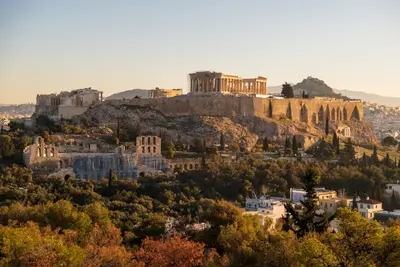
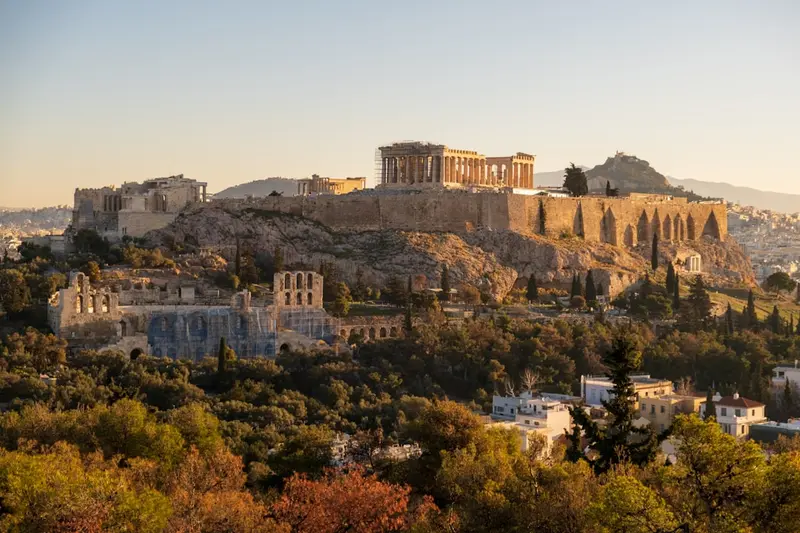
    Athens is a city that doesn't keep its 3,400 years in a museum, but lives them daily: Beneath the Acropolis lie districts full of tavernas, record shops, and rooftop bars. If you only seek antiquity, stay two days.

    Discover
    Delphi
    Highlight 2 of 8

    Delphi

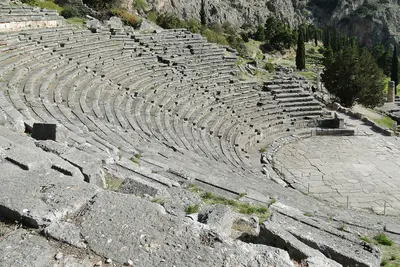
    Delphi lies on the southern slope of Mount Parnassus, about two and a half hours' drive northwest of Athens. In antiquity the Sanctuary of Apollo and its oracle was one of the most important cult centres in Greece; today it is a UNESCO World Heritage Site.

    Discover
    Meteora
    Highlight 3 of 8

    Meteora

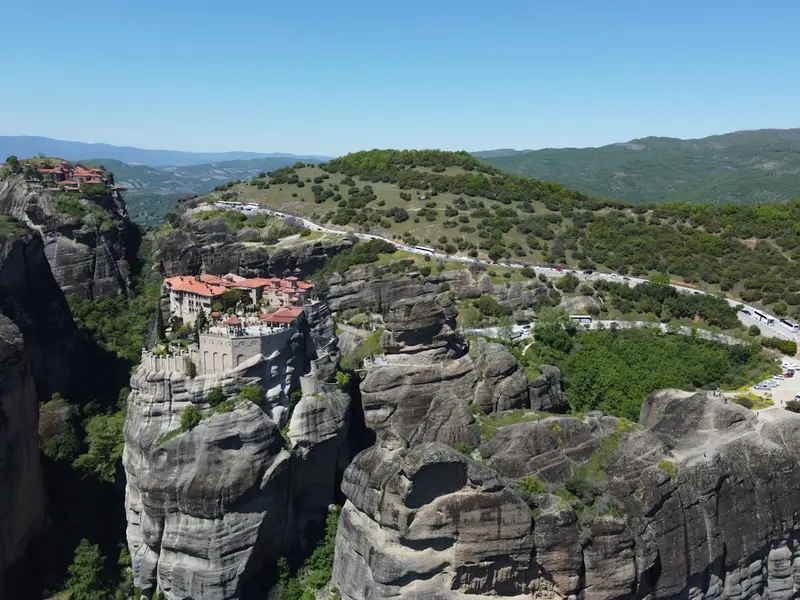
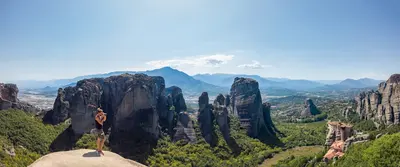
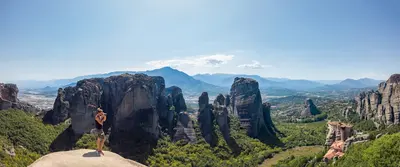
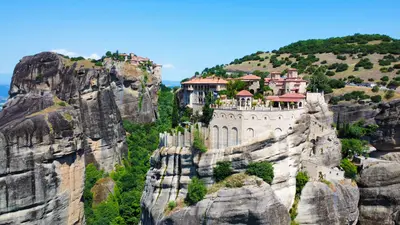
    Meteora lies on the edge of the Thessalian plain above the small town of Kalambaka. Orthodox monasteries stand on tall conglomerate rock towers, the first of them built in the 14th century.

    Discover
    Corfu
    Martin Falbisoner / Wikimedia Commons / CC BY-SA 4.0
    Highlight 4 of 8

    Corfu

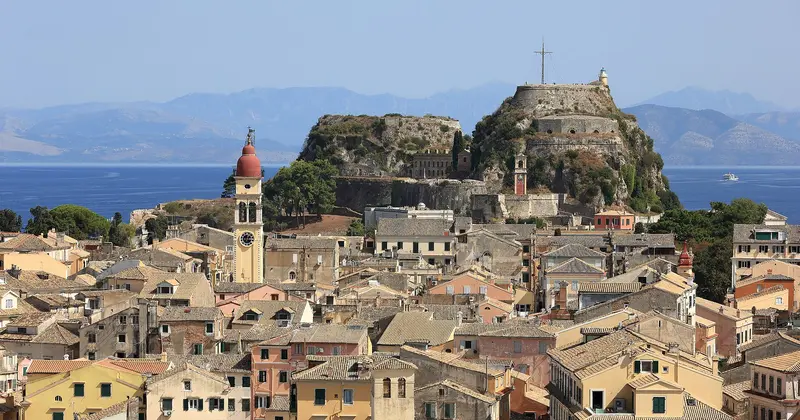
    Corfu is the northernmost of the large Ionian Islands and lies off the coast of Albania and Epirus. Corfu Town's Old Quarter, with its two Venetian fortresses, is a UNESCO World Heritage site.

    Discover
    Mykonos
    Highlight 5 of 8

    Mykonos

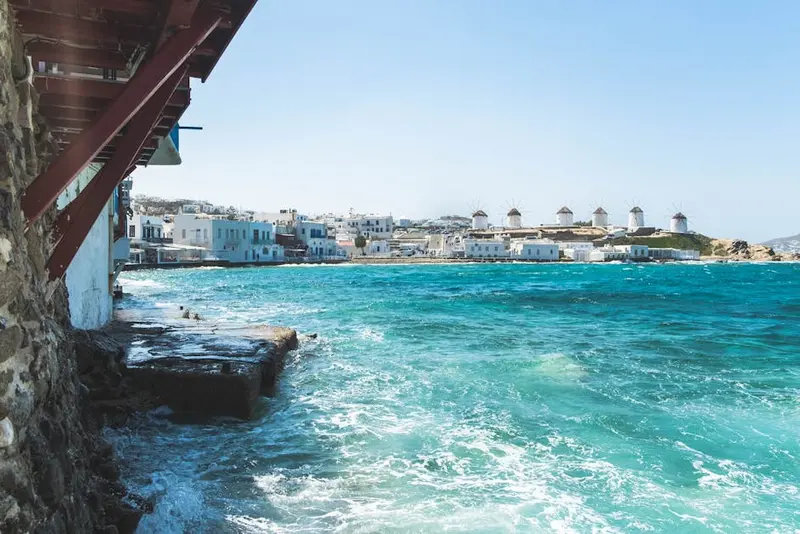
    Mykonos is a small, barren Cycladic island between Tinos and Naxos. The main town, Chora, is a tangle of white cube houses and narrow lanes, with the balconied houses of Little Venice on the water and the Kato Mili windmills above.

    Discover
    Naxos
    Highlight 6 of 8

    Naxos

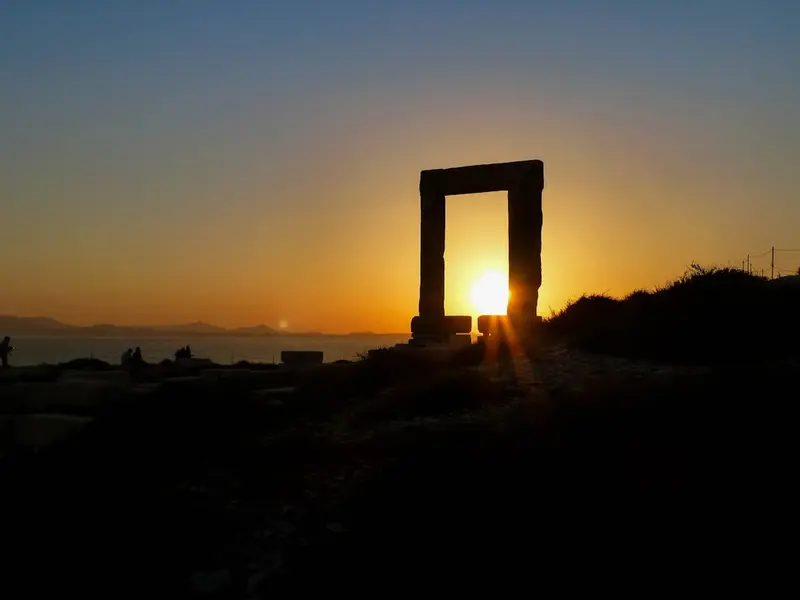
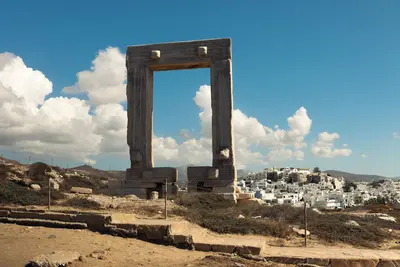
    At around 430 square kilometres, Naxos is the largest island in the Cyclades and one of the most fertile. Long sandy beaches such as Agios Prokopios and Plaka line the west coast, while the interior has mountains, olive groves and villages of marble and stone.

    Discover
    Santorini (Thira)
    Highlight 7 of 8

    Santorini (Thira)

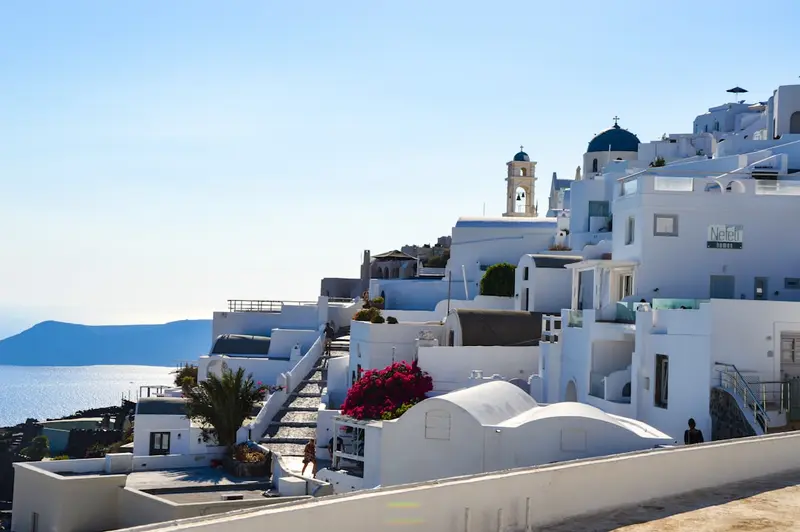
    Santorini, officially Thira, is the remnant of a volcano in the southern Cyclades. The island wraps in a crescent around a flooded caldera, whose present shape was partly formed by the great Bronze Age eruption.

    Discover
    Crete
    Highlight 8 of 8

    Crete

    Crete is the largest island in Greece and big enough for several trips.

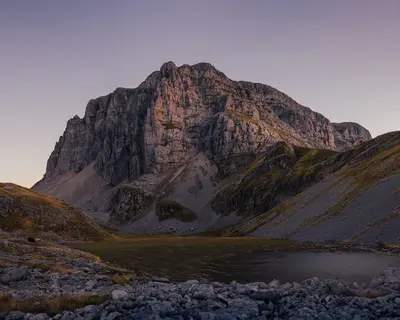
    Crete is about 260 kilometres long and has just over 600,000 inhabitants. Three mountain ranges shape the island: the White Mountains in the west, the Ida range with Psiloritis (2,456 m) in the centre and the Dikti range in the east.

    Discover

    More highlights in Greece

    Unique experiences that make Greece unforgettable.
    Rhodes (City)

    Rhodes (City)

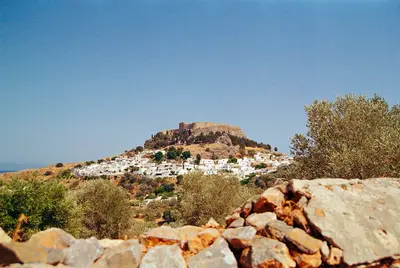
    The Old Town of Rhodes City is one of Europe's most completely preserved medieval cityscapes and has been a UNESCO World Heritage site since 1988. It was shaped by the Knights Hospitaller, who ruled the island from 1309 to 1522, with mosques and baths later added by the Ottomans. Behind a roughly four-kilometer-long ring wall lie the Grand Master's Palace , the Street of the Knights, and a maze of alleys. Outside the walls are the New Town with Italian buildings from the 1920s and 1930s and Mandraki Harbor. Walk through the Old Town in the early morning or late afternoon; at midday, it's crowded with day-trippers.
    Nafplio

    Nafplio

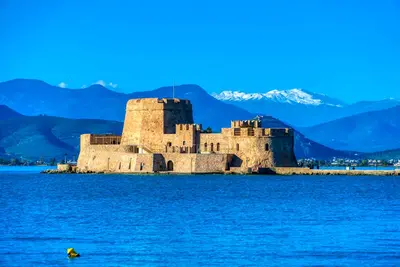
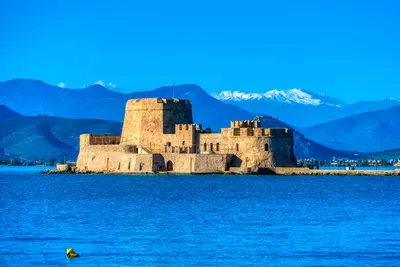
    Nafplio lies on Argolis' east coast, on the Argolian Gulf, some 140 kilometers southwest of Athens. From 1823 to 1834, it served as the first capital of independent Greece, having previously seen Venetians and Ottomans alternately rule its port. The city retains three fortresses, a compact old town of Venetian and neoclassical houses, and a scenic rock path encircling the peninsula.
    Hydra

    Hydra

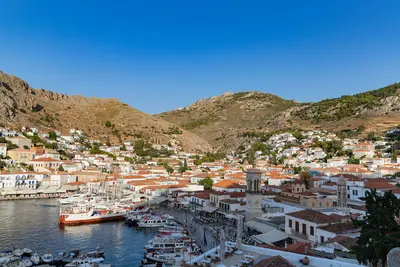
    Hydra is a narrow, rocky island in the Saronic Gulf off the coast of the Peloponnese. Around the semicircular harbour rise the stone houses and mansions of the shipping families who supplied a large part of the Greek fleet during the War of Independence in 1821. There are no cars or other vehicles on the island; loads are carried by mules and donkeys.
    Chalkidiki

    Chalkidiki

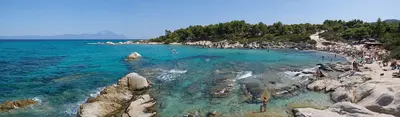
    The Chalkidiki peninsula, southeast of Thessaloniki, extends into three narrow fingers: Kassandra, Sithonia, and Athos. Pine forests here stretch to sandy beaches and clear bays. Additionally, there are the Monastic Republic on the Holy Mountain, the Petralona stalactite cave, and Stagira, the birthplace of Aristotle.

    How to plan your trip to Greece

    From the guide to the road: here is what comes next.

    1. 1
      Sunrise over alpine peaks and a sea of clouds
      1234

      Round trip

      12 days · 4 stops

      Saved

      Pick a route

      Pick a ready-made one or save places and plan your own.

      Browse routes
    2. 2

      Trip to Greece

      Live
      • 1Athens3 days
      • 2Delphi4 days
      • 3Meteora5 days
      Budget

      Plan your trip

      The planner sorts stops, days and budget. Plan together in real time.

      Go to My Trips
    3. 3
      9:41 No signal
      Greece
      Available offline

      Use it on the road

      Download the guide to your phone and use it on site, even offline.

    Regions to Discover

    Explore the diverse regions of Greece.

    Central Macedonia

    Central Macedonia

    Central Macedonia stretches from Olympus' peak to Chalkidiki's three peninsulas, hosting Thessaloniki, Greece's second-largest city. In between are Vergina's Royal Tombs, Pella's mosaics, and a coast where Greeks themselves summer. Antiquity, Byzantium, and bathing coves lie here as close as almost nowhere else in the country.
    Epirus

    Epirus

    Epirus, in northwestern Greece, stretches from the Pindos Mountains to the Ionian Sea coast. The mountains are home to the stone villages of Zagorochoria, the Vikos Gorge, and old arched bridges, while coastal towns include Parga and Sivota. Its capital is Ioannina, situated on Lake Pamvotis, featuring an Ottoman-influenced castle town. May, June, and September are ideal for hiking, while summer is best for swimming.
    Crete

    Crete

    Crete is the largest island in Greece and big enough for several trips. Along the north coast, Venetian-influenced port towns and resorts follow one another; in the south, the mountains drop steeply to the Libyan Sea, with plateaus, gorges and olive groves in between. Add the palaces of the Minoan culture, one of Europe's earliest civilisations, and a cuisine rooted in the island's own farming.
    Attica

    Attica

    Attica is the peninsula surrounding Athens and, with almost four million inhabitants, by far the most populous region of Greece. Here you'll find the Acropolis and the capital's major museums, but also sanctuaries like Eleusis, Brauron, and Rhamnous, which only a few visitors see.For those planning a few days beyond Athens, you'll find swimming coves and the Temple of Poseidon at Sounion along the coast; to the north, the battlefield of Marathon; and Parnitha, a forested mountain range that is reachable from the city in less than an hour.
    Dodecanese

    Dodecanese

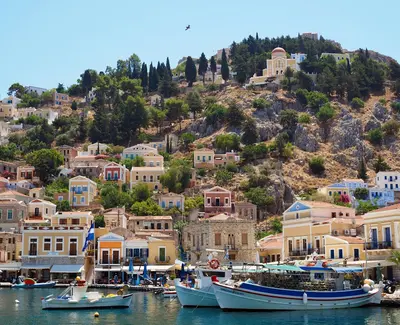
    The Dodecanese , a long chain of islands off the Turkish coast, only became part of Greece with the Treaty of Paris in 1947. More than elsewhere, the Knights Hospitaller, Ottomans, and Italians left their mark here, hence the architecture has little to do with the white cube houses of the Cyclades: knightly castles, mosques, fortified monasteries, and Italian administrative buildings. The group ranges from Rhodes, by far the largest and liveliest island, to islets with only a few hundred inhabitants. Visitors will find seaside resorts, ancient sites, and quiet harbour villages often just an hour's ferry ride apart.
    Ionian Islands

    Ionian Islands

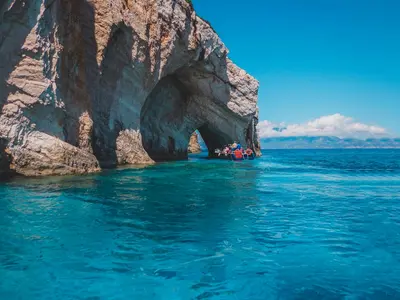
    The Ionian Islands, west of the mainland, contrast sharply with the Aegean: more rain, more greenery, a Venetian rather than Ottoman past. Seven larger islands, from northern Corfu to southern Kythira, feature cypresses, olive groves, and towns with arcades and bell towers. Here, travelers find limestone cliffs, turquoise water, and Italian cuisine.
    Cyclades

    Cyclades

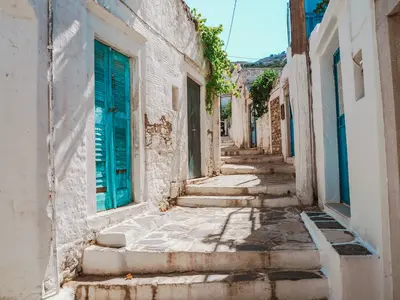
    The Cyclades are a group of around 220 islands and islets in the central Aegean Sea; only a fraction are inhabited. White-washed villages, barren hills, and a dense ferry network define the region, uniting very diverse islands, from Mykonos' nightlife to Amorgos' quiet mountain villages.If you want to see more than one island, plan your route along the ferry lines, not the map. Two or three islands on a single route are easily manageable in a week.
    North Aegean Islands

    North Aegean Islands

    The North Aegean Islands lie close to the Turkish coast and are among Greece's least crowded island groups. Lesbos, Chios, Samos, Ikaria, and Limnos are large enough for their own mountain ranges, wine regions, and port towns that remain inhabited even in winter. You travel here for mastic, ouzo, hot springs, and empty pebble coves, not for a postcard backdrop.
    Peloponnese

    Peloponnese

    The Peloponnese hangs off the southern end of the Greek mainland and, strictly speaking, is an island since the construction of the Corinth Canal. Mycenaean castles, the Sanctuary of Olympia, Byzantine ruined cities, and Venetian sea fortresses lie close together here.Between them, mountain ranges rise to over 2,400 meters, with Taygetos reaching 2,407 meters. The coastal roads remain narrow and winding; those who travel the peninsula are better off planning with few base locations and day trips.
    Thessaly

    Thessaly

    Thessaly lies between the Pindus Mountains and the Aegean Sea and consists largely of a vast plain that supplies Greece with grain and cotton. On its fringes stand the monastery rocks of Meteora, the Pelion Peninsula rises above the coast, and Mount Olympus marks its northern border. Anyone driving from Athens to Thessaloniki crosses the region in two hours; those who turn off will find mountain villages, bathing coves, and towns largely untouched by tourism.
    Central Greece area

    Central Greece area

    Central Greece, in Greek Sterea Ellada, stretches from the Gulf of Corinth, over Mount Parnassus, to the Malian Gulf. Between Delphi's Oracle Sanctuary, Thermopylae Pass, and the mountain villages of Evrytania, lies a landscape many travellers merely pass through en route north. Those who stop find ancient sites without crowds and a mountain range snowy in winter.

    Recommended Itineraries

    Discover the best routes through Greece.
    Peloponnese Tour

    Peloponnese Tour

    From Athens, you drive across the Corinth Canal to Nafplion, from where Mycenae and Epidaurus are a short drive away. To conclude, head southeast to Monemvasia; the drive from Nafplion takes around two and a half hours.

    9 Days
    Stops at a glance
    1. 1.Athens
    2. 2.Corinth
    3. 3.Nafplio
    4. 4.Monemvasia
    View Route Details →
    Northern Greece & Meteora

    Northern Greece & Meteora

    From Thessaloniki, you drive to the Royal Tombs of Vergina and on to the rock monasteries of Meteora. Via the Pindos Mountains, you finally reach Ioannina on Lake Pamvotida, the gateway to the Zagori villages.
    8 Days
    4 stops
    Athens & Cyclades: Paros and Naxos

    Athens & Cyclades: Paros and Naxos

    After three nights in Athens, the ferry from Piraeus takes you to Paros in three to four hours. From there, it's just about 45 minutes by ferry to Naxos, where you spend your last five nights.
    13 Days
    3 stops
    Crete West-East

    Crete West-East

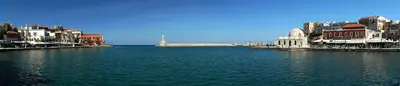
    From Chania, head to the southwestern tip, Elafonissi, then east via Rethymno to Heraklion with the Palace of Knossos. After a detour to Matala on the south coast, the journey ends at Vai Palm Beach in the far east; this leg takes about three and a half hours.
    15 Days
    6 stops
    Central Greece & Delphi

    Central Greece & Delphi

    From Athens, you drive in just over two hours to the mountain village of Arachova on Mount Parnassus and further to nearby Delphi with its Sanctuary of Apollo. Finally, head down to the Gulf of Corinth to Galaxidi, a quiet port town with old captain's houses.

    8 Days
    4 stops

    What you eat in Greece

    Souvlaki

    Souvlaki

    Fleischspieße

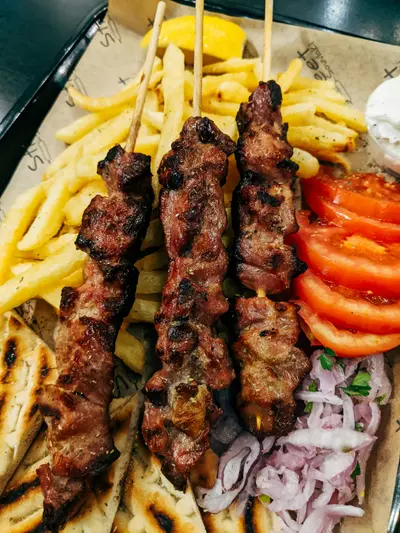
    Ein absolutes Muss für jeden Besuch in Griechenland! Souvlaki sind saftige Fleischspieße, typischerweise vom Schwein oder Huhn, die über offener Flamme perfekt gegrillt werden. Du findest sie entweder pur, serviert mit Brot und Zitrone, oder oft in einem warmen Pita-Brot gewickelt, zusammen mit Tomaten, Zwiebeln und einer großzügigen Portion Tzatziki. Es ist das ideale Street Food und ein schneller, köstlicher Snack, der dich sofort in seinen Bann ziehen wird.
    Horiatiki Salata

    Horiatiki Salata

    Traditional Greek Salad

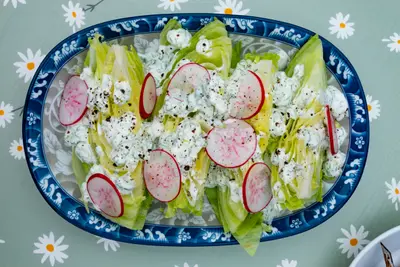
    Experience the freshness of Greece with a Horiatiki Salata, the authentic Greek village salad. This colorful salad is a symbol of Mediterranean cuisine and deliberately skips lettuce leaves. Instead, you'll find crisp tomatoes, cucumbers, red onions, green peppers, Kalamata olives, and a generous piece of creamy Feta cheese, all drizzled with the finest olive oil and a hint of oregano. It's light, refreshing, and pairs perfectly with almost any dish.
    Tzatziki

    Tzatziki

    Yogurt Dip

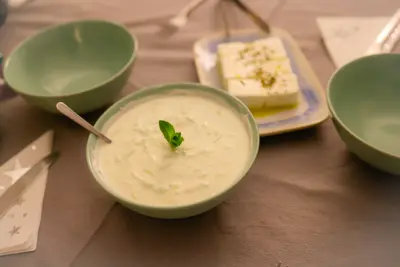
    No Greek meal is complete without **Tzatziki**, this refreshing and versatile dip. Its base is creamy **Greek yogurt**, mixed with finely grated cucumbers, fresh garlic, olive oil, and a splash of vinegar or lemon juice. This cool, tangy dip is not only a fantastic appetizer with crusty bread but also the perfect accompaniment to grilled meats like Souvlaki or Gyros. Its invigorating texture and intense flavor will delight you.
    Spanakopita

    Spanakopita

    Spinat-Feta-Kuchen

    Lass dich von der Spanakopita verführen, einer köstlichen herzhaften Pastete, die dich mit ihrer knusprigen Hülle und der saftigen Füllung begeistern wird. Dünne Schichten von Filoteig umschließen eine würzige Mischung aus frischem Spinat, cremigem Feta-Käse, Zwiebeln und Kräutern wie Dill und Minze. Ob als Vorspeise, leichter Snack oder als Teil eines Mezze-Tellers, diese goldbraun gebackene Spezialität ist ein wahrer Klassiker der griechischen Küche und schmeckt warm am besten.
    Baklava

    Baklava

    Honey-Nut Pastry

    For a sweet end to your culinary adventure, you absolutely must try **Baklava**. This legendary pastry consists of countless wafer-thin layers of **phyllo dough**, carefully filled with chopped nuts, usually walnuts or pistachios, and spiced with cinnamon. After baking, the golden pastry is generously doused with an aromatic honey syrup. The combination of crispiness, sweetness, and the rich nutty aroma makes Baklava an irresistible dessert that pairs perfectly with a Greek coffee.

    Good to Know

    Essential info for your trip planning.

    Land & People

    Greece has about 10.4 million inhabitants; a good third of them live in the greater Athens area.

    History & Society

    Ancient GreeceOn Crete, the Minoan palace culture emerged around 2000 BCE, followed by the Mycenaean culture on the…

    Food & Drink

    Greek cuisine is regionally diverse and built upon a few staple ingredients: olive oil, vegetables, legumes, herbs like…

    Practical Info

    Currency and LanguageThe currency is the Euro. Cards are accepted almost everywhere, but some cash is still useful in…

    Getting Around

    How you travel around Greece depends on whether you're visiting islands, the mainland, or cities.

    RV Travel

    RV Travel in GreeceWith an RV, you can reach secluded beaches, mountain villages, and ancient sites at your own pace.

    Traveling with Kids

    Greece is an easygoing destination for families. Children are naturally welcome in tavernas and village squares, even…

    Best Time to Visit

    When is the best time for your trip?

    April
    May
    September
    October
    16–25°C·20–50 mm(little rain)
    Die Monate April, Mai, September und Oktober bieten das ideale Reisewetter für Griechenland. Die Temperaturen sind angenehm warm, ideal für Sightseeing und Strandaktivitäten, aber die Touristenmassen des Hochsommers sind geringer und die Preise moderater. Das Meer ist im Herbst (September, Oktober) noch besonders warm.
    Griechenland besitzt ein überwiegend mediterranes Klima mit heißen, trockenen Sommern und milden, feuchten Wintern. Die Wetterbedingungen können jedoch je nach Region variieren:Inseln und Küstengebiete (Ägäis, Ionische Inseln, Südgriechenland): Hier dominiert das klassische mediterrane Klima. Die Sommer sind sehr heiß und sonnig mit kaum Niederschlägen. Im Juli und August können die Temperaturen oft über 35°C steigen. In den Ägäischen Inseln kann in den Sommermonaten der sogenannte Meltemi-Wind wehen, ein starker, trockener Nordwind, der für Abkühlung sorgt, aber auch den Fährverkehr beeinträchtigen kann. Die Winter sind mild und feucht, mit gelegentlichen Regenfällen.Zentrales und Nördliches Festland (Makedonien, Thrakien, Epirus): In diesen Regionen gibt es stärkere kontinentale Einflüsse. Die Sommer sind ebenfalls heiß, aber tendenziell feuchter als im Süden und können Gewitter mit sich bringen. Die Winter sind kälter, mit häufigerem Frost und Schneefall in den Bergregionen.Gebirgsregionen: Höhere Lagen erleben kühle bis kalte Winter mit reichlich Schneefall, was Griechenland auch zu einem Ziel für Wintersport macht. Die Sommer sind hier angenehm mild.Generell gilt: Für Strandurlauber sind die Monate Juni bis September ideal, wobei Juli und August am heißesten und belebtesten sind. Für Kultur- und Aktivurlauber eignen sich die Frühlings- und Herbstmonate am besten, um der extremen Hitze und den Menschenmassen zu entgehen.

    Seasons

    Jan
    Feb
    Mar
    Apr
    May
    Jun
    Jul
    Aug
    Sep
    Oct
    Nov
    Dec
    Trockenzeit
    Zwischensaison
    Regenzeit
    Best Time to Visit
    ▶Show detailed monthly data
    MonthTemp (°C)Rain (mm)Sun (h)
    January9.0804.0
    February10.0705.0
    March12.0606.0
    April16.0408.0
    May21.02510.0
    June26.01011.0
    July29.0512.0
    August29.0511.0
    September25.0209.0
    October20.0507.0
    November15.0855.0
    December11.0904.0

    Travel advice

    Safety, entry requirements and health: the official, up-to-date advice for Greece is published by the UK government on GOV.UK.

    Go to GOV.UK

    Sources & method

    • Photos: Wikimedia Commons, Unsplash, Pexels. Each photo carries its credit.
    • The content is based on web research from public, traceable sources. How the content is made · The role of AI
    Felix at Kuirau Park in Rotorua, New Zealand

    Who's behind Fernweh?

    Hi, I'm Felix.

    I love to travel, and I love planning even more. Fernweh.guide is my attempt at building a really good online travel guide.

    About Fernweh

    All places in Greece

    • Agios Nikolaos
    • Ancient Epidauros
    • Ancient Olympia
    • Ano Poli
    • Ano Syros
    • Apano Meria
    • Arachova
    • Athens
    • Attica
    • Central Greece area
    • Central Macedonia
    • Chalkidiki
    • Chania
    • Chios
    • Corfu
    • Corinth
    • Crete
    • Cyclades
    • Delphi
    • Dodecanese
    • Elafonissi
    • Epirus
    • Galaxidi
    • Galissas
    • Heraklion
    • Hydra
    • Ikaria
    • Ioannina
    • Ionian Islands
    • Karpathos
    • Kefalonia (Island)
    • Kini
    • Kolonaki
    • Kos
    • Ladadika
    • Larissa
    • Lefkada (Island)
    • Lefkes
    • Leros
    • Lesbos (Lesvos)
    • Limnos (Lemnos)
    • Lindos
    • Loutro
    • Mani
    • Marathon
    • Matala
    • Meteora
    • Milos
    • Molyvos (Mithymna)
    • Monastiraki and Psyrri
    • Monemvasia
    • Monodendri
    • Mycenae
    • Mykonos
    • Nafplio
    • Naoussa
    • Naxos
    • Neapoli (Neapoli Voion)
    • North Aegean Islands
    • Papingo
    • Paros
    • Patmos
    • Peloponnese
    • Pilion (Pelion)
    • Plaka
    • Poseidonia and Agathopes
    • Rethymno
    • Rhodes (City)
    • Samos
    • Santorini (Thira)
    • Sounion
    • Symi
    • Syros
    • Thermopylae
    • Thessaloniki
    • Thessaly
    • Trikala
    • Vai
    • Vergina
    • Zakynthos (Island)

    More about Greece

    • Best Time to Visit Greece
    • Greece with Kids
    • Greece by RV